Writer Truman Capote published his novella Breakfast at Tiffany's in 1958, and it became an instant literary sensation. It told the story of Holly Golightly, a carefree New York party girl with a mysterious past who befriends a struggling writer in her upper east side apartment building.
Of all his characters, Truman Capote named Holly as his favorite and she became one of the more intriguing characters in modern American fiction. The Holly of Capote's book was somewhat hard and cynical, as was the overall tone of the book. While not exactly a call girl, Holly was described by Capote as the kind of girl who makes a career out of being arm candy for wealthy men. "The main reason I wrote about Holly, outside of the fact that I liked her so much," explained Capote, "was that she was such a symbol of all these girls who come to New York and spin in the sun for a moment like May flies and then disappear. I wanted to rescue one girl from that anonymity and preserve her for posterity."
Women came out of the woodwork claiming to have been Capote's inspiration for the character of Holly. Capote often referred to this phenomenon as the "Holly Golightly Sweepstakes." The truth was that Holly was a combination of several women Capote knew. Carol Marcus (who later became the wife of Walter Matthau), Doris Lilly (a part-time actress and New York party girl), Phoebe Pierce (a high school friend of Capote's), Oona Chaplin (wife of Charlie Chaplin), socialite Gloria Vanderbilt, and Capote's own mother Nina all provided inspiration. There was also a trace of Capote's own background in Holly; he had risen from obscurity in the deep south to become a New York society fixture and international jet-setter.
Capote had many offers from Hollywood to turn his book into a movie and he always envisioned his friend Marilyn Monroe in the role of Holly. "Holly had to have something touching about her...unfinished," he said. "Marilyn had that." Monroe wanted the part badly, and worked hard on the role with Capote's help.
After Capote sold the rights to Paramount, Richard Shepherd and Martin Jurow were brought in as the producers and screenwriter George Axelrod was hired to adapt Capote's novella for the screen.
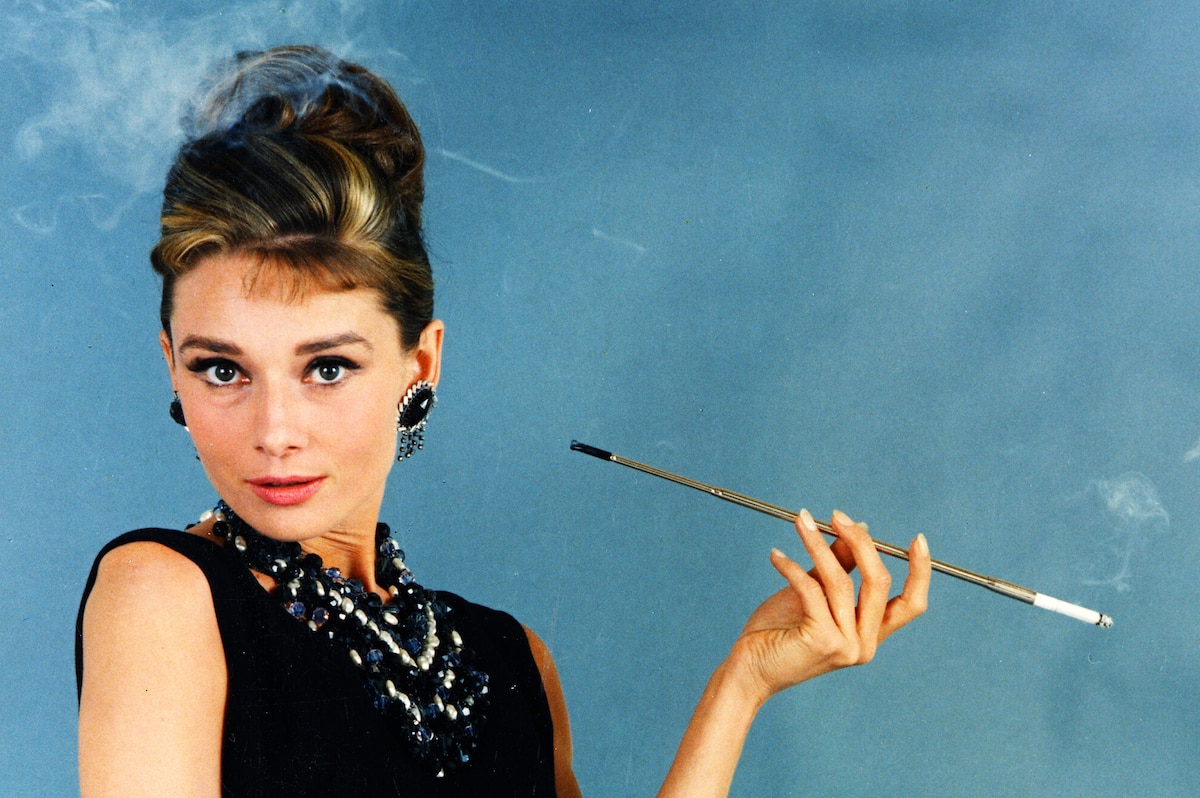
Even though Capote wanted Marilyn Monroe to play Holly Golightly, Paramount had other plans. Audrey Hepburn, who was already a big star after such films as Roman Holiday (1953) and Funny Face (1957), was under contract to Paramount, and they wanted her for the role.
At that time, Audrey Hepburn was looking to transition into more sophisticated adult roles. She was 32, married to actor Mel Ferrer, living quietly in Switzerland, and had just given birth to her first child Sean when she received an offer to star in Breakfast at Tiffany's. She wasn't convinced that she was right for the part, having heard about Capote's preference for Marilyn Monroe. However, she accepted, determined to test herself as an actress. "I was nothing like her (Holly)," said Hepburn, "but I felt I could act Holly. That was a revolutionary thought for me. After so many movies, I no longer felt like an amateur...I knew the part would be a challenge, but I wanted it anyway."
With Audrey Hepburn securely on board, Paramount wanted John Frankenheimer to direct. However, Hepburn, who had a say in the matter, was unfamiliar with his work and the studio decided his style was too dark for the film. Director Blake Edwards, who loved the screenplay and was well known for his light comic touch, moved into the director's chair instead.
Actor George Peppard was a relative newcomer to the silver screen with only a handful of credits to his name. He came from the Actors Studio, known for its intense "Method" approach to acting. Director Blake Edwards didn't want Peppard in the movie at all, but the producers did. "He just didn't have whatever it was that I wanted," said Edwards. "He wasn't my cup of tea." Edwards begged the producers not to cast Peppard in the role of Holly's neighbor Paul, but in the end he was outnumbered.
One actor that Blake Edwards did put his support behind was Patricia Neal in the part of George Peppard's older married benefactress known only as "2-E." "I was with Patricia from the beginning," said Edwards. "As far as I was concerned she was the only actress." The timing was right for Patricia Neal, and it was her first Hollywood acting job offer in years. She had worked with George Peppard before at the Actors Studio when he was a struggling young performer, and she looked forward to seeing him again. There was one condition set for Patricia when she accepted the role: she was required to dye her hair red, so as not to clash with Audrey Hepburn's frosted brunette locks. She was grateful for the role after a long absence from the silver screen. "I had really come to believe I would never work in films again," Neal said in her 1988 autobiography As I Am.
Rounding out the unconventional cast was Martin Balsam as a slick Hollywood agent and Mickey Rooney as Holly's Japanese neighbor Mr. Yunioshi. At the time, Rooney was middle-aged and no longer in demand, unlike his early days working for MGM. Though he would later come to regret doing the role because of its ethnic stereotyping, Breakfast at Tiffany's still gave him an opportunity to show his versatility as a character actor.
by Andrea Passafiume
The Big Idea
by Andrea Passafiume | February 15, 2007
SIGN UP FOR OUR NEWSLETTERS

CONNECT WITH TCM