Budgeted at just over $2 million dollars, Breakfast at Tiffany's went into production in October 1960. Audrey Hepburn moved to New York from Switzerland for the location shoot with husband Mel Ferrer and new baby Sean in tow.
The very first scene filmed was the opening shot of Audrey Hepburn munching on a pastry in front of Tiffany's in an evening gown. The scene took place in front of the actual Tiffany's on 5th Avenue in Manhattan early on a Sunday morning. Tiffany's was extremely cooperative during the filming and allowed the crew unprecedented access to film its interiors.
While Audrey Hepburn was the ultimate professional during the making of Breakfast at Tiffany's, her insecurities about playing the role took their toll and the stress resulted in weight loss that she didn't need. It also didn't help that co-star George Peppard's intense "Method" approach to acting was totally opposite from Hepburn's own instinctive style. Peppard, she thought, overanalyzed every scene, which both annoyed and unnerved her.
Not surprisingly considering his intensity, Peppard didn't make many friends on the set of Breakfast at Tiffany's. He and Blake Edwards locked horns many times throughout the filming, almost coming to blows on at least one occasion. No matter what kind of direction he was given, Peppard would end up playing the scene as he thought it should be played, which didn't endear him to anyone. Even Patricia Neal, with whom Peppard had been friendly in the past, noticed a change in the actor-and not for the better. Peppard, she felt, had been "spoiled." Peppard felt from the get-go that Neal's character was too dominant. "He wanted things as he wanted them," she later said of Peppard. "I dominated him a lot more in the script and he didn't want to be seen in that condition...His character was written with a battered vulnerability that was totally appealing, but it did not correspond to George's image of a leading man. He seemed to want to be an old-time movie hunk."
Meanwhile, composer Henry Mancini set out to write a musical theme for the movie that captured its unique blend of humor and melancholy. Mancini found his greatest inspiration in the film's star herself. "It's unique for a composer to really be inspired by a person, a face or a personality, but Audrey certainly inspires me," said Mancini. "Normally, I have to see a completed film before I'll compose the music, but with Tiffany I knew what to write for Audrey just by reading the script."
The song "Moon River" grew out of the music that Mancini had already written for the film with lyrics contributed by Johnny Mercer. "When I met Audrey the first time," said Mancini, "I knew the song would be something very, very special. I knew the exact quality of her voice and that she could sing 'Moon River' beautifully...'Moon River' was written to explain that Audrey/Holly was really a yearning country girl."
For the famous scene in which Holly throws a wild party in her apartment, Blake Edwards wanted to capture the free-wheeling lifestyle of Holly and her New York friends, using an intricate series of visual gags. Edwards ordered up cases of real champagne and let the bubbly flow among the actors, allowing everyone to contribute ideas of outrageous behavior. It became one of the most memorable scenes in the film.
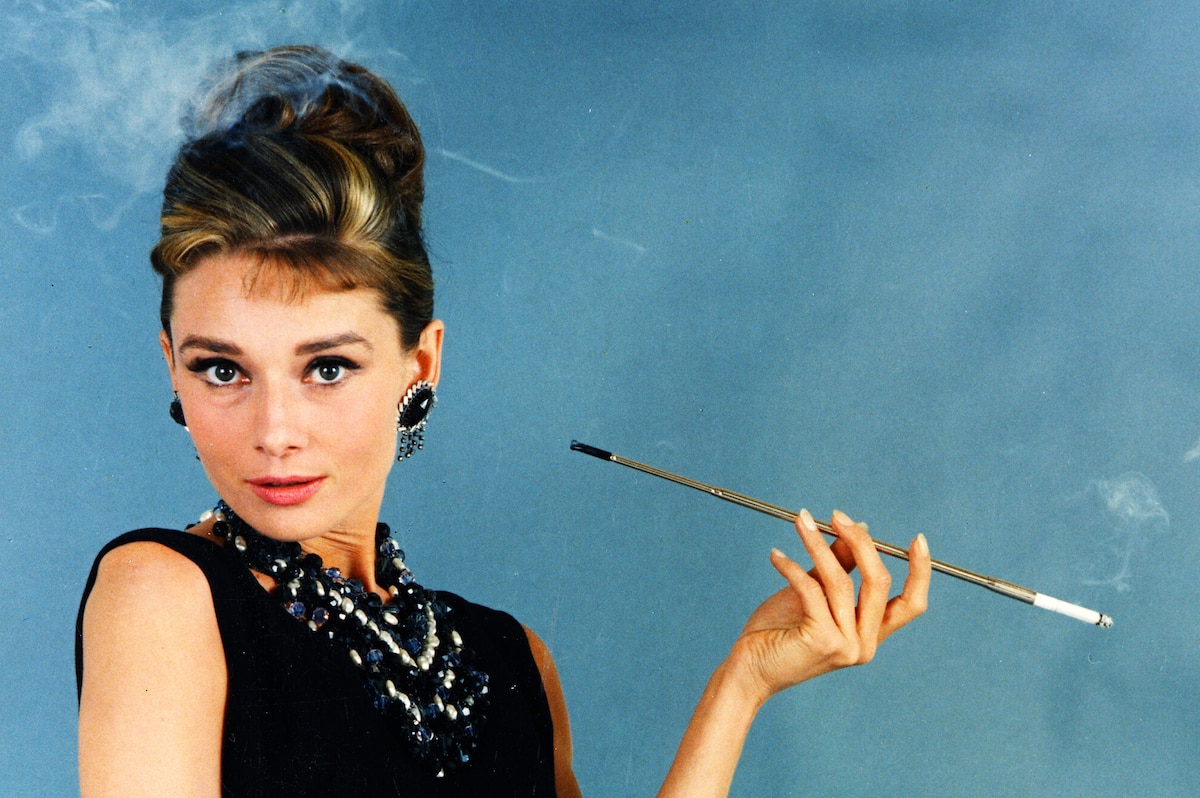
For the costumes, Audrey's great friend Hubert de Givenchy was brought in to design the signature dresses for Hepburn's lithe figure. Givenchy had a long-standing relationship with the actress, having previously dressed her for Sabrina (1954), Funny Face (1957) and Love in the Afternoon (1957). Many considered Hepburn to be the designer's muse, and together they created her career-making look of simple, chic and elegant. "There's not a woman alive who doesn't dream of looking like Audrey Hepburn," Givenchy often said.
The song "Moon River" almost didn't make it into the finished film. According to lyricist Johnny Mercer, during one of the previews of Breakfast at Tiffany's in San Francisco, the audience response wasn't terribly enthusiastic about the tune, so one of the producers announced, "Well, I don't know what you guys are going to do, but I'll tell you one thing-that damn song can go." Luckily Hepburn herself protested, saying "Over my dead body," and the song, of course, stayed. The song went on to win an Academy Award and became a classic.
by Andrea Passafiume
Behind the Camera
by Andrea Passafiume | February 15, 2007
SIGN UP FOR OUR NEWSLETTERS

CONNECT WITH TCM