After the seismic success of Easy Rider (1969) pushed the youth counterculture to the forefront of Hollywood and redefined the studio system as everyone knew it, filmmakers scrambled to find the next big thing that would lure in the college and high school kids who had turned war protests and rowdy rock concerts into regular national events. The immediate result was a large number of films that have since drifted into relative obscurity and present unavailability like, The Magic Garden of Stanley Sweetheart (1970) and Been Down So Long It Looks Like Up to Me (1971), along with slightly more enduring offerings like The Harrad Experiment (1973). Sharing company with them is Cover Me Babe (1970), which was part of a bizarre roster of 20th Century-Fox films that year and came in the immediate wake of Beyond the Valley of the Dolls, Myra Breckinridge, and Tora! Tora! Tora!.
This ambitious, semi-experimental feature was the second film by director Noel Black after another Fox release, Pretty Poison (1968), a pitch-black comedy with Anthony Perkins and Tuesday Weld about a mentally unstable young man who gets caught up with a murderous all-American cheerleader in the suburbs. Though not a box-office success, Cover Me Babe allowed Black to take one more shot at the youth market with the United Artists release Jennifer on My Mind (1971), which spelled the end of Black's theatrical career at the time. This caused him to turn to television until his belated return to the big screen for three more eccentric features: Mirrors (1978), A Man, a Woman, and a Bank (1979) and Private School (1983).
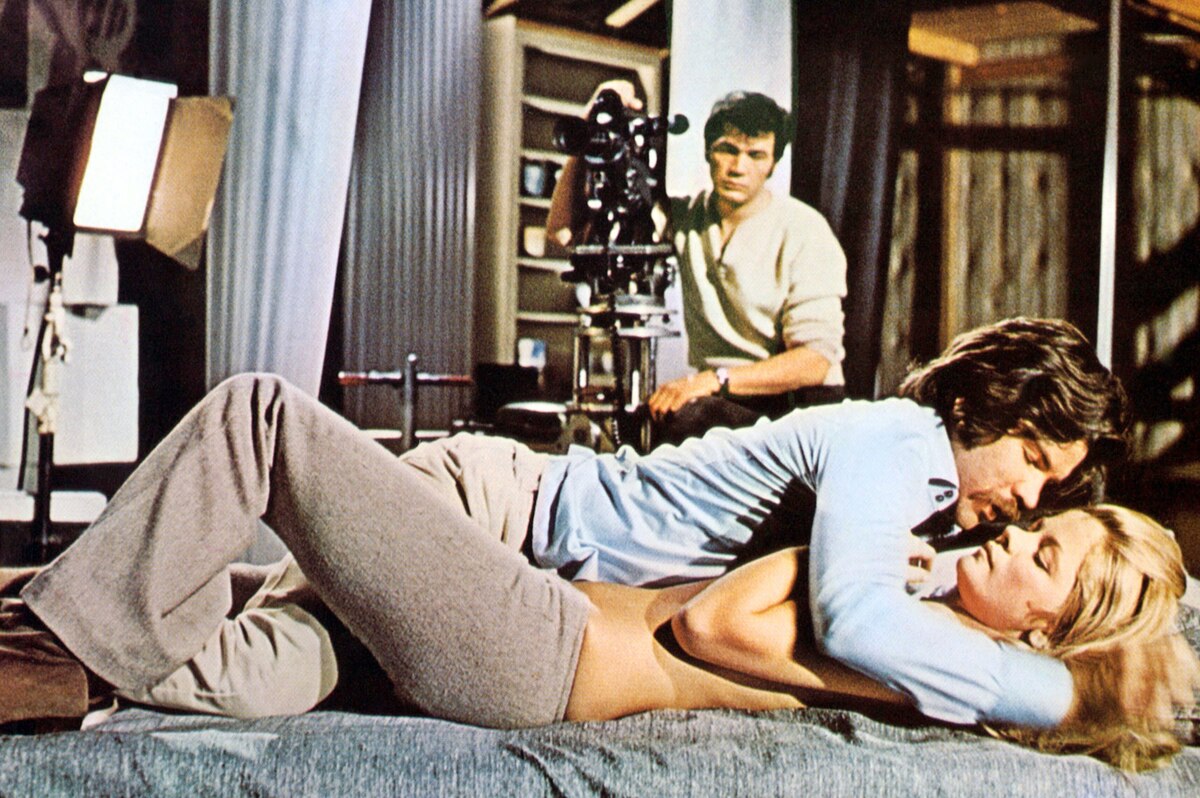
Originally shot under the title Run Shadow Run and scripted by screenwriter George Wells, who had helmed a number of comedies and musicals for MGM, including Summer Stock (1950) and Designing Woman (1957), the film proved to be frustrating for Black as he expressed numerous times in interviews over the years that he had wanted to shift the story to be less cynical about the art of filmmaking. The story concerns a self-absorbed student filmmaker, Tony Hall (Robert Forster), whose abrasive attitude and insistence on capturing absolute "reality" in his films puts him at odds with his mentors and crew. A hot property after the successful Medium Cool (1969), Forster shot this film back to back with the now obscure Pieces of Dreams (1970). Though neither film did his career any favors and his leading man days were instantly over, he found a busy career in TV and became an in-demand character actor including a well-deserved Oscar nomination for his role as bail bondsman Max Cherry in Quentin Tarantino's Jackie Brown (1997). Perhaps the most remarkable aspect of this film today is its eclectic supporting cast, highlighted by a young Sondra Locke as Tony's exploited girlfriend, Melisse; this was only her second feature after her standout debut in The Heart Is a Lonely Hunter (1968), and she would go on to a notable career as both an actress and director in the 1980s and '90s. Also on hand are Susanne Benton, who would go on to star in A Boy and His Dog (1975), as well as Sam Waterston, Hollywood vet Jeff Corey, counterculture fixture Michael Margotta, veteran stage actor Robert Fields, and in his second and final feature film role, Floyd Mutrux, who switched gears the following year to become a director with Dusty and Sweets McGee (1971), followed by such films as American Hot Wax (1978) and The Hollywood Knights (1980).
Dismissed at the time by critics including The New York Times (who declared it "the sort of movie that needs the words of a critic less than it requires the services of an analyst"), Cover Me Babe has since taken on a fascinating time capsule quality thanks to its personnel and its period trappings such as its soundtrack contributions from legendary rock band Bread, with the title song co-written by Randy Newman and film composer Fred Karlin. What seemed self-indulgent at the time has since gone on to join the ranks of other films about troubling filmmakers, such as The Wild Eye (1967) and The Stunt Man (1980), albeit on a smaller film school scale here and rendered in a way that seems light years removed from cinema today.
By Nathaniel Thompson
Cover Me Babe
by Nathaniel Thompson | March 21, 2020
SIGN UP FOR OUR NEWSLETTERS

CONNECT WITH TCM