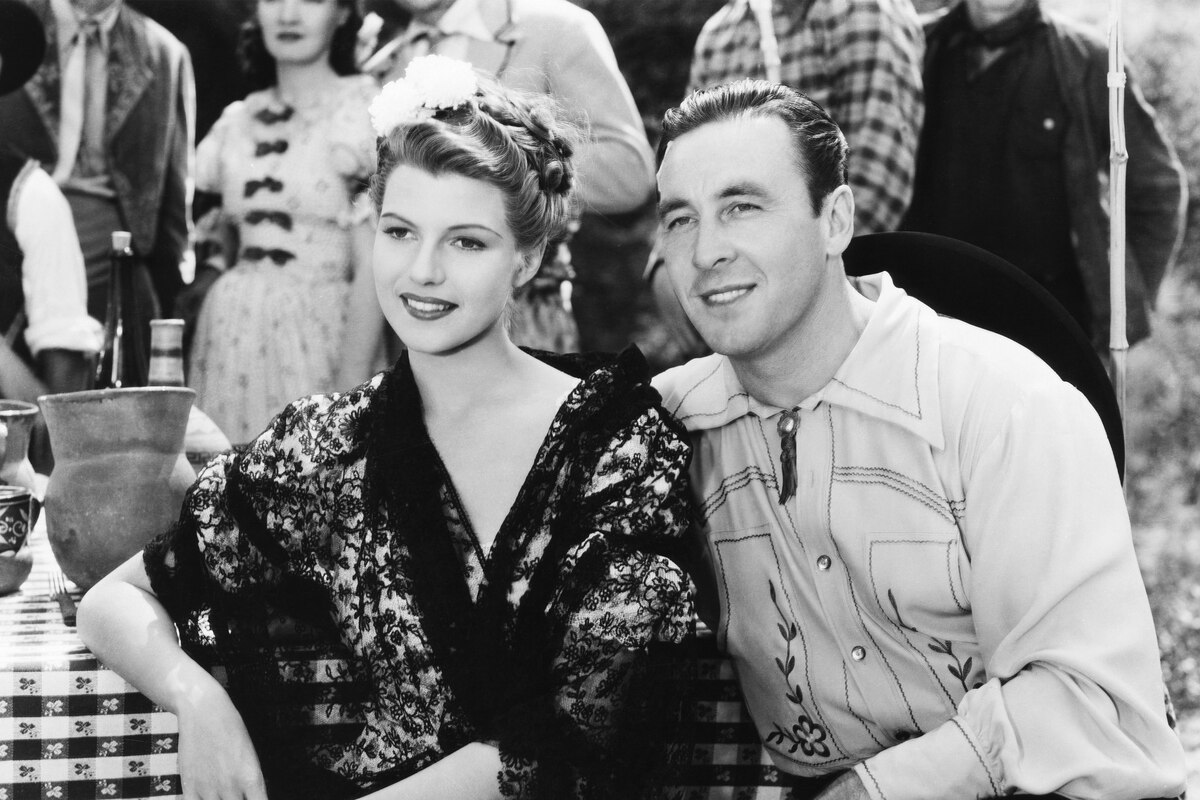
The RKO studio had a popular and lucrative franchise going for many years with its B westerns. In the early 30s, as part of a series of oaters with cowboy star Tom Keene, a story by veteran scenarist Ben Cohen was filmed for the first time as Come On Danger! (1932). A few years later, George O'Brien, an important leading man during the silent era, was now the king of the RKO Westerns, and Oliver Drake, its principal screenwriter, dusted off the old script to make The Renegade Ranger (1938). The studio borrowed Columbia starlet Rita Hayworth, then still primarily typecast by her Spanish heritage, as Judith Alvarez, an incognito bandit queen. She is, in fact, something of a female Robin Hood of the Old West, fighting the corrupt government agents who have been cheating local ranchers out of their land (it would not be the last time Hayworth would play a woman who was not what she seemed). O'Brien is the Texas Ranger dispatched to apprehend her but ends up saving her life instead.
The seasoned star was impressed with Hayworth's good nature and professional eagerness. O'Brien said that during filming, she frequently asked for advice on how to play a certain moment and never pretended to know more than she did or put on airs about "slumming" in a B western. "Rita carried herself beautifully," he later noted. "She walked and moved with such grace! Cliché though it might be, she was poetry in motion." Reviewers noted the young actress's screen talents and riding skills, calling hers "one of the finest female sagebrush performances seen in a long while." It was clear, even at this early stage of her career and in such an inauspicious setting, that Hayworth would soon justify O'Brien's prediction that she was destined to go far in the movie business.
The Renegade Ranger was considered one of the best of the more than two dozen pictures O'Brien made with director David Howard between 1932 and 1940. Variety told readers it was "a very good western, filled with brawling, gunning and outlawry" and praised its "above average" photography and sound.
Just a few years after this film, O'Brien, whose resume included the great silent classic Sunrise (1927) and John Ford's first major western The Iron Horse (1924), hung up his spurs and joined the Navy at the age of 41 to fight in World War II. He was decorated many times for his service in the Pacific, but when he returned stateside, he had difficulty finding work in movies. He only made five more movies between the end of the war and 1964; three of them cast him in smaller roles as cavalry officers in the films of his old friend, John Ford - Fort Apache (1948), She Wore a Yellow Ribbon (1949) and Cheyenne Autumn (1964).
Featured in The Renegade Ranger as a young hothead drummed out of the Rangers who joins Alvarez's gang is 20-year-old Tim Holt, son of Jack Holt, a leading man of the silent and early talkies era. In the 1940s and into the early 50s, Tim Holt would take up the mantle as RKO's western star, appearing in O'Brien's role in a remake of The Renegade Ranger under its original title Come On Danger (1942). In addition to the popular western series, Holt occasionally made appearances in such prestige pictures as The Magnificent Ambersons (1942), My Darling Clementine (1946) and The Treasure of the Sierra Madre (1948).
Director: David Howard
Producer: Bert Gilroy
Screenplay: Oliver Drake, based on a story by Bennett Cohen
Cinematography: Harry J. Wild
Editing: Frederic Knudtson
Art Direction: Van Nest Polglase
Original Music: Roy Webb
Cast: George O'Brien (Captain Jack Steele), Rita Hayworth (Judith Alvarez), Tim Holt (Larry Corwin), Ray Whitley (Happy), Lucio Villegas (Juan Capillo).
BW-59m.
by Rob Nixon
Renegade Ranger
by Rob Nixon | February 13, 2007
SIGN UP FOR OUR NEWSLETTERS

CONNECT WITH TCM