Some western towns seem to harbor the ghosts of their dead. Pass through Laramie, Wyoming on a quiet summer evening as the sun dips behind the mountains and you'll feel their presence in the streets. The Western genre claimed its towns and landmarks, its Monument Valley, its Rio Grande and Red River--names that conjure up enormous rocks and raging water cutting through sand and stone. Beyond the artifice and fiction of these places rests a true history, of violence and calm, of peace and death, since spun into yarns, etched into pages, acted out before cameras.
The classic Western saw its most prolific period in the mid-century, before changes in American life and thought saw the birth of the revisionist cinema of Hellman and Peckinpah and various genre offshoots, while overseas Leone and Corbucci lent the genre a bloody twist.
Among the hundreds upon hundreds of Westerns released in the 1940s and '50s few titles seem to stand out. There are masterpieces among them, those that are forgettable and others that are harder to watch now, given their skewed portrayal of Native Americans. But overall, they gave us the lonesome cowboy trope: the hero on a horse, the rider fading into the sunset. But perhaps more importantly--and much more fun--they bred the ultimate baddies.
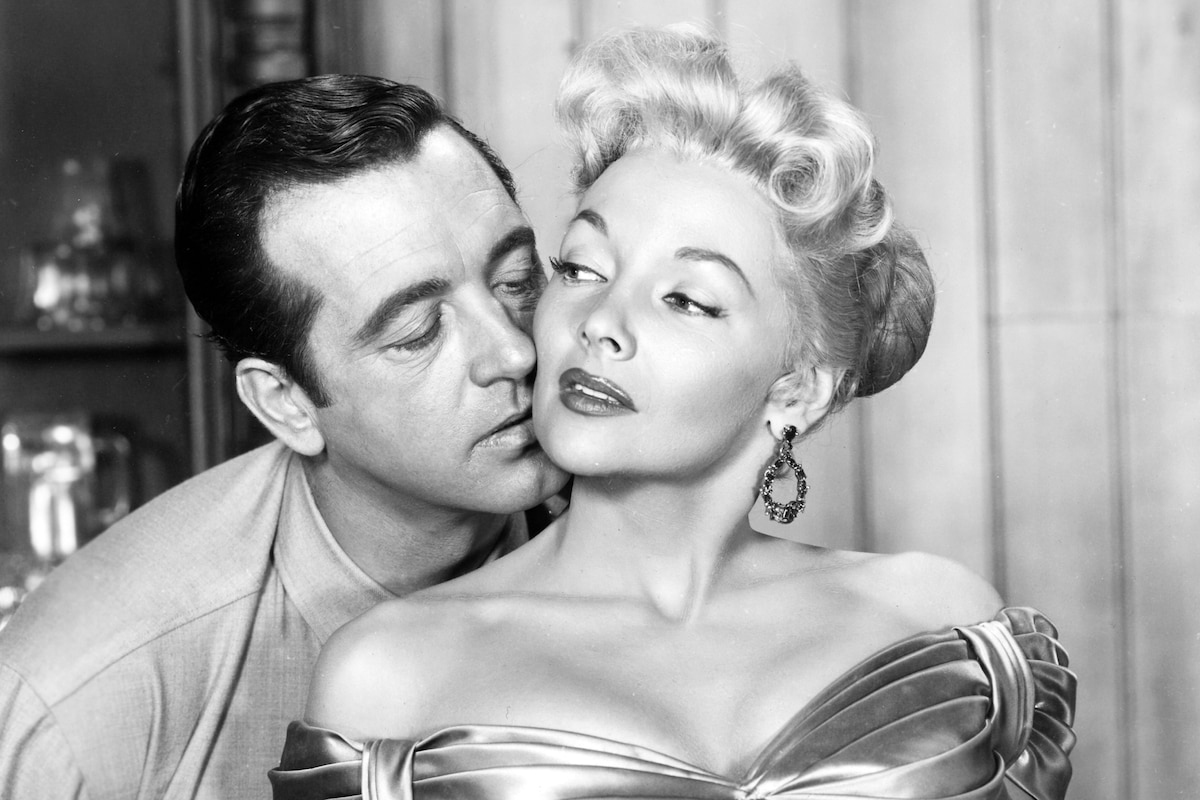
Rails Into Laramie (1954) isn't a special picture by any means. It's directed through its twists and turns by the steady hand of Jesse Hibbs, who in later year had an extremely prolific career on the small screen with credits on Perry Mason and Gunsmoke. It's got a reliable lead in John Payne, who, in the next year would go on to film two other transportation-theme-titled Westerns (Santa Fe Passage and The Road to Denver, both as memorable as their names suggest). But the wild card in the stack was supporting actor Dan Duryea.
In Hollywood--as in history--the West was a place where a man could reinvent himself. Tired of his life on the East Coast, he could pack his bags and light out for the territory. If he made it past the vast stretches of plains, the rattlesnakes and coyotes, territorial tribes and the brutal heat, well, then he had to do his best to not tick anybody off and find a bullet in the back. But--the main thing was he was here, and here he wasn't who he used to be.
Duryea began his career working in advertising until he couldn't take it anymore. He turned to his true passion for acting, a vocation which proved to be his meaning in life. He quickly made up for lost time, and pretty soon he found himself on the other side of James Stewart, Gary Cooper, Burt Lancaster and Edward G. Robinson, and over the course of a 100 plus credit career made a name for himself as a go-to heavy, the man who had the good looks and sinister sneer who'd shoot with a smile on his face.
In genres oversaturated with archetype and plot, the work of character actors shines through. Duryea gave a special spark to the noir and Western canons, and it's quite fun to see him let loose, especially in a thrilling climax set on a moving train. While Laramie as a standalone film isn't particularly memorable, it's the work of actors like Duryea who add color and texture to the canvas of the West in all its history and mythology.
By Thomas Davant
Rails into Laramie
by Thomas Davant | March 03, 2020
SIGN UP FOR OUR NEWSLETTERS

CONNECT WITH TCM