In the last several years, women in the film industry--as well as film critics, writers and historians--have called out the lack of diverse representation in film, both in front of and behind the camera, and specifically the disproportionate amount of men who are given directorial projects over women. Activists and advocates highlighting the work of current female filmmakers (including those who identify as transgender and non-binary), have also called attention to the small handful of trailblazing women who broke through the male-dominated industry, including Lois Weber, Zora Neale Hurston, Marion E. Wong, Mabel Normand, Dorothy Arzner, Ida Lupino, Elaine May and the one who is considered not only the first female director, but the first studio director period,--Alice Guy-Blaché. In 2018, filmmaker Pamela B. Green released her feature-length documentary Be Natural: The Untold Story of Alice Guy-Blaché, which highlights the life and career of this key figure in cinema history.
The French-born Alice Guy-Blaché first got her start as a secretary for Léon Gaumont, who ran a camera manufacturing company. During this time, she learned about the various cameras the company produced and was introduced to several customers, including Georges Demenÿ and the Lumière Brothers (Auguste and Louis)--all three key figures in the early days of cinema. After watching a presentation of the Lumières film Workers Leaving the Lumière Factory, Guy-Blaché had an idea: film could be used not only for instructional or demonstration purposes, but as vehicle for fictional storytelling. With Gaumont's blessing, Guy-Blaché embarked on her first film project, which became La Fée aux Choux (1896), a fantasy tale about a fairy who makes babies grow out of cabbage plants. This film is widely considered to be the very first narrative film ever produced. Guy-Blaché continued to experiment with fictional storytelling and various filming techniques and special effects like double exposure.
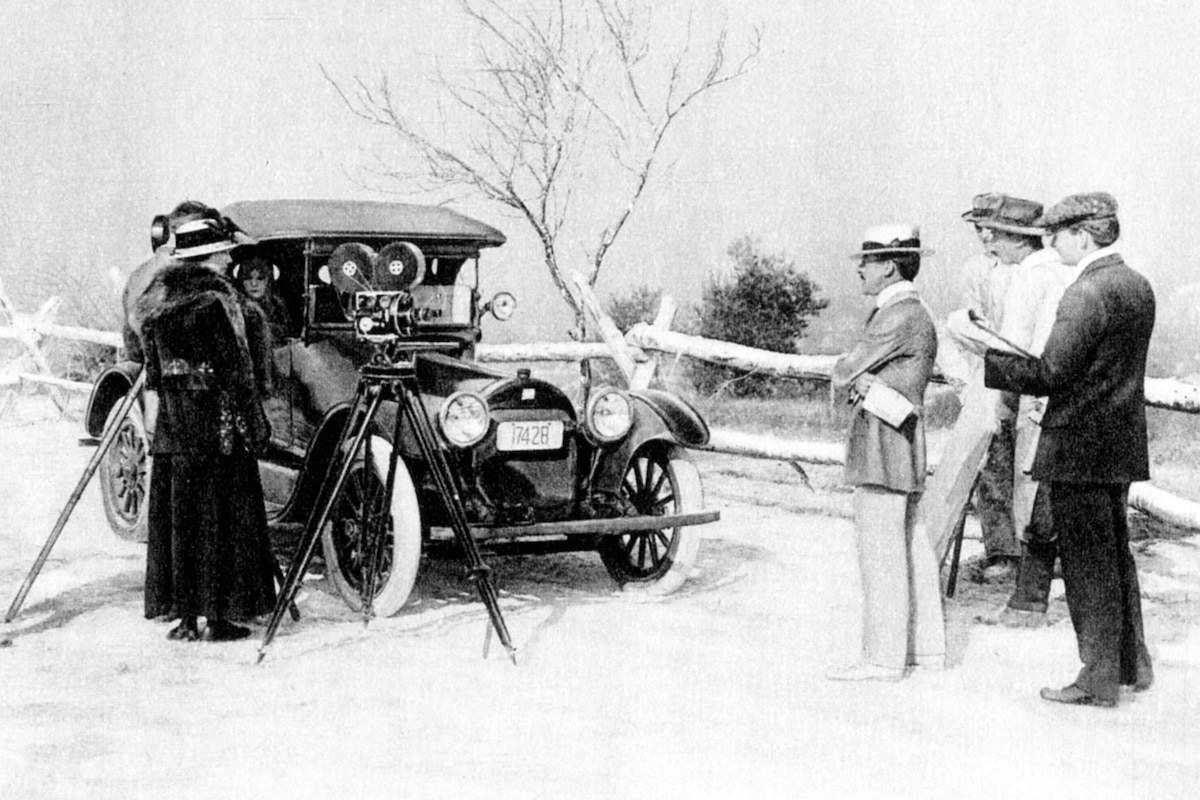
By 1907, Guy-Blaché married Herbert Blaché, and the couple moved to the United States to work for Léon Gaumont's company, which had recently expanded to New York. However, by 1910, Guy-Blaché and her husband left Gaumont and formed their own company with partner George A. Magie: The Solax Company, which became the largest studio in the country--prior to the formation of the major Hollywood studios. Based in Queens, The Solax Company eventually expanded to Fort Lee, New Jersey. It was here that Guy-Blaché hung a large sign that read, "Be Natural" - the inspiration for the title of Pamela B. Green's documentary.
In the later years of Guy-Blaché's life, she went on record to make sure that her legacy was intact. Concerned that her contributions to film had been not only forgotten, but essentially erased, Guy-Blaché tirelessly communicated with film historians, making lists of everything she made and correcting the record. She also wrote her autobiography in the late 1940s, which wasn't published until 1976, almost a decade after her death. Years later, Guy-Blaché's daughter and daughter-in-law worked with writer and film historian Anthony Slide to publish the book in English.
While Guy-Blaché was largely forgotten for years by the film industry overall, key film historians fought to keep her legacy alive and intact. Those experts were brought in by director Pamela B. Green to help set the record straight in Be Natural: The Untold Story of Alice Guy-Blaché. In order to get her film financed, Green used the popular crowdfunding website Kickstarter to raise funds. With support from a wide range of enthusiastic cinephiles contributing small donations and big-name supporters like Robert Redford and Hugh Hefner, Green's project was fully funded and debuted at the 71st Cannes Film Festival in May 2018.
Narrated by Jodie Foster, Be Natural features an impressive list of film historians, filmmakers and actors giving their observations and praise of Guy-Blaché's work, including Gillian Armstrong, Cari Beauchamp, Lake Bell, Peter Bogdanovich, Kevin Brownlow, Ava DuVernay, Geena Davis, Patty Jenkins, Kathleen Turner and Agnés Varda. It's exactly the sort of tribute that the world's very first filmmaker deserves, firmly reinforcing Alice Guy-Blaché's position in film history.
Director: Pamela B. Green
Written by: Pamela B. Green and Joan Simon
Producer: Pamela B. Green, Cosima Littlewood and Joan Simon
Editing: Pamela B. Green
Music: Peter G. Adams
Cast: Jodie Foster (narrator), Gillian Armstrong (herself), John Bailey (himself), Cari Beauchamp (herself), Lake Bell (herself), Peter Billingsley (himself), Peter Bogdanovich (himself), Serge Bromberg (himself), Kevin Brownlow (himself), Diablo Cody (herself), Geena Davis (herself), Julie Delpy (herself), Ava DuVernay (herself), Janeane Garofalo (herself), Cheryl Hines (herself), Michel Hazanavicius (himself), Patty Jenkins (herself), Ben Kingsley (himself), Kathleen Turner (herself), Agnès Varda (herself), Julie Taymor (herself) and Evan Rachel Wood (herself).
C-117min
Resources:
https://cinema-fanatic.com/a-year-with-women/
https://www.hollywoodreporter.com/review/be-natural-untold-story-alice-guy-blache-review-1111465
https://www.nytimes.com/2019/04/25/movies/be-natural-untold-story-alice-guy-blache-review.html
https://deadline.com/2018/05/be-natural-documentary-first-female-director-best-cannes-1202389720/
By Jill Blake
Be Natural: The Untold Story of Alice Guy-Blache
by Jill Blake | March 03, 2020
SIGN UP FOR OUR NEWSLETTERS

CONNECT WITH TCM