Following the success of the Vietnam War drama The Boys in Company C (1978), writer-director Sidney J. Furie started planning another film set in that conflict. Again co-written with Rick Natkin, this idea turned into Purple Hearts (1984), a romantic melodrama that failed to match its predecessor at the box office or with the critics.
Purple Hearts was produced by The Ladd Company, an adventurous outfit that had a string of bombs that led them to insist on lower budgets. A sampling includes: Love Child (1982), Five Days One Summer (1982), Lovesick (1983) and their biggest money loser of all, The Right Stuff (1983). They had been involved with films as wide-ranging as Body Heat (1981), Chariots of Fire (1981) and Blade Runner (1982), but their books were in the red. As reported in the AFI Catalog, Furie was given $2.8 million to make Purple Hearts, which he thought was workable by shooting the film in the Philippines, as he did on Company C. The rest of The Ladd Company's 1984 was made up of Police Academy, which became a huge hit, and Sergio Leone's Once Upon a Time in America, on which they edited without Leone's input (it lost money anyway). The company essentially dissolved in 1984 after Warner Bros. ended their partnership, though they revived in 1995 to make Braveheart.
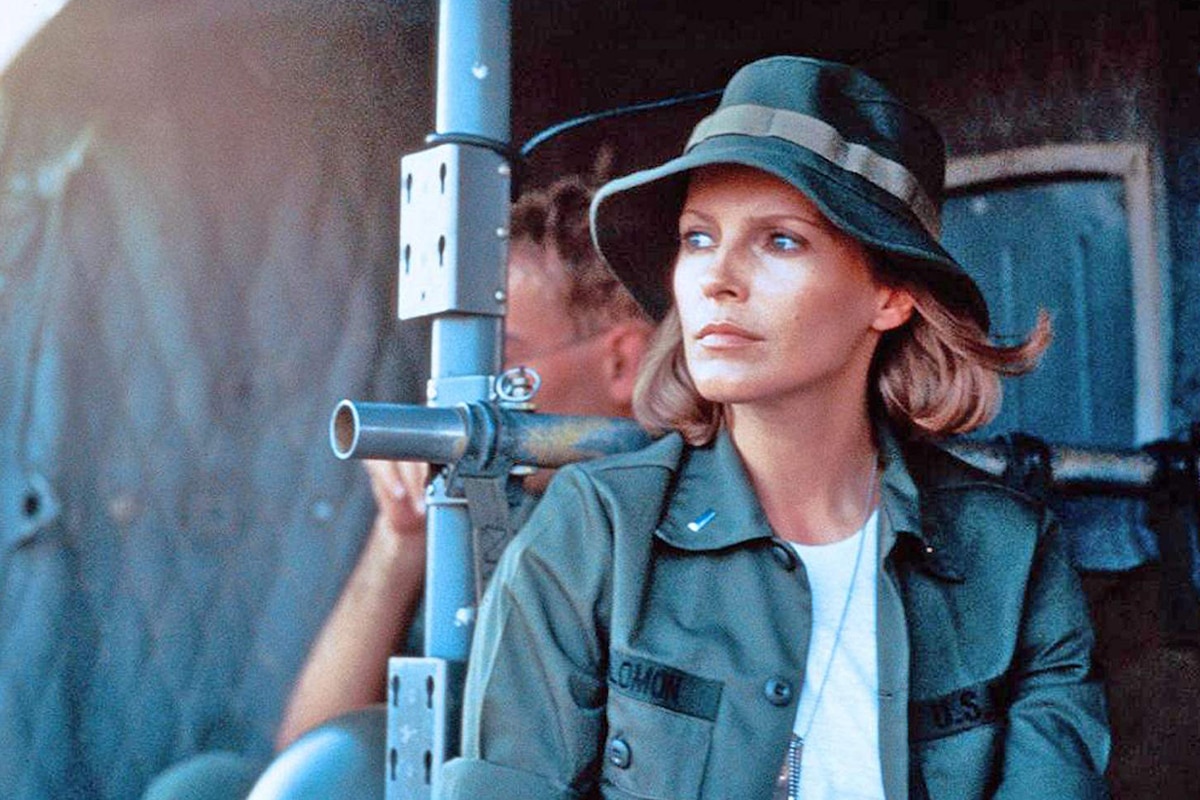
Furie aimed for intimacy this time around, focusing on the romance between Dr. Don Jardian (Ken Wahl) and Nurse Deborah Solomon (Cheryl Ladd), who are continually split up by the war. Furie had Ken Wahl in mind from the beginning of the script process but auditioned over one hundred actresses for the role of Deborah. It was Ladd's first starring role in a feature, though she had already become a TV sensation on Charlie's Angels. The Ladd Company was headed by Alan Ladd Jr., who was the half-brother of Cheryl's husband, David Ladd, who surely had some influence in the casting decision.
The film opened with the following dedication: "This film is dedicated to the 347,309 Americans who received the Purple Heart awarded for wounds suffered in the Vietnam Conflict." But the war, and the soldiers, are a backdrop to the central story here, which is a circuitous love story that takes place across Vietnam as Don and Deborah are continually thwarted in finding each other.
Don Jardian is a hotshot doctor who could have evaded the draft, but instead embraces his duty as a true test of skill. His path first intersects with Donna at a hospital in Da Nang, where she is working on one of his patients. Don is immediately attracted to her, but Donna keeps her distance, wary of being just one of Don's conquests. Upon return to base, Don can't get her out of his head, and he spends the rest of the movie moving heaven and Earth to get next to her again. His selfless passion eventually wins Debora over, but the war keeps getting in the way, as Don is recruited for a secret mission to free POWs, and Deborah's hospital comes under attack. Both of their deaths seem assured, but somehow their love endures.
The liveliest sections of the film involve the supporting characters - like Don's vulgar doctor buddy Wizard (Stephen Lee), who brings an off-kilter energy to the film. James Whitmore Jr. (the son of James Whitmore), who was also in The Boys in Company C, pops up as an idiosyncratic squad leader who leads the rescue mission. These were the kind of colorfully detailed performances that aided Company C but get limited screen time here.
Whether it was an inability to create chemistry between Wahl and Ladd, or too much of a reliance on coincidence in the plotting, Purple Hearts failed to catch on with critics or audiences. The reviewers were not kind. Roger Ebert gave the film half a star in the Chicago Sun-Times, writing, "This isn't war, this is bad plotting. And this isn't romance, it's soap opera." Janet Maslin at the New York Times wasn't much kinder, saying it has "an ending so contrived it may make your teeth ache." The box office returns didn't offer much solace either, as it took in $2,075,282, not enough to make back its budget.
By R. Emmet Sweeney
Purple Hearts
by R. Emmet Sweeney | March 03, 2020
SIGN UP FOR OUR NEWSLETTERS

CONNECT WITH TCM