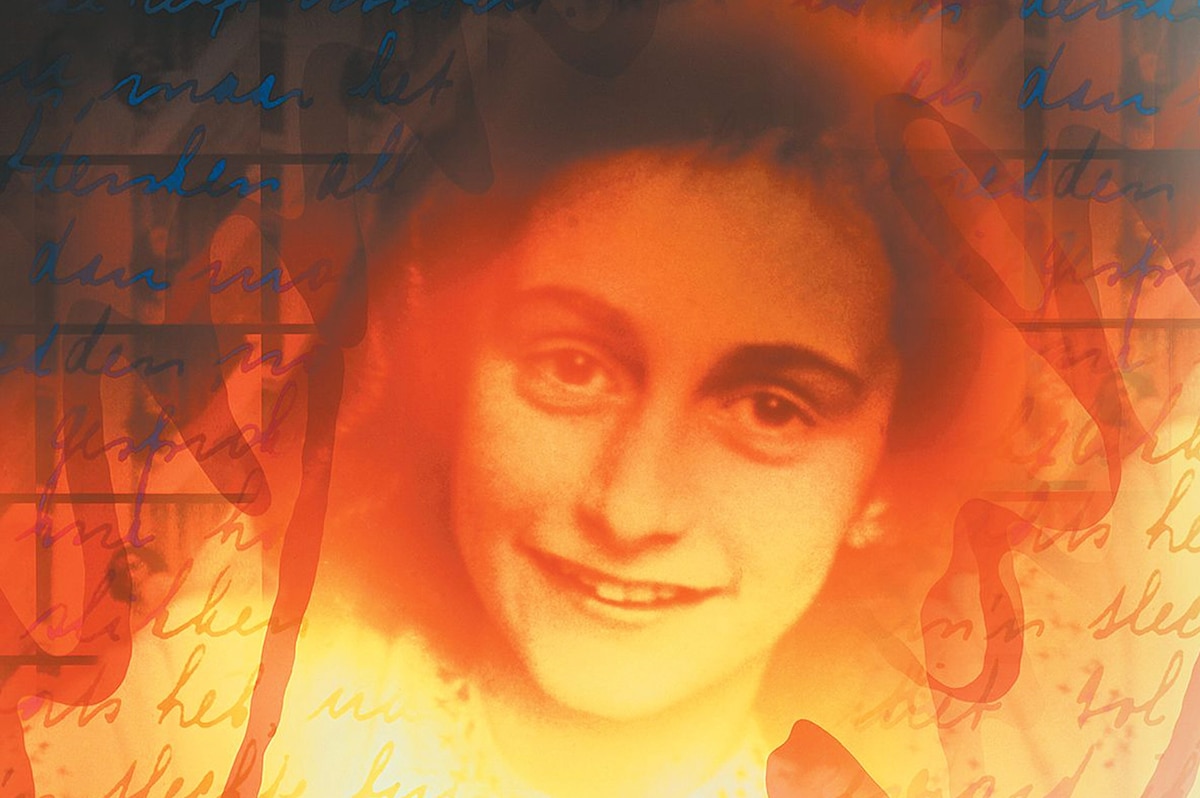
In 1995, Jon Blair wrote, directed and produced the feature-length documentary film Anne Frank Remembered, a touching and intimate portrait of one young girl's fear, strength, survival and tragedy amidst the horrific events of the Holocaust, based on the memoir The Diary of a Young Girl, published in 1947 and more commonly known as The Diary of Anne Frank. While Blair's documentary is based on Frank's personal account, the filmmaker was able to incorporate both new and archived interviews of surviving witnesses, relatives and acquaintances, including archival footage of Frank's father, Otto Frank, and two of her close friends, Hannah Goslar and Jaqueline van Maarsen. These interviews provide additional invaluable first-hand information that at the time of the film's release was new to audiences.
One of the many witnesses Blair managed contact with for the documentary was Hermine "Miep" Gies, the Dutch woman who was one of a few trusted allies who supported Anne Frank and her family by helping them go into hiding from the Nazis. By helping the Frank family and others seek refuge--including Fritz Pfeffer, Hermann van Pels, Auguste van Pels and Peter van Pels--Gies selflessly put her own life at risk as anyone caught harboring Jews would be subject to execution. When the Franks, Pfeffer and the van Pels were betrayed and captured by the Nazis (the source of their betrayal has long been debated with several theories, including the more recent theory that instead of betrayal it was simply a case of bad luck), Gies managed to find Anne Frank's notes and diaries before they were seized, of which she had absolutely no previous knowledge. Gies only found the diaries when she went to retrieve a cat that she knew was left behind in the hidden annex. With the intent of returning to Frank, Gies hid the diaries away for safekeeping.
Fortunately, Gies's life was spared and she remained in Amsterdam with her husband for the remainder of World War II. After the war, when Gies learned of Anne Frank's death, she met with Otto Frank to return the diaries. It was then that Gies informed him that she hadn't read his daughter's diaries out of respect for Anne's privacy. And it was a good thing Gies didn't; Anne named several individuals who assisted them, unintentionally putting them at risk. Had Gies read the diaries, she would have had no choice but to destroy them and we would be without this valuable first-person account. In addition to interviewing Gies for the documentary, Blair also captured an emotional meeting between her and Werner Peter Pfeffer, the son of Fritz Pfeffer.
In addition to new and archived interviews with witnesses and acquaintances, Blair filmed on-location at several places that were significant in Anne Frank's life, including her childhood neighborhood, the hiding place in Amsterdam where she and her family sought refuge and finally at two concentration camps: Auschwitz and Westerbork.
While Jon Blair produced, directed and wrote Anne Frank Remembered, the production of the documentary was very much a team effort. Blair collaborated with the Anne Frank House museum in Amsterdam, which also provided invaluable archival materials (including the only known video footage of Anne Frank, which Blair incorporated into the film), as well as television networks BBC and the Disney Channel. In addition to those collaborations, Blair received a great deal of support from filmmaker Steven Spielberg. In an interview with Blair by Sony Pictures Classics about the making of Anne Frank Remembered, Blair said that his and Spielberg's shared interest in Oskar Schindler brought them together. Blair wanted to research and follow-up on Schindler's story so that he could make a documentary. However, in order to do so, he had to first obtain the rights to the story.
According to Blair, Universal had obtained the rights and were hesitant to allow him to make the documentary. Once Spielberg became aware of the situation, he advocated on Blair's behalf. In 1983, Blair released the feature-length documentary Schindler, which was narrated by British actor Dirk Bogarde. A decade later, when Steven Spielberg was making his film Schindler's List (1993), he relied heavily upon Blair's documentary as source material. After Blair released Schindler, his first documentation of the Holocaust, he was approached to make Anne Frank Remembered. Despite his success with Schindler, Blair struggled with an extremely limited budget for the film. Fortunately, Spielberg stepped in and helped secure the rest of the financing needed to complete the film.
While Anne Frank Remembered is mainly comprised of archival and interview footage, it does feature narration from actors Kenneth Branagh and voiceovers from Glenn Close and Joely Richardson. The film won the Academy Award for Best Documentary Feature in 1996. During the ceremony, Jon Blair accepted the award alongside Miep Gies, bringing the entire audience to its feet for a lengthy standing ovation.
Director: Jon Blair
Written by: Jon Blair, based on diary entries written by Anne Frank
Producer: Jon Blair
Cinematography: Barry Ackroyd
Editing: Karen Steininger
Music: Carl Davis
Cast: Kenneth Branagh (narrator), Glenn Close (diary readings), Anne Frank (herself in archive footage), Joely Richardson (diary readings), Janny Brandes-Brilslijper (herself), Rose De Liema (herself), Sal De Liema (himself), Buddy Elias (himself), Bloeme Evers (herself), Miep Gies (herself), Werner Peter Pfeffer (himself) and Hannah Pick-Goslar (herself).
C-117min
Resources:
https://www.sonyclassics.com/annefrank/misc/interview.html
https://www.history.com/.amp/news/who-betrayed-anne-frank
By Jill Blake
Anne Frank Remembered
by Jill Blake | February 21, 2020
SIGN UP FOR OUR NEWSLETTERS

CONNECT WITH TCM