Hollywood films have dominated the global film market since the industry began, due to technological advances, bigger budgets, and, true to the United States' origin as a nation of immigrants, poaching the brightest talents from other countries. Then, as now, domestic film studios around the world had to work hard to remain competitive while at the same time retaining their national identity. Although Britain shared a common language with Hollywood, it wasn't enough to gain as firm a foothold in the United States as American films had in Britain. The issue was summed up by Gaumont-British studio head Michael Balcon in 1935, "It is necessary to bear in mind that in order to obtain a firm grip on the American market our pictures must bear comparison, not only with the average Hollywood product, but with the outstanding American films; this is our problem in a nutshell." At the same time, the British film industry felt threatened by "denationalization" due to the influence of Hollywood. Gaumont-British made a public commitment in 1934, with spokesman C.M. Woolf proclaiming, "Although our pictures will be made for the world market, it is our intention to make them as strongly British in sentiment as they are today."
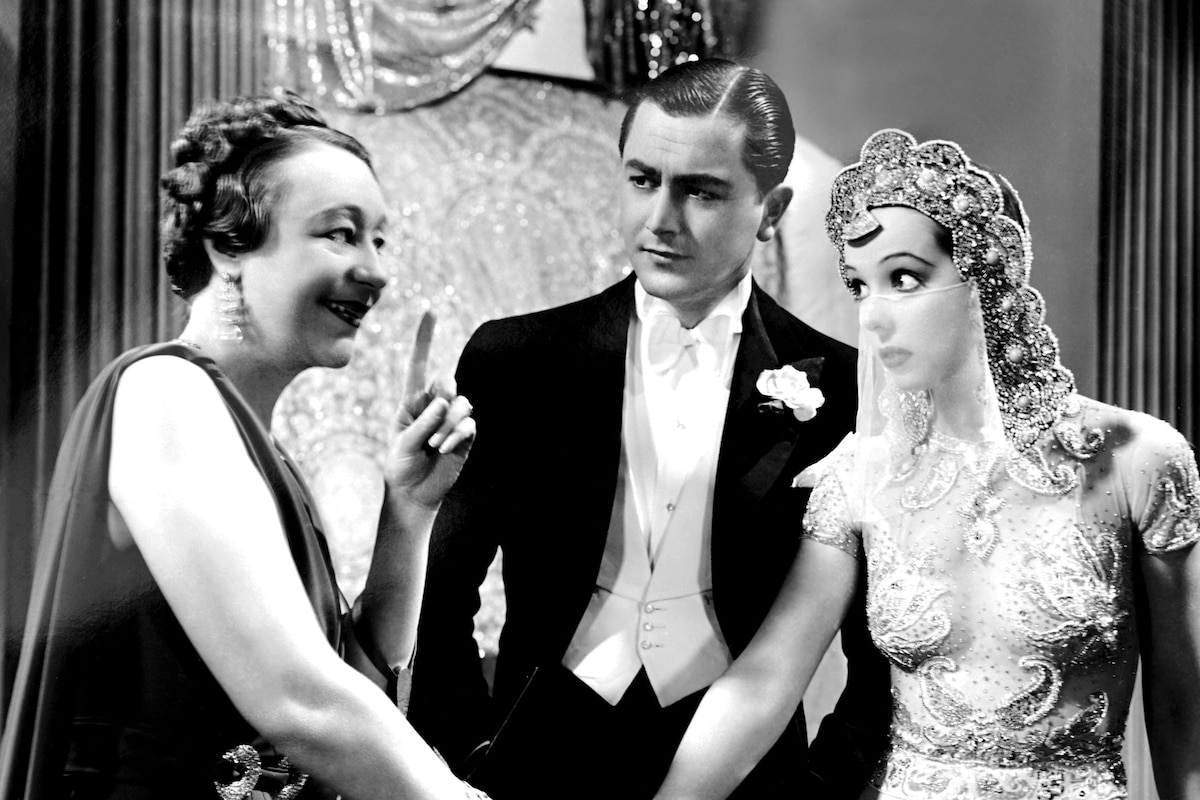
It's Love Again (1936) was Gaumont-British's attempt to sell their quintessentially British star, Jessie Matthews, to the American public. To do this, they created a Hollywood-style film, written by an American writer, Marion Dix, directed by Victor Saville, a British filmmaker who had worked extensively in Hollywood, and co-starring Hollywood leading man Robert Young. Paradoxically, Gaumont-British used the film to reinforce how shallow they thought Hollywood was. Dix's screenplay, co-written with British writer Lesser Samuels under the working title of Modern Masquerade reads like any other Hollywood comedy of the 1930s, and was particularly reminiscent of an Astaire-Rogers musical about mistaken identity. American gossip columnist Peter Carlton (Young, on loan from Metro-Goldwyn-Mayer) and his friend Freddie (Sonnie Hale, Matthews' real-life husband) plant fake stories in Peter's column about the high-flying adventures of "Mrs. Smythe-Smythe," the supposed wife of an Indian Maharajah who liked to hunt tigers. When chorus girl Elaine (Matthews) with aspirations for stardom makes a splash pretending to be the fictional Mrs. Smythe-Smythe, Peter and Freddie find themselves caught between wanting to expose her as a fraud and not wanting to be exposed as having created the fraud. Elaine, Peter and Freddie turn the deception into success but Elaine finds that it's not all it's cracked up to be. Jessie Matthews, a brunette who had scored big in the British industry through her comedic and musical talents, would make her last of five films with Saville with It's Love Again. Also in the cast are Sara Allgood, who would become a familiar face to Hollywood audiences as a reliable, dough-faced character actress, and Ernest Milton.
The film was shot at the Lime Grove Studios in the Shepherd's Bush section of London, which was reportedly the first facility built in Britain solely for film production in 1915. In the late 1940s, Lime Grove was bought by the BBC for use as a television studio, remained in commission until 1991, and demolished two years later.
Released in the United States on May 22, 1936 with a premiere in New York at the Roxy Theater, It's Love Again received positive reviews for Matthews as well as a healthy dose of criticism. Frank Nugent, writing for The New York Times opined that Gaumont-British had "yet to do full justice to Miss Jessie Matthews, first lady of England's musical comedy screen." Nugent felt that the studio had made Matthews carry the weight of what he called "a cumbersome and unevenly paced comedy. [...] [A]lthough she rises to the task with her accustomed loveliness, gayety and talent, she is unable to convert the picture into anything more than what the gentlemen of the drama department would call 'a personal triumph.' [...] It's Love Again reduces itself to Miss Matthews and, much as we approve her, it is top-heavy and not nearly as good as it might have been."
By Lorraine LoBianco
SOURCES:
Film Architecture and the Transnational Imagination. (n.d.).
Jessie Matthews Rescues the Roxy's 'It's Love Again' -- Mr. Runyon's 'Three Wise Guys' at the Capitol. (1936, May 23). Retrieved from https://www.nytimes.com/1936/05/23/archives/jessie-matthews-rescues-the-roxys-its-love-again-mr-runyons-three.html
It's Love Again
by Lorraine LoBianco | February 19, 2020
SIGN UP FOR OUR NEWSLETTERS

CONNECT WITH TCM