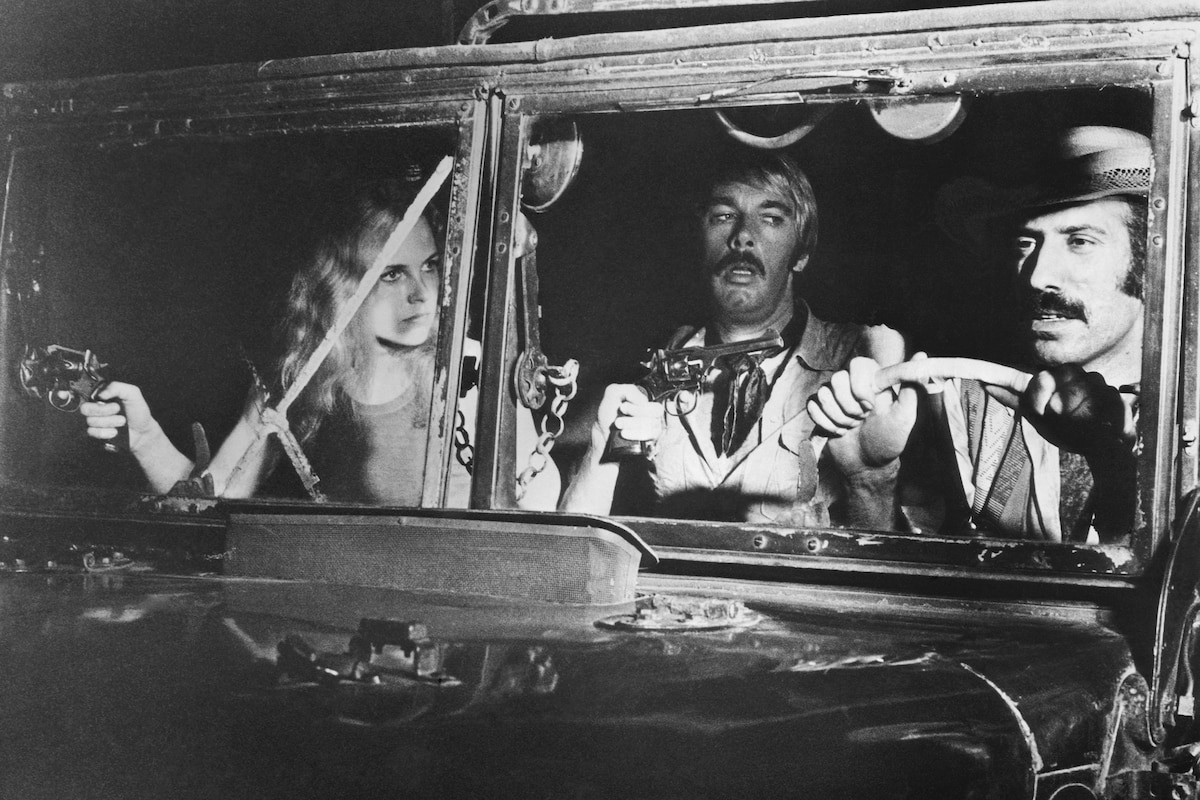
Though the Philippines was primarily known to American viewers in the 1960s as a hotbed for low-budget but successful horror films like Mad Doctor of Blood Island (1968), enterprising drive-in mavens soon realized the potential for a far broader range of genre offerings in the following decade. No film played a more vital role in this transition than The Big Doll House, which unspooled in U.S. theaters from coast to coast through the spring and summer of 1971. Women in prison films had certainly been around for a while, ranging from respectable, Oscar-winning fare like I Want To Live! (1958) to Jess Franco's grubby 99 Women (1969), but this variant was the one that really found the right formula for sex, violence, racial diversity and women's empowerment (to some degree or another) that would define the women in prison (or WIP) trend well into the 1990s.
Much of this film's effectiveness can be attributed to the winning combination of director Jack Hill and producer Roger Corman, who released this through his nascent company at the time, New World Pictures. Founded in 1970, New World was Corman and his brother Gene's effort to go on his own after many successful years at American International Pictures where he struck gold with a string of Edgar Allan Poe adaptations mostly starring Vincent Price. New World enjoyed its first hit with only its second release, Stephanie Rothman's The Student Nurses (1970), which established the sexy nurse wave that would become a reliable breadwinner for New World, but The Big Doll House wasn't too far off as it emerged from the studio's stable alongside such films as The Velvet Vampire and Lady Frankenstein that same year. Corman had purchased a script by James Gordon White in June of 1970, The Big Doll House, and asked Rothman and her husband, Charles S. Swartz, to take the reins at New World while he was off shooting Von Richthofen and Brown (1971) in Ireland. Initial attempts between Rothman, Swartz, New World story editor Frances Doel and Hill to come up with an overhaul of the White script proved unfruitful, so The Student Nurses scribe Don Spencer was brought aboard to pen what would become the final screenplay. Upon Corman's return, Rothman declined to direct the feature and so duties fell to Hill, who had worked in various capacities on Corman projects dating back to The Terror (1963) and the incredibly convoluted Blood Bath (1966).
All of the necessary elements are already in place here, including sadistic wardens, resourceful prisoners, outlandish punishments including novel use of a hanging snake and an ambitious escape attempt involving Hill's most beloved acting mascot, the late Sid Haig, who had stolen the show in Spider Baby (1967). The cast is a drive-in who's who including Judith Brown from Psychic Killer (1975) and Willie Dynamite (1974), the much-loved Roberta Collins from Wonder Women (1973) and the greatest of all WIP films, Caged Heat (1974), Pat Woodell from The Twilight People (1972), Christiane Schmidtmer from The Giant Spider Invasion (1975), and exploitation's closest answer to Bette Davis, Kathryn Loder, whose short but unforgettable career capped off with her turn as the villain in Foxy Brown (1974).
However, the most indelible performance in this film comes from Pam Grier in her first speaking role. The North Carolina native had gotten her start as a switchboard operator at AIP and made such an impression here as a prison snitch that Hill retained her for his next WIP title for New World, The Big Bird Cage (1972), shot in the Philippines, as well. Grier even performs this film's theme song, "Long Time Woman," which was prominently used in her starring vehicle for Quentin Tarantino, Jackie Brown (1997). The Hill-Grier partnership proved so successful that AIP kept them together for two of the most popular films of the black action cycle, Coffy (1973) and Foxy Brown (1974), which made her a prime box office draw for the studio. An action film pioneer, scholar and skilled dramatic actress, Grier has since enjoyed a long and lustrous career that now seems predetermined after this powerhouse curtain raiser.
By Nathaniel Thompson
The Big Doll House
by Nathaniel Thompson | February 13, 2020
SIGN UP FOR OUR NEWSLETTERS

CONNECT WITH TCM