"Yes, folks, this isn't any cheap X-rated movie or any fifth-rate porno play. This is the show you want! Lady Divine's Cavalcade of Perversions, the sleaziest show on Earth! Not actors, not paid impostors, but real actual filth who have been carefully screened in order to present to you the most flagrant violation of natural law known to man! These assorted sluts, fags, dykes and pimps know no bounds! They have committed acts against God and nature, acts that by their mere existence would make any decent person recoil in disgust!"
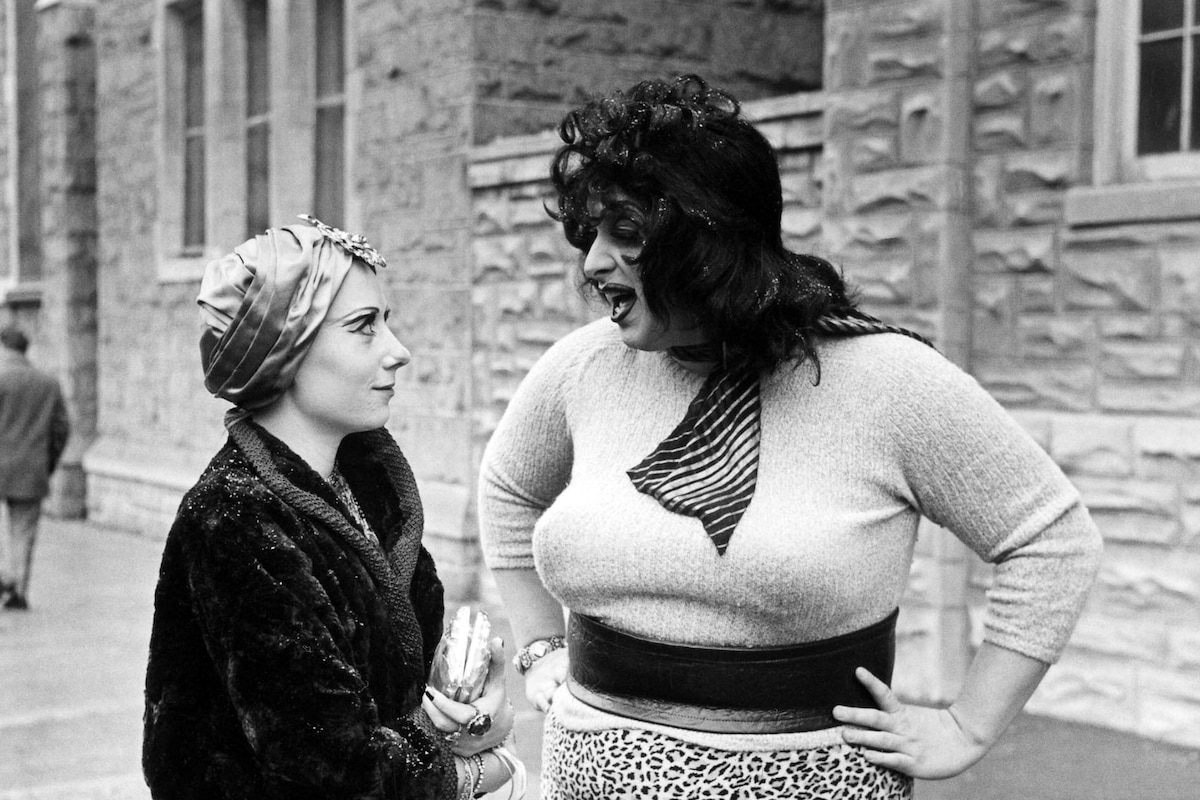
David Lochary, Multiple Maniacs (1970)
Director-producer-writer-cinematographer-editor John Waters followed his debut feature, Mondo Trasho (1969), with this 1970 paean to perversion in all its many forms, from bicycle-seat licking to murder. Although initially dismissed by most reviewers as an exercise in brutality, it has now achieved cult status with critics hailing it as an essential step in the development of the aesthetic that would inform his breakout feature, Pink Flamingos, two years later.
Multiple Maniacs follows the twisted career of Lady Divine (Divine), who runs a traveling sideshow called "The Cavalcade of Perversion" with her lover, Mr. David (David Lochary). Bored with their routine, in which they shock customers who get in free and then rob them at gun point, she kills one group for the thrill of it. She then learns from bar owner Edith (Edith Massey) that Mr. David is cheating on her and plotting her murder. This leads to revenge and ever-escalating sexual perversions.
Waters refers to Multiple Maniacs as a "cinematic atrocity" and claims to have made it to counter the love and peace of the hippie era with a film glorifying violence. The film's title is a tribute to Herschell Gordon Lewis' goresploitation classic Two Thousand Maniacs! (1964). Waters drew other inspiration from a variety of sources, including surrealistic painter Salvador Dali, underground filmmaker Jack Smith and his own consumption of LSD and marijuana. He got the idea for the giant lobster that rapes Divine from a postcard depicting a lobster floating over the Provincetown, RI, beach. At the time, Divine had garnered publicity by jokingly claiming to have been responsible for Sharon Tate's murder, and the film originally was to have ended with the implication that she had run off to Hollywood to commit that crime. When the Manson family was revealed as the real perpetrators, Waters changed the ending. He retained lines in which Lady Divine accuses Mr. David of committing the Manson murders.
As with most of his early films, Waters shot the picture in Baltimore, usually without applying for permits, with a group of recurring actors referred to as The Dreamlanders. They included Divine, Lochary, Massey, Cookie Mueller, Mary Vivian Pearce and Mink Stole. Working on a small budget (about $5,000 borrowed from his father), Waters' cast used their own clothing. Lady Divine's fur coat had been a Christmas present from Waters. Edith's bar was the bar where Massey actually worked and Lady Divine's apartment was Waters' own, decorated with posters from the exploitation films he loves. He borrowed the camera from a local TV news crew, and the credits were written on shelving paper. The film was his first with a synchronized soundtrack, shot in black-and-white on 16mm film. Waters was so concerned about recording sound on film that he had his actors shout most of their lines.
The film premiered in a Baltimore church on April 10, 1970, after which Waters personally took the print to arthouses around the country, often having to pay a deposit to screen the film as a midnight movie. It debuted in England in 1971. Early reviewers praised the film's humor but decried its brutality. Even after the success of later features like his next pictures, Pink Flamingos and Polyester (1981), Multiple Maniacs was often dismissed as revolting and offensive, words Waters would have considered high praise. The film grossed a little over $33,000, though that represents more than six times its cost, something few Hollywood films can claim.
Janus Films and the Criterion Collection restored the film in 2016. This was a major accomplishment, since the original printing elements had been stored in a closet and then an attic for decades. Because of rights problems, two Elvis Presley songs were replaced with music by George S. Clinton. For the reissue, Janus used the tag line "Filmed in Baltimore, where life is cheap-er," a parody of the tagline for Snuff (1975): "A film that could only be made in South America, where life is CHEAP!" Time Out hailed the restoration and called the film "an anarchist masterwork from an artist who has doggedly tested the limits of taste for decades."
Director-Screenplay-Producer: John Waters
Cinematography: Waters
Score: George S. Clinton
Cast: Divine (Lady Divine), David Lochary (Mr. David), Mary Vivian Pearce (Bonnie/Cavalcade Patron), Mink Stole (Mink/Cavalcade Patron), Cookie Mueller (Cookie Divine/Cavalcade Patron), Edith Massey (Edith/Virgin Mary)
By Frank Miller
Multiple Maniacs
by Frank Miller | December 18, 2019
SIGN UP FOR OUR NEWSLETTERS

CONNECT WITH TCM