Despite the title of Boston Blackie Goes Hollywood (1942), Jack Boyle's immortal character Boston Blackie, who first appeared in published stories in 1914, actually "went Hollywood" many years earlier. The first film depiction of the ex-con safecracker and gentleman thief was Bert Lytell in two pictures in 1918 and 1919. Blackie appeared several more times over the following decade (often portrayed by Lionel Barrymore). After a hiatus, the character was revived by Columbia Pictures in Meet Boston Blackie (1941), starring Chester Morris in the role he would create 13 more times over the next eight years (not counting radio appearances as the character). The character resurfaced in the 1950s in a TV series starring Kent Taylor.
Although he had been in films since 1917, Boston Blackie Goes Hollywood was by far Morris's most successful screen venture. After the Blackie series ended in 1949, he worked almost exclusively in television for most of the remainder of his career. He was appearing in a regional theater production in Pennsylvania in September 1970 when he died of a barbiturate overdose, one month before the release of his first major big screen role in years, The Great White Hope (1970).
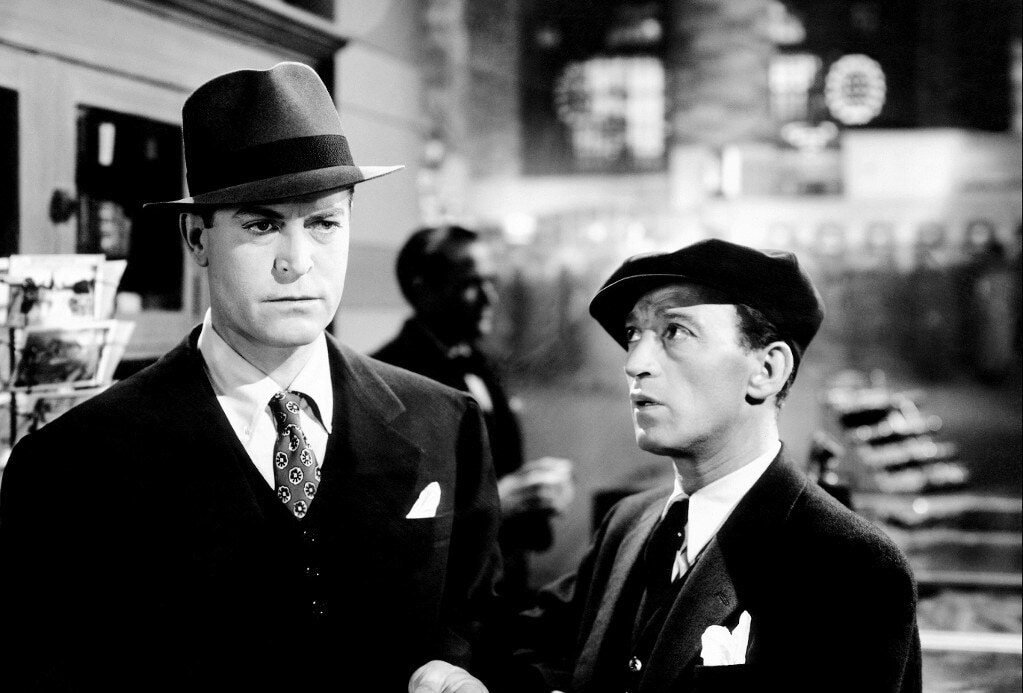
Boston Blackie Goes Hollywood was the fourth film in the series, and it finds Blackie and sidekick The Runt heading west transporting $60,000 and avoiding capture on suspicion of having stolen a valuable diamond. The Runt, Blackie's dimwitted ex-jailbird pal, was along for comic relief on all 14 films, and so was Blackie's chief nemesis, Inspector Farraday. The plot in this installment is set partly in motion by Blackie's eccentric millionaire friend Arthur Manleder, who usually did more inadvertent harm than good in the many movies in which he appeared.
A stage actor and director, Michael Gordon broke into movies in 1940, first as a dialogue director, then a film editor. Boston Blackie Goes Hollywood was his debut as a feature film director. Despite some highly praised work over the next decade-Another Part of the Forest (1948), a prequel to The Little Foxes (1941), and Cyrano de Bergerac (1950), which won an Oscar® for Jose Ferrer-Gordon's career was derailed for a time by the Hollywood blacklist of the 1950s. Universal producer Ross Hunter broke the ban by hiring Gordon for the hugely successful Doris Day-Rock Hudson comedy Pillow Talk (1959), and he had a moderately successful career for another dozen or so years, doing mostly glossy, big-budget comedies.
Director: Michael Gordon
Producer: Wallace MacDonald
Screenplay: Paul Yawitz, based on the character created by Jack Boyle
Cinematography: Henry Freulich
Editing: Art Seid
Art Direction: Lionel Banks
Cast: Chester Morris (Horatio "Boston Blackie" Black), George E. Stone (Runt), William Wright (Slick Barton), Constance Worth (Gloria Lane), Richard Lane (Inspector John Farraday), Forrest Tucker (Whipper).
BW-68m.
by Rob Nixon
Boston Blackie Goes Hollywood
by Rob Nixon | January 30, 2007
SIGN UP FOR OUR NEWSLETTERS

CONNECT WITH TCM