Repeat Performance (1947) was one of two films actress Joan Leslie made as a contract player for Poverty Row studio Eagle-Lion Films. Leslie had just severed ties with her home studio Warner Bros. She had grown frustrated with the quality of roles and felt strongly that they did not take her seriously as an actress. She sued the studio for top billing in Two Guys from Milwaukee (1946), and when that didn't happen she wanted out of her contract. Her lawyers argued that her studio contract, made when Leslie was still a minor, was not legally binding but in the end the California Supreme Court ruled in favor of Warner Bros. Leslie was released from her contract in May of 1946 but continued her battle with the studio. According to Warner Bros. historian Daniel Bubbeo, Leslie claimed that the studio 'intended to implant in the minds of the theatrical profession that she had lost her position as a star actress by reason of inferior ability.' Now as a free agent, the star went to work for Eagle-Lion. Actress Constance Dowling had just left Eagle-Lion because of her own dissatisfaction with her roles and Leslie replaced her as the lead in Repeat Performance. Eagle-Lion was eager to showcase their new star and they elevated what would have been a low-budget film to a big budget production.
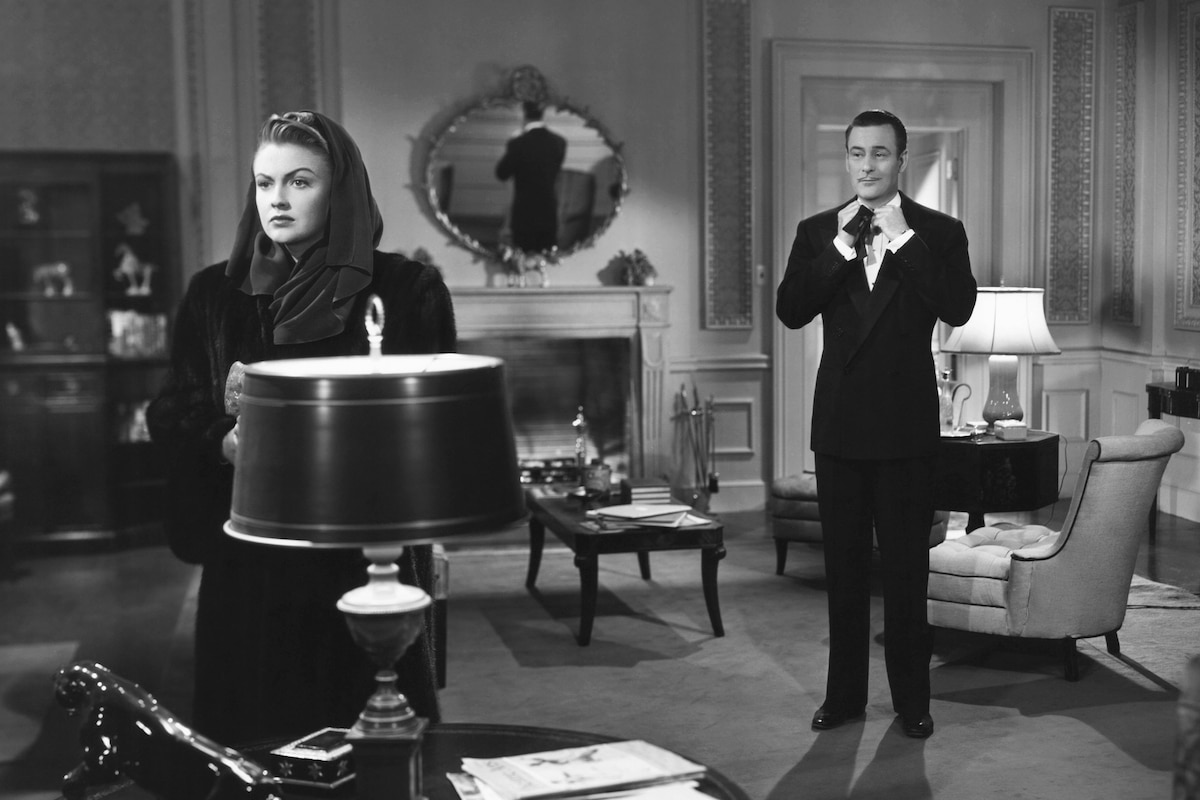
Based on the novel by crime author William O'Farrell, Repeat Performance is a flimsy film noir bolstered by an intriguing conceit. Leslie stars as Sheila Page, an actress who murders her husband just before midnight on New Year's Eve. She's mysteriously transported back in time by one year to relive and possibly alter the events leading up to the murder. The film was directed by Alfred L. Werker who had just come from 20th Century-Fox to work for Eagle-Lion. O'Farrell's story was adapted by Walter Bullock, a songwriter and composer who also moonlighted as a screenwriter. South African actor Louis Hayward plays opposite Leslie as her husband Barney Page, a theatrical producer with a penchant for booze, women and violence. Hayward's career had peaked in the 1930s when he worked for MGM, Warner Bros. and RKO and he had a notable part in Anthony Adverse (1936). He was deeply affected by his time served in WWII, and he never attained the level of success reached by his former wife, actress and director Ida Lupino. According to Noir Alley host Eddie Muller, the role of Barney mirrored Hayward's own personal and professional decline. Other notable cast members include Richard Basehart in his screen debut as William Williams, a poet who time travels with Sheila, as well as Tom Conway, who plays John Friday, a wealthy playboy and rival love interest.
Unfortunately, Repeat Performance was dead in the water before it even premiered. Leslie's contentious battle left a bad taste in the mouths of the powers that be, and they refused to screen Repeat Performance which limited the number of theaters where the film could play. The Hollywood Antitrust Case was just a year away and Warner Bros. still ran their own theaters. Eagle-Lion tried to capitalize on their star as a sexy ingenue with suggestive poster art, including a New York City billboard that depicted Leslie brandishing a gun while wearing an outfit that didn't leave much to the imagination. Leslie was horrified and demanded the billboard be taken down. Eagle-Lion refused.
The film premiered in May 1947 in Zanesville, Ohio, Richard Basehart's home town. It received poor reviews and was not a hit at the box office or with the critics. New York Times film critic Bosley Crowther wrote, "not only is dramatic credibility completely lacking in all this stew but the whole thing is done with such pretension that even the possible salve of ridicule is missed... Joan Leslie plays the tortured female with childish anxiety and Louis Hayward plays her no-good husband in the heaviest melodramatic blackguard style."
Repeat Performance didn't make a splash back in 1947 but it continues to linger in the minds of generations of viewers who have seen it since. At the 2013 Seattle Noir City premiere of the film, Eddie Muller called the film a "film noir version of It's a Wonderful Life (1946)." He went on to say that "over the years [many people] have told me about seeing Repeat Performance when they were young and it stuck in their mind. There is something about the premise of this film..." The introductory voiceover read by John Ireland and the conceit is also a memorable precursor to Rod Serling's hit TV show The Twilight Zone. Repeat Performance has since been remade as the TV film Turn Back the Clock (1989) with Joan Leslie in a cameo role. Leslie was a featured guest at a 2011 Noir City event and by sheer luck a 16mm print purchased by a private collector was made available just in time for the screening. Bad prints of the film have circulated over the years and this newly discovered 16mm print was in much better condition. Repeat Performance has since been restored by the Film Noir Foundation in conjunction with the Packard Humanities Institute.
By Raquel Stecher
Repeat Performance
by Raquel Stecher | November 19, 2019
SIGN UP FOR OUR NEWSLETTERS

CONNECT WITH TCM