The Black Sleep was one of several pictures produced in the 1950s by Howard W. Koch and Aubrey Schenck through their Bel-Air Productions, and distributed by United Artists.
Reginald Le Borg had directed several horror films at Universal in the 1940s, including The Mummy's Ghost (1944), and several in the "Inner Sanctum" series, such as Calling Dr. Death (1943), Weird Woman, and Dead Man's Eyes (both 1944). All of these films starred Lon Chaney, Jr. later a prominent co-star of The Black Sleep.
The screenwriter of The Black Sleep, John C. Higgins, wrote several low-budget crime movies in the late 1940s. Several of these films were directed by Anthony Mann and are now considered classics of Film Noir: Railroaded! (1947), T-Men (1947), Raw Deal (1948), and Border Incident (1949).
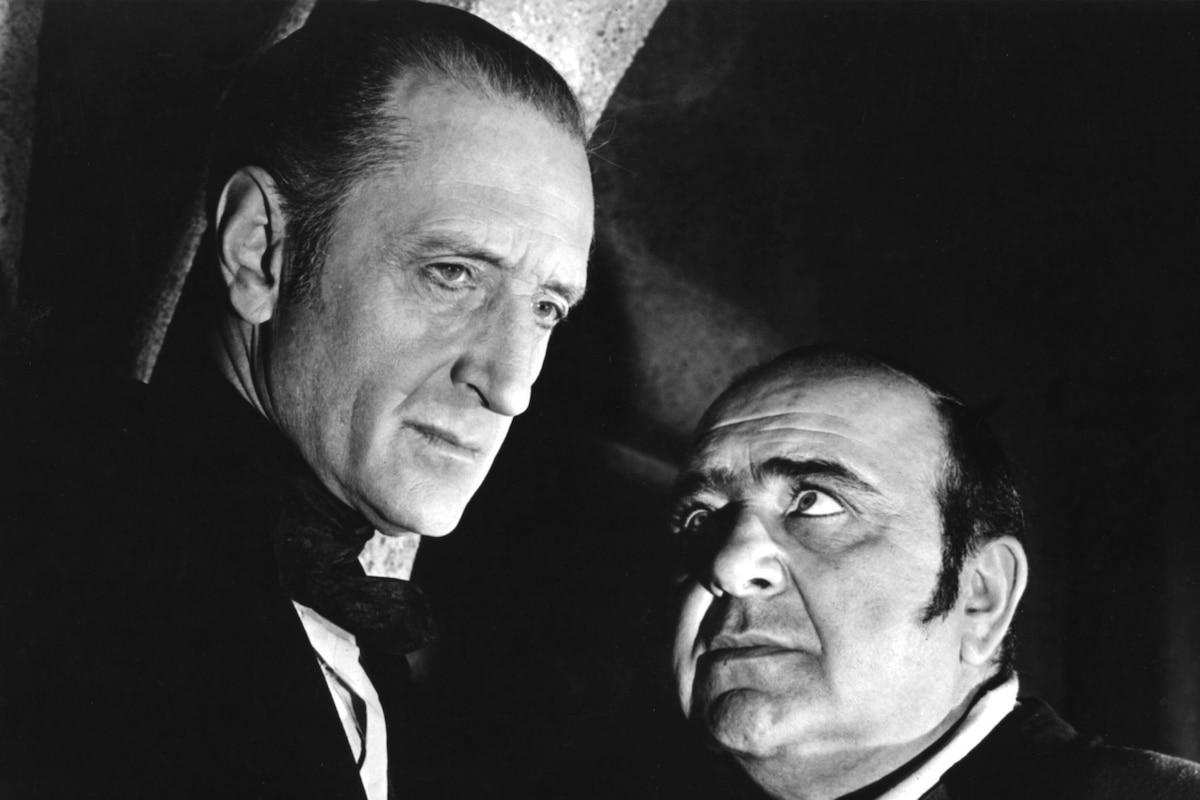
Peter Lorre was sought out for the role of Odo the Gypsy in The Black Sleep, but his asking price was too high. Akim Tamiroff played the part instead.
The torn and tattered shirt that John Carradine wore in The Black Sleep was from his own wardrobe collection; he had worn it in over 200 performances on the stage, as Jeeter in the play Tobacco Road.
United Artists turned on the publicity machine for The Black Sleep before the film was even finished. On February 23, 1956, the final day of shooting, a publicity stunt was staged in which John Carradine, Tor Johnson, Bela Lugosi, and other actors from the film's rogues gallery pulled up next to the Hollywood restaurant Tail o' the Cock, and proceeded to go in and dine in full horror make-up from the film, mind you in front of other lunchtime patrons. Photographers were in tow to capture the moment for the newspapers.
To further publicize The Black Sleep, a west coast tour was set up in early June, 1956, hitting San Francisco, Portland, and Seattle. Horror TV-show hostess Vampira made personal appearances in theaters along with cast members Bela Lugosi, John Carradine, Tor Johnson, and Lon Chaney, Jr.
On the first night of the publicity tour, in San Francisco, Tor Johnson was sharing an upper-floor hotel room with Bela Lugosi. Lugosi had been drinking and was apparently despondent. He kept muttering that he just "wanted to die." The story, as related by Johnson and other witnesses, goes that Tor, growing tired of Bela's whining, grabbed the elder actor by the collar and hung him over the open hotel window several stories up, and asked, "Is this what you want, you miserable Hunkie?" Bela admitted that he wanted to live after all, so Tor brought him back in.
For the New York opening of The Black Sleep, life-sized wax figures were made of Basil Rathbone, John Carradine, Lon Chaney, Bela Lugosi, Akim Tamiroff, and Louanna Gardner (who played the comatose Angelina Cadman). The figures cost United Artists $20,000 to produce, and they were shipped to New York in individual coffins!
The Black Sleep had its opening in Los Angeles on June 27, 1956. Accompanying Bela Lugosi to the screening were his wife Hope and friend Forrest J. Ackerman. Ackerman later said that while Lugosi was "broken" and "decrepit" at the time, he saw a great change when a local TV camera crew appeared to interview the actor: "...the eye of Hollywood was upon him and the limelight was shining so right before my eyes he changed! ...It just seemed like he filled out and rose three or four inches taller. He was proud and strong as he strode towards the waiting television camera, and once again the magic and charisma of the great Count Dracula was pouring out for the public."
Bela Lugosi died less than two months later, on August 16, 1956.
United Artists released The Black Sleep on a double-bill with The Creeping Unknown (1956), which was the American re-edit of the 1955 British film directed by Val Guest, The Quatermass Xperiment. The double feature grossed more than $1,600,000 in less than a year of release. The earnings were impressive considering the production cost of the pair of films totaled less than $400,000.
A year after The Black Sleep was released, the same producers and director made Voodoo Island (1957), which starred Boris Karloff. Karloff was practically the only horror actor of the day that was not featured in The Black Sleep.
The Black Sleep was reissued in 1963 under the title Dr. Cadman's Secret.
Compiled by John M. Miller
SOURCES:
AFI
The Films of Basil Rathbone: His Life and His Films by Michael B. Druxman
The Psychotronic Encyclopedia of Film
The Immortal Count: The Life and Films of Bela Lugosi by Arthur Lennig
Attack of the Monster Movie Makers: Interviews With 20 Genre Giants by Tom Weaver
The Horror People by John Brosnan
The Monster Show: A Cultural History of Horror by David J. Skal
John Carradine: The Films by Tom Weaver
In the Know (The Black Sleep) - TRIVIA
by John M. Miller | January 02, 2007
SIGN UP FOR OUR NEWSLETTERS

CONNECT WITH TCM