The Adventures of Ozzie and Harriet debuted on CBS radio in October 1944. A comedy about the lives of the Nelson family, starring real-life Ozzie and Harriet Nelson, the radio series was just the beginning of what would grow into a multimedia pop cultural force over 20 years. In 1949, the Nelsons' two sons, David and Ricky, joined the show. In October 1952, the Nelson family brought the show to TV, under the same title, for a series that remains the longest live-action sitcom ever to run on American television. But just before the TV series, there was also a movie.
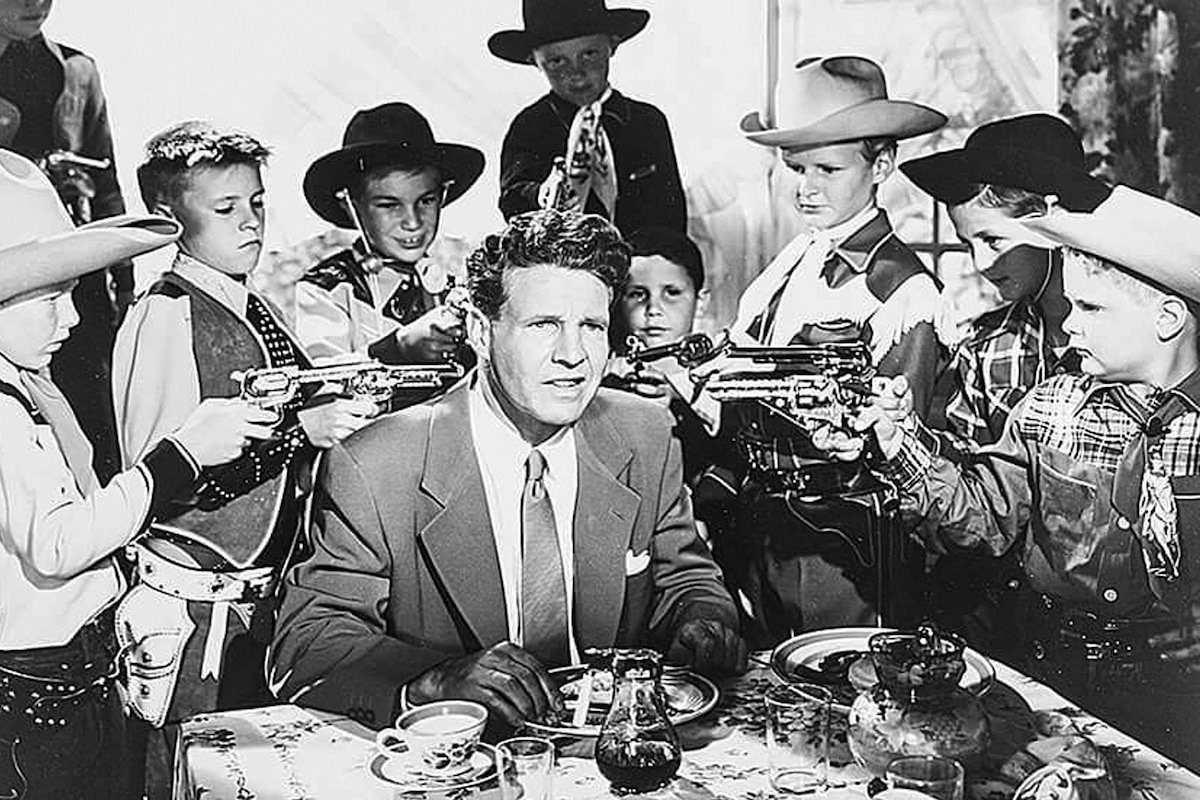
Entitled Here Come the Nelsons (1952), it was made as a way for Ozzie and Harriet to see if their type of comedy would translate to the screen. They had long wanted to move their show to television and figured a modest movie could serve as a useful test of sorts. A respected Universal producer, Aaron Rosenberg, was interested in making the picture and so Ozzie, his brother Don, and Bill Davenport set about constructing a script.
They wrote it in spring 1951, and cameras rolled that August. The film opened in February 1952 to decent reviews. "A good family comedy," said Variety. "Pleasant, easy to take," declared The Hollywood Reporter. "Laughs come from characterizations and situations rather than the dialogue." And from Boxoffice magazine: "Wholesomeness is the forte of this diverting comedy that will displease no one." More importantly for Universal and the Nelsons, however, the movie was a clear hit.
Producer Rosenberg smartly cast the supporting roles with recognizable, popular actors such as Jim Backus, Sheldon Leonard, rising contract player Rock Hudson and Barbara Lawrence, an actress who just three years earlier had her name above the title on a major Preston Sturges comedy, Unfaithfully Yours (1948), but who now was fading quickly from the big screen.
Film critic Hal Erickson later pointed out that Ozzie Nelson was also using this movie as a way "to test out what wouldn't work on television." For instance, in the film, we learn that Ozzie works as a writer at an ad agency, but no specific job is ever mentioned on the TV show. (He later said that was because he concluded a wider audience would then be able to identify with his character.) Also in the film, Ozzie and Harriet argue bitterly, the two boys are kidnapped by crooks and an action set piece concludes the story--all of which are the kinds of things that would not be written into the more benign television show.
The movie's story revolves around Ozzie coming up with an ad campaign for a line of women's girdles, which pays off in the kidnapping plot thread when he deploys a mountain of undergarments on a road during a car chase. The film is different enough from the television show that Erickson described it as "Ozzie and Harriet for people who don't like Ozzie and Harriet." He also wrote: "Both Ozzie and David [Nelson]...credited the sensitive direction of Fred de Cordova for the youngsters' excellent performances, but in all fairness de Cordova had the advantage of working with a pair of juvenile actors bubbling over with charisma and charm." Indeed, Ricky Nelson in particular would later in the 1950s become so popular as a singing star that Universal re-released Here Come the Nelsons in 1959 to take advantage.
"It seemed to come off amazingly well," Ozzie Nelson later wrote of this film, "especially those scenes involving the boys. Most importantly from our standpoint, however, was that it demonstrated to us that our type of comedy projected just as well on the screen as it did on radio, and that the transition from radio to television would not be too difficult."
Ozzie also wrote that he had wanted rising starlet Marilyn Monroe for the Barbara Lawrence role, but the studio couldn't obtain her.
Supporting actors Jim Backus and Ann Doran, who play husband and wife, would do so again in Monogram's low-budget The Rose Bowl Story (1952) and then for a third time in Warner Bros' Rebel Without a Cause (1955), an all-time classic.
SOURCES:
Philip Bash, Teenage Idol, Travelin' Man
Hal Erickson, From Radio to the Big Screen: Hollywood Films Featuring Broadcast Personalities and Programs
Ozzie Nelson, Ozzie
By Jeremy Arnold
Here Come the Nelsons
by Jeremy Arnold | September 16, 2019
SIGN UP FOR OUR NEWSLETTERS

CONNECT WITH TCM