"The human mind is like Salome at the beginning of the dance -- hidden from the outside world by seven veils. Veils of reserve, shyness, fear. Now with friends the average person will drop first one veil, then another, maybe three or four altogether. With a lover, she will take off five or even six. But never the seventh. The human mind likes to conceal its nakedness too and keep its private thoughts to itself. Salome dropped her seventh veil of her own free will, but you will never get the human mind to do that. And that is why I use narcosis. Five minutes under narcosis and down comes the seventh veil."
Thus saith psychiatrist Dr. Larsen (Herbert Lom) at the beginning of Compton Bennett's British classic The Seventh Veil (1945). Larson is preparing to treat a beautiful pianist, Francesca Cunningham (Ann Todd), who has escaped from a nursing facility, attempted suicide by leaping from a bridge, and is now strapped to a bed, unresponsive. Using the peculiar metaphor of undressing to explain psychoanalysis, Larson rolls up his sleeves and prepares to strip Cunningham's mind bare: "A surgeon doesn't operate without first taking off the clothes. Nor do we, the mind." There follows a series of flashbacks in which Cunningham's life is recounted, and the viewer, with Dr. Larson, must sift through her romantic entanglements and personal setbacks to find the source of her psychological distress.
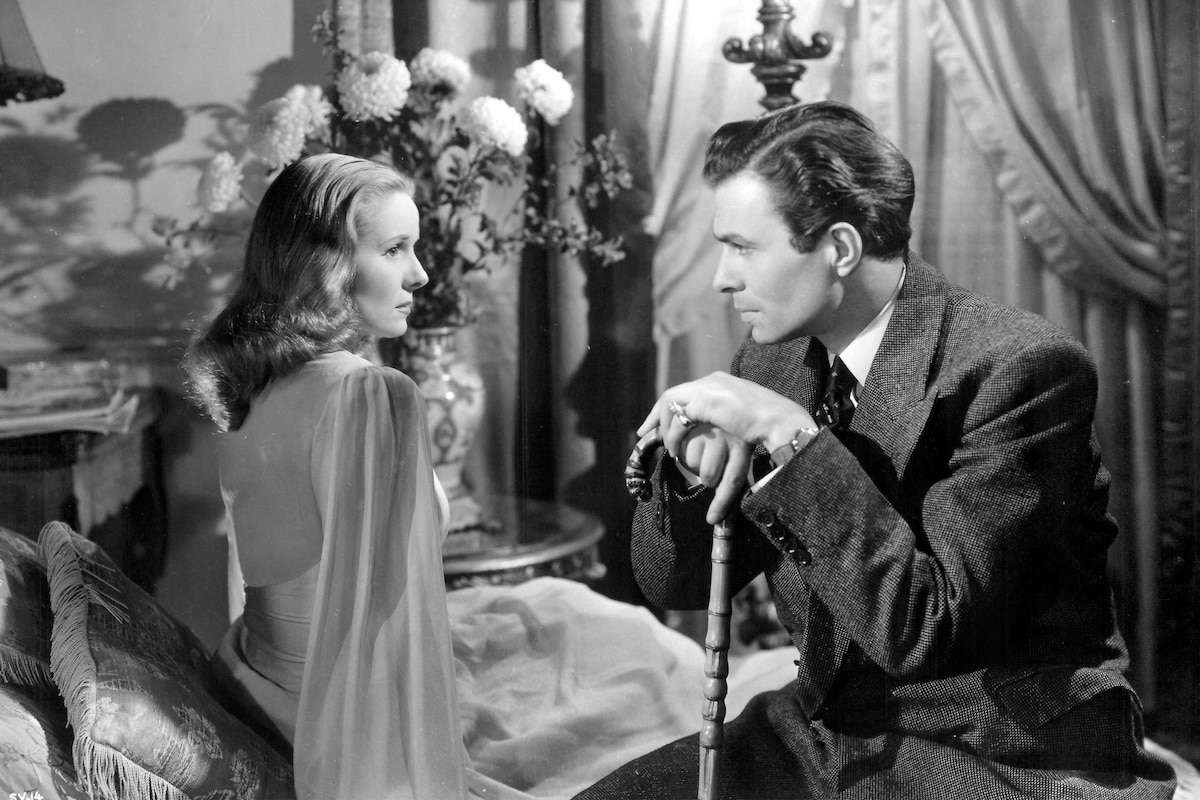
As a teenager, she is taken into the home of a mysterious distant relative, Nicholas (James Mason), and the film takes on shades of Rebecca (1940), as the wide-eyed naif struggles for the affection of the cold-hearted, domineering lord of the manor. With an iron fist, Nicholas encourages her to pursue the piano and, under the influence of her Svengali, Francesca's talents flourish. The other men who enter her life include Peter (Hugh McDermott), a struggling American musician who becomes a swing band conductor, and Max (Albert Lieven), a celebrated artist with a fear of commitment. When Francesca attempts to flee from Nicholas's control, he smashes her hands with a cane, which plunges her into the psychological turmoil from which Dr. Larsen must rescue her. The truth that lies beneath the seventh veil will reveal not only the identity of the man she truly loves... but the man who cares most for her.
The British Film Institute maintains a list of "Ultimate Films," in which motion pictures are ranked according to the quantity of tickets sold in the UK, regardless of price. By this system The Seventh Veil is (for British audiences) the tenth most popular film ever made. With an estimated attendance of 17.9 million persons, it edged out such blockbusters as Jaws (1975), Jurassic Park (1993), as well as the Harry Potter and Lord of the Rings series.
Ann Todd was a familiar face to British filmgoers when she made The Seventh Veil, having worked in the industry for almost fifteen years, but without a major success. Following the film's release, she co-starred with Gregory Peck in Alfred Hitchcock's The Paradine Case (1947). In 1949, she married director David Lean, and starred in a trio of his films: The Passionate Friends (1949), Madeleine (1950), and The Sound Barrier (1952, released as Breaking the Sound Barrier in the U.S.). Unfortunately, these are the three least memorable titles in the director's otherwise impeccable body of work. Following a divorce from Lean in 1957, she concentrated on television, and worked almost exclusively in that medium until her death in 1993.
Upon the release of The Seventh Veil, the UK's Monthly Film Bulletin remarked, "James Mason is an excellent actor with a fine face for screen-work," but added, "Why must he always play a Victorian maidservant's conception of a rich, romantically overbearing lord?" Although he would occasionally depart from this personality type (as in Carol Reed's Odd Man Out [1947]), Mason always shone most brightly when he was erudite and slightly sinister, as in Hitchcock's North by Northwest (1959) and Stanley Kubrick's Lolita (1962).
Born in Prague as Herbert Charles Angelo Kuchacevich Schluderpacheru, Lom reprised his role as Dr. Larsen in a stage adaptation of The Seventh Veil in 1951, his debut on London's legendary West End. Early in his career, Lom tended toward heavier roles, in such films as Jules Dassin's Night and the City (1950), but later proved himself equally adept at comedy (e.g. Alexander Mackendrick's The Ladykillers [1955]). He is today best known as the stressed-out Chief Inspector Charles Dreyfus in Blake Edwards's Pink Panther comedies. Lom continues to work in television today.
Curiously, both Lom and Mason would go on to portray Captain Nemo, in adaptations of Jules Verne's fantasy novels: Lom in Mysterious Island (1961) and Mason in 20,000 Leagues Under the Sea (1954).
When The Seventh Veil opened on Christmas Day, 1945, at New York's Winter Garden Theater, The New York Times characterized it as, "a suspenseful and unusual treatment of a challenging theme," and appreciated the fact that Dr. Larsen's final analysis of Francesca did not send the film into a thematic somersault, "The denouement is, oddly enough, both surprising and sensible."
The husband-and-wife team of Muriel and Sydney Box won the Academy Award for Best Original Screenplay for The Seventh Veil .
Not surprisingly, Todd did not perform the virtuoso piano solos featured in The Seventh Veil. This task fell to Tasmanian-born concert pianist Eileen Joyce. She also performed the stunning Rachmaninov solos featured in David Lean's Brief Encounter (1945). In The Seventh Veil, Joyce is often backed by the London Symphony Orchestra, under the baton of Muir Mathieson.
Director: Compton Bennett
Producer: Sydney Box
Screenplay: Muriel and Sydney Box
Cinematography: Reginald H. Wyer
Production Design: James A. Carter
Music: Benjamin Frankel
Cast: Ann Todd (Francesca Cunningham), James Mason (Nicholas), Herbert Lom (Dr. Larsen), Hugh McDermott (Peter Gay), Albert Lieven (Maxwell Leyden).
BW-90m.
by Bret Wood
The Seventh Veil
by Bret Wood | December 18, 2006
SIGN UP FOR OUR NEWSLETTERS

CONNECT WITH TCM