Shortly after the end of World War II, producer Samuel Goldwyn tapped into the zeitgeist with The Best Years of Our Lives (1946), the story of three servicemen returning to civilian life after World War II and trying to adjust. It was a huge critical and popular success, and won seven Oscars®, including Best Picture for Goldwyn and Best Director for William Wyler.
Goldwyn never topped that achievement, but he never stopped trying. His subsequent productions were disappointing, both commercially and artistically. By 1950, world events and their influence on his family would lead to Goldwyn's next attempt to recapture the glory of The Best Years of Our Lives. His son, Sam Jr., who had served in World War II and had been living in Europe since then, returned home and joined his father's company as a producer. The younger Goldwyn's first production was supposed to be about an American soldier in the peacetime army in Germany. Then North Korea invaded South Korea. The film was cancelled, and Sam Jr., who had remained in the Army Reserves, was called back to active duty. This disruption of the family's lives and careers gave Goldwyn an idea. As he told the press, he would "tell a story of the effect of America's rearming on the lives of the American family today." Goldwyn asked playwright and Best Years screenwriter Robert Sherwood to develop it, but Sherwood, although enthusiastic about the idea, was too busy to accept. Instead, he suggested Irwin Shaw, who had just published his first novel, The Young Lions. Shaw agreed to write a screenplay, taking the title from a recruiting poster: I Want You (1951). Shaw would later say that he considered the script "whoring," and that "I just gave Sam what he wanted."
Like Best Years, I Want You tells the story of three men: Martin Greer, a World War II veteran with a wife and two children, who runs the family construction business with his father, a veteran of World War I. Younger brother Jack also works, unenthusiastically, for the firm. When Jack is called up, the family expects Martin to ask that his brother be deferred, since he's in an essential occupation. But Martin not only finds himself unable to do so, he's also finding it difficult to refuse an old army buddy who wants Martin to return to active service as well.
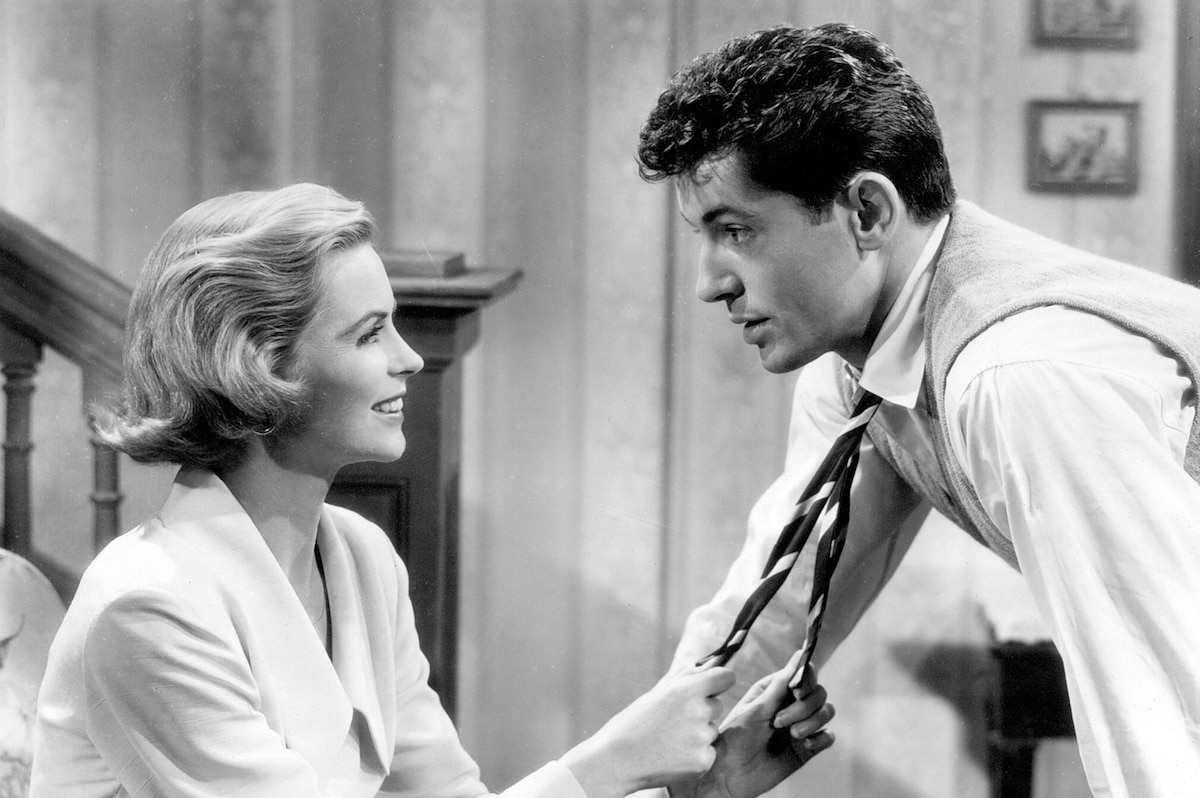
To play the brothers, Goldwyn chose one of his Best Years leading men, Dana Andrews, as Martin, and contract player and teen idol Farley Granger as Jack. It would be Andrews' last film under his Goldwyn contract. Goldwyn borrowed Dorothy McGuire from Selznick to play Andrews' wife. Veteran character actor Robert Keith played the senior Greer, and Mildred Dunnock, who had originated the role of Linda Loman in the stage production of Death of a Salesman, was a standout as his wife. (Dunnock repeated the role of Linda in the film version of Death of a Salesman, also in 1951, and she would be nominated for a supporting actress Academy Award for that performance.)
Tired of the producer's constant interference, director William Wyler had left Goldwyn after Best Years, when his contract expired, and had rejected Goldwyn's efforts to woo him back. And cinematographer Gregg Toland had dropped dead of a coronary at the age of 44 in 1948. So it was impossible for Goldwyn to reunite his Best Years team for I Want You. Instead, Mark Robson directed, proving to be more malleable than Wyler. And Harry Stradling, the Oscar®-winning cinematographer of The Picture of Dorian Gray (1945) provided the lustrous black-and-white cinematography. The film's opening aerial shot, with Andrews' voice-over, is intentionally reminiscent of Best Years. And, like Best Years, I Want You ends with a wedding.
Goldwyn promoted I Want You as a worthy successor, but it suffered by comparison. The issues in the Korean conflict were less clear-cut than the threat of fascism had been during World War II, so I Want You's appeal to patriotism was less effective than Best Years' drama of readjustment. I Want You's characters and script were also less compelling. Unlike Best Years' Oscar® triumph, I Want You was nominated for only one Academy Award, for sound recording, and lost to The Great Caruso (1951). In spite of some affecting performances, particularly Dunnock's, the public and the critics were not impressed by I Want You. As Bosley Crowther wrote in the New York Times, "All in all, the running crisis of the 'cold war' has been absorbed in the cotton padding of sentiment. A straight recruiting poster would be more convincing and pack more dramatic appeal." Perhaps if Goldwyn had not persisted in invoking Best Years, I Want You might have been judged on its own merits. Seen today, it is a striking look at the changing American attitudes towards patriotism and global conflict after World War II, and one that still resonates today.
Director: Mark Robson
Producer: Samuel Goldwyn
Screenplay: Irwin Shaw, based on New Yorker stories by Edward Newhouse
Cinematography: Harry Stradling
Editor: Daniel Mandell
Costume Design: Mary Wills
Art Direction: Richard Day
Music: Leigh Harline
Principal Cast: Dana Andrews (Martin Greer), Dorothy McGuire (Nancy Greer), Farley Granger (Jack Greer), Peggy Dow (Carrie Turner), Robert Keith (Thomas Greer), Mildred Dunnock (Sarah Greer), Ray Collins (Judge Turner), Martin Milner (George Kress, Jr.), Jim Backus (Harvey Landrum).
BW-102m.
by Margarita Landazuri
I Want You
by Margarita Landazuri | December 18, 2006
SIGN UP FOR OUR NEWSLETTERS

CONNECT WITH TCM