By 1963, after eight years and 10 films, Satyajit Ray was already considered a great director in need of a comeback. Such is the fickle nature of the film industry throughout time and place. No matter how great or successful your work, you're only as good as your last film and Ray's previous two films had not fared well either critically or commercially. Despite the masterworks of The Apu Trilogy films and other great works like The Music Room (1958), Ray was suddenly a director in need of a hit. A story by the writer Narendranath Mitra gave Ray his inspiration and from that story, Abataranika, came The Big City (1963), aka Mahanagar, arguably one of Ray's best films.
The Big City is a movie about a culture in flux. Not a culture of nationality or race but of gender and tradition. A culture that was universally in flux in 1963 (though the film takes place in the 1950s) and still in flux today. That culture is one in which men and women accept socially approved gender roles and stepping outside of it means risking everything.
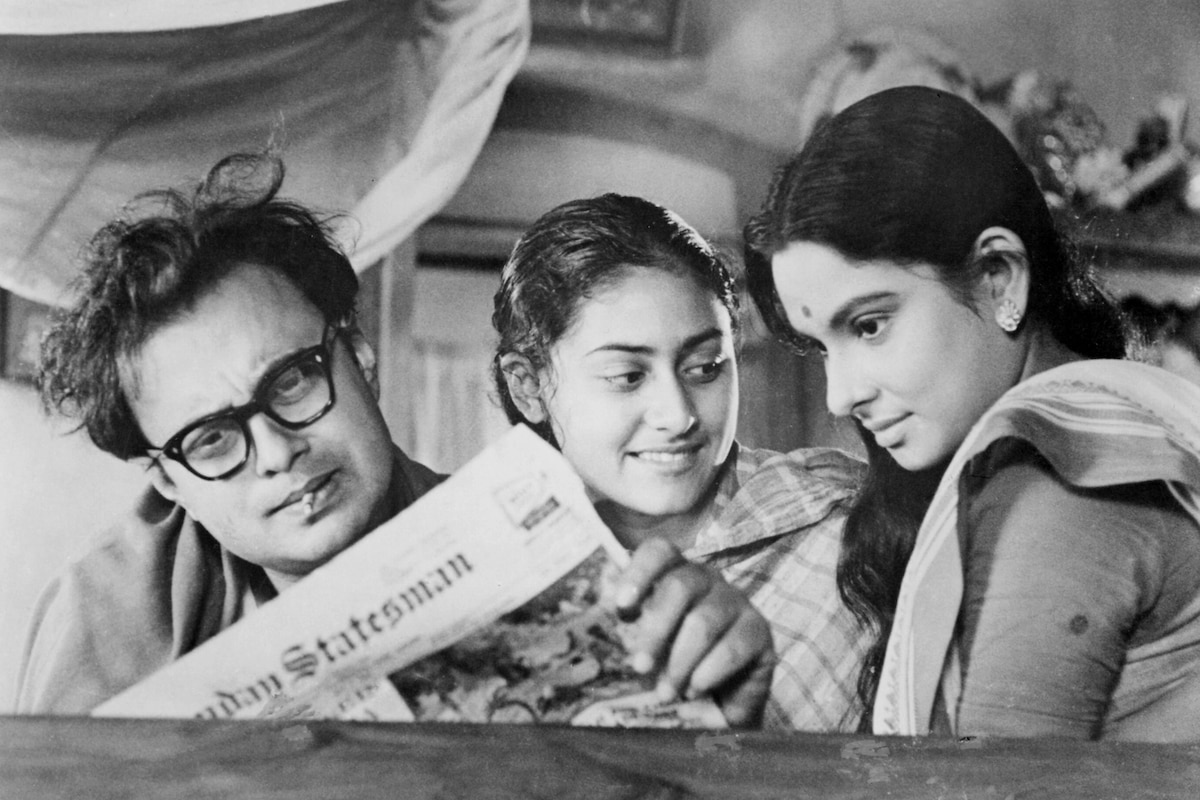
In the Mazumdar household, the husband, Subrata (Anil Chatterjee) is the sole income provider while his wife, Arati (Madhabi Mukherjee), takes care of the chores around the house. When Arati wants to get a job, both because she knows of a neighbor who has done so and they could use the extra financial help, her conservative in-laws object but Subrata, to his credit, supports his wife and her ambitions. That she succeeds far beyond anyone's expectations and to the point that she becomes the chief bread-winner complicates matters considerably.
It is in this examination of a gender culture war that Ray touched on a subject that was both universal and extremely of the moment. Women all over the world were fighting for equal rights, and that extended to equal pay, respect and autonomy. The film was a critical and commercial success, although it was not selected as a nominee for Best Foreign Language Film by the Academy that year (a blunder on the Academy's part), and regained prominence for Ray as a director. Not that he ever lost it but as every great director before and after him discovered, critics and audiences have incredibly short memories.
The star of the movie, Madhabi Mukherjee, was a rising star in the Indian film industry when she began working with Ray. Her role in The Big City would bring her international fame and recognition for a truly great performance. One of the key aspects of her portrayal is Arati's strength. She fills the role with a confidence that makes Arati's successful transition to salesperson seem like a natural arc. After working with Ray on two more films, she continued her stardom but never made any movies again as good as those with Ray.
The rest the cast are equally good, with Anil Chatterjee, Haradhan Bannerjee, Vicky Redwood and Haren Chatterjee all standouts in their roles. And then there is Jaya Bhaduri (now Bachchan) as Subrata's sister, Bani. It was her first role at age 15, and though no one knew it at the time she would go on to have one of the most successful careers in Indian cinema and then after retiring, a successful career in the Indian Parliament as well.
Despite The Big City touching on so many culturally charged themes, Ray didn't make a movie about a cause, a simple political narrative with characters as mouthpieces for each individual position. Rather, he crafted out of Mitra's story a study of a family, and friendship, between co-workers and spouses alike. And a study in courage, as Arati embraces her new role but also stands by her ideals without flinching. It is a beautiful film, one that reminded the world, once again, of the greatness of Satyajit Ray and the poetry of his art.
Directed by Satyajit Ray
Written by Satyajit Ray
Produced by R.D. Bansal
Music by Satyajit Ray
Cinematography by Subrata Mitra
Film Editing by Dulal Dutta
Production Design by Bansi Chandragupta
Art Direction by Bansi Chandragupta
Makeup by Ananta Das
Cast: Anil Chatterjee (Subrata Mazumdar), Madhabi Mukherjee (Arati Mazumder), Jaya Bhaduri (Bani), Haren Chatterjee (Priyogopal, Subrata's father), Sefalika Devi (Sarojini, Subrata's Mother), Prasenjit Sarkar (Pintu), Haradhan Bannerjee (Himangshu Mukherjee), Vicky Redwood (Edith)
By Greg Ferrara
The Big City (1963)
by Greg Ferrara | June 07, 2019
SIGN UP FOR OUR NEWSLETTERS

CONNECT WITH TCM