The idea for Walt Disney's True-Life Adventures - a series of eye-popping nature documentaries which ranged from short subjects to feature-length films - is said to have come from the pre-production work on Bambi (1942), during which Disney's crew pored over all manner of natural science materials, nature photos and related wildlife research. Perhaps, figured Disney, the natural world was cinematically captivating in its own right. With raw footage being less expensive than animation, Disney commissioned husband-and-wife documentarians Alfred and Elma Milotte to collect raw footage of the Alaskan wilderness. When Disney took a look at the results, he zeroed in on shots of the seal population and, with his showman's instinct, cobbled it together into a nifty little package of infotainment titled Seal Island (1948). It handily won the 1949 Oscar for Best Short Subject, and True-Life Adventures was born.
Few documentaries are free of artifice and the True-Life Adventures were no exception. Disney could never resist the impulse to improve on reality by imposing dubious storylines on the material and, occasionally, even staging sequences to make the story fit. Reels and reels of footage would be cut down by the team of James Algar, Winston Hibler and Ben Sharpsteen into workable small-scale narratives, whether about the migration practices of lemmings or the everyday lives of desert animals. As the critic Gary Giddins put it, "The films aimed for something new: they combined genuinely innovative close-quarters nature photography with plotlines similar to those of Disney cartoons." At the time, this attempt to bend nature to Disney's colorful sensibility handsomely paid off, as the Academy Awards rewarded Disney and company time and time again for these films, which, at the time, evoked the same majesty and wonderment that the BBC's Planet Earth (2006) elicits generations later.
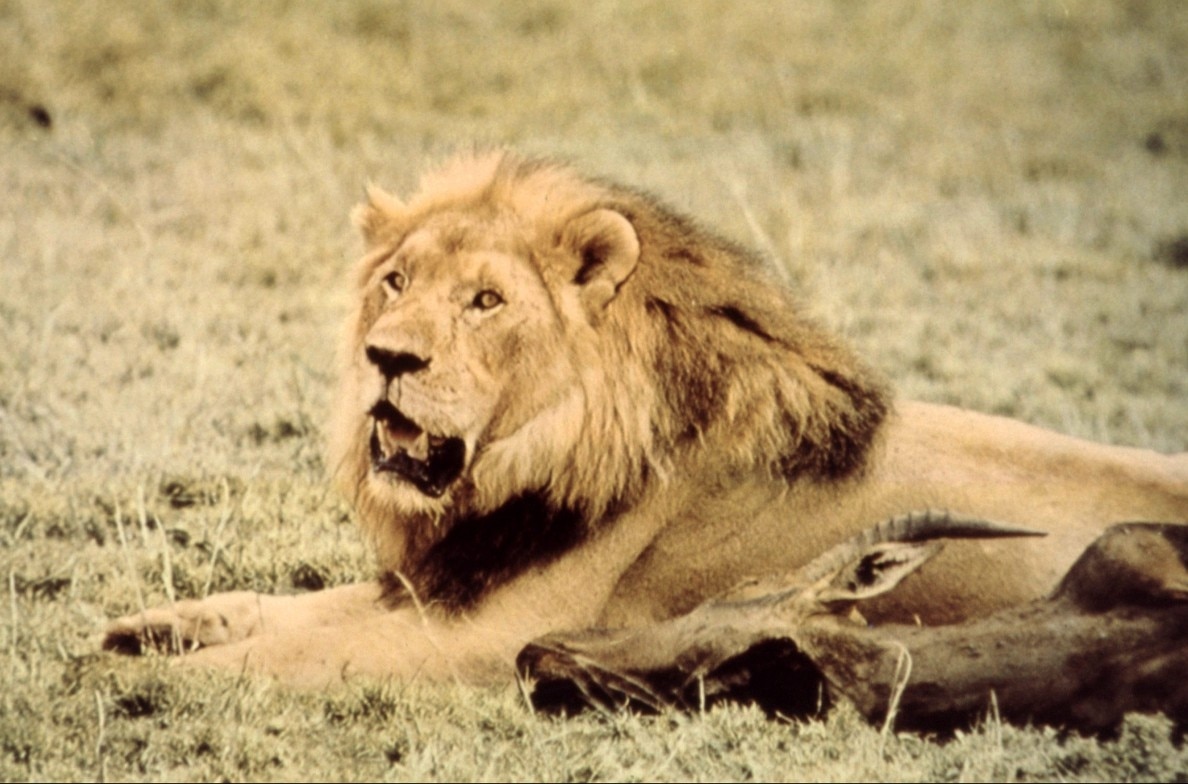
Beneath Disney's family-friendly window dressing, the power and beauty of the footage his team assembled was unassailable, arguably culminating in the feature-length The African Lion (1955). Documenting the wildlife of the Serengeti plains of Africa, with a particular focus on the eponymous 'king of the beasts,' the film is an all but unembellished 75-minute chronicle of one of the planet's most awe-inspiring ecosystems. Calling it "the purest of the Disney nature films," The New York Times reviewer Bosley Crowther reported that "It is notable and much to be applauded that none of the usual Disney bits of whimsical cutting and playful tricks with footage to make for humor have been popped into this film."
It is Alfred and Elma Milotte who should be commended for the achievement of The African Lion. For all of the post-production storytelling impositions engineered by Disney and his crew (in this case, a 'dramatic conflict' in the form of drought and insect pestilence), it was the Milottes who were on the frontlines, putting their naturalist training to cinematically inspired use. The couple spent three years on location in Africa in and around Mt. Kilimanjaro, documenting the animal kingdom with unflinching interest in the dog-eat-dog interconnectivity of the various species within. While only 6% of the film they shot was used in the finished product, the end result vividly attests to these years of exposure to the African plateau region. The Milottes retired in 1959 and, thirty years later, both Alfred and Elma passed away within a week of each other, two lifetimes' worth of documentary filmmaking behind them.
The True-Life Adventures were banner entertainment of the 1950s and went on to become a staple of public school classrooms, inspiring a passion for nature in countless students (Disney historian Jim Korkis has mused on the number of forestry service applicants that are due to the influence of these movies). Disney's customary cuteness may have occasionally eclipsed the visceral power of the footage itself, but not always. The African Lion is perhaps the most riveting example. Its images are indelible.
By Stuart Collier
The African Lion
by Stuart Collier | April 01, 2019
SIGN UP FOR OUR NEWSLETTERS

CONNECT WITH TCM