When 24-year-old Kathleen Winsor's epic historical romance novel Forever Amber was published in November 1944, it caused a sensation selling 100,000 copies in its first month and eventually 3,000,000 copies in 16 countries. In September 1944, months before the book hit the shelves, 20th Century-Fox made a bid for the film rights, even though they'd only read a synopsis. That alone told the studio what the publishers knew: Forever Amber was the right tale at the right time, promising lonely women an escape from the grim realities of World War II via a bodice-ripper set in the late 1600s, the time of King Charles II. Forever Amber had plenty of action, sex and a strong heroine who, like Scarlett O'Hara of Gone with the Wind (1939), took control of her own life (and, consequently, made a mess of it). Amber St. Clair goes from foundling child to the wife of an earl to the mistress of the king himself, but the one thing she couldn't have was the man she really loved, the father of her child, Lord Bruce Carlton.
In advance of their rights purchase of Forever Amber , Fox sent a script synopsis to Production Code Administration (PCA) head Joseph I. Breen for approval, but Breen shot it down, telling the studio that the film would be "utterly and completely unacceptable under any one of a dozen provisions of the Production Code." On November 1st, Col. Jason S. Joy, himself a former PCA executive now working as Fox's director of public relations, told Breen that Fox was going to buy the film rights regardless of Breen's ban because PCA official Geoffrey Shurlock was certain that there were ways of editing the story to make it acceptable to the censors. The very next day, Fox signed a deal to buy the exclusive rights for a whopping $200,000. News of the censor's refusal spread and helped to sell copies when the book was finally released in November.
Although young, author Kathleen Winsor had done her homework. While attending the University of California, Berkeley, and still in her teens, she had married a fellow college student, football star Bob Herwig. Herwig had written a paper on Charles II for one of his classes, and his wife began to read her husband's research books. Winsor got hooked on the time period, and for the next five years she immersed herself in the English Restoration. The result was Forever Amber. During the film's pre-production, news articles claimed Winsor would be acting as a technical advisor and assisting with the script, but according to the American Film Institute, there is no evidence in Fox studio files to substantiate this. Fox already had plenty of writers on staff and over the next two years men like Jerome Cady and Philip Dunne submitted drafts that were predictably rejected by the PCA. Dunne's final draft was finished in February 1946 and screenwriting credit would eventually be given to Cady, Dunne and Ring Lardner, Jr., who had been hired to do re-writes.
Objections to the book weren't only in the United States. Australia had placed American fiction under an embargo, but the news of the novel's runaway success had spread, and copies of the book were reaching their shores in suitcases or through the mail. The excitement over Fox's plans to bring the novel to the screen increased interest in the book, prompting J.J. Kennedy, the Comptroller General, to rush a copy to its Literature Censorship Board, asking that it be dealt with "as a matter of urgency." The censors read the book and, like Joseph Breen, were appalled by the many references to sex, impotence and even abortion. As a result, the book was banned in Australia for both American and English editions, with then Australian Minister of Trade and Customs, Senator Richard Keane stating, "The Almighty did not give the people eyes to read that kind of rubbish." Winsor, for her part, replied, "I don't care whether Senator Keane likes my book or not. [..] I don't make English history, The English did it first. I only wrote about it." Forever Amber would not be removed from Australia's banned books list until 1958.
If the book and screenplay gave the censors a headache, it was nothing compared to what Fox went through trying to make the film. Announcements about casts and even directors were continuously made in the press. First John M. Stahl was named director in October 1945, then Edmund Goulding in January 1946 and then Stahl again the following month. Nineteen-year-old British actress Peggy Cummins won the role of Amber, Cornel Wilde would play her true love Bruce Carlton (a role that Fox studio chief Darryl F. Zanuck had originally considered for Rex Harrison), Vincent Price was hired to play Carlton's friend, Lord Harry Almsbury, and Reginald Gardiner would be King Charles II.
With a budget estimated at $3,000,000, Forever Amber went into production in March 1946 but ground to a halt after only a month, with Fox claiming that Peggy Cummins was ill with the flu. The next day, however, the studio sent out a press release saying that they and Stahl had mutually agreed that he would step aside, Cummins would be replaced and production would remain shut down for the next three months. Zanuck later said, "if there was any problem at all with Peggy Cummins, it was her extreme youth." This false start would cost the studio an estimated $1,000,000. The total budget would grow to about $6,000,000.
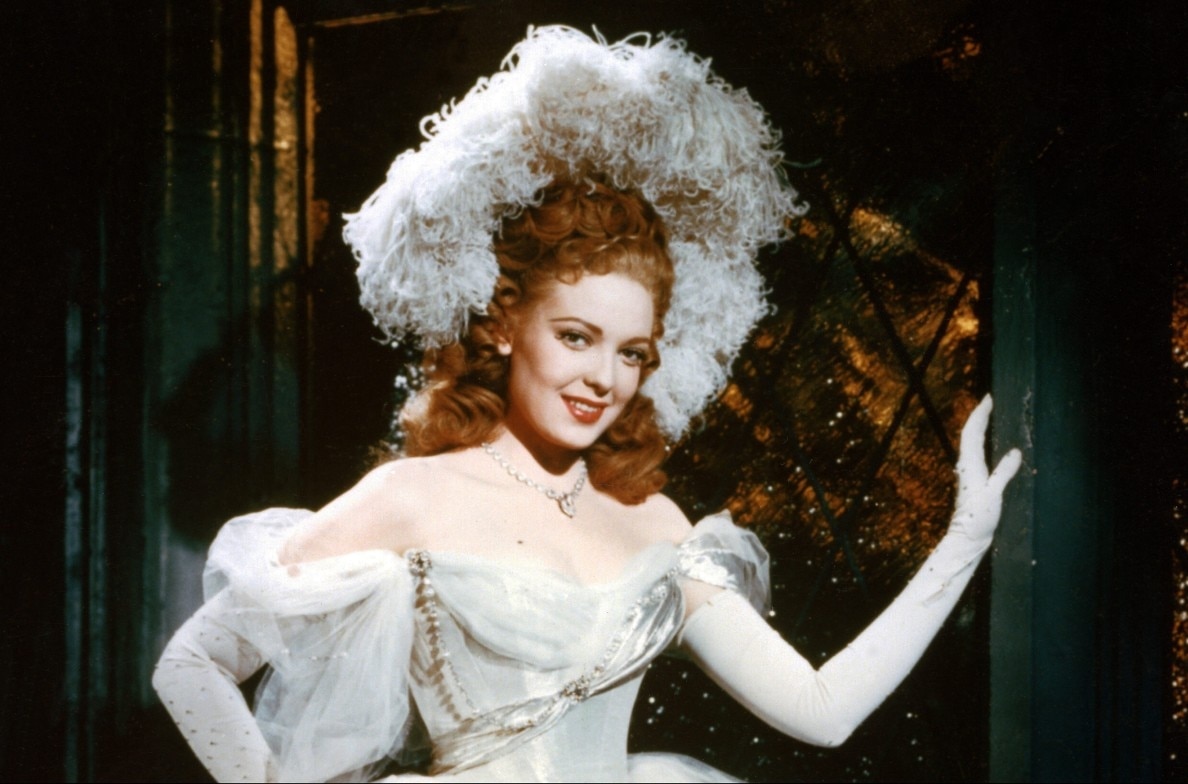
In mid-June 1946, Otto Preminger, who had scored a hit with Laura (1944), was signed to direct. Vincent Price was off the picture because of a scheduling conflict and replaced with Richard Greene. George Sanders replaced Reginald Gardiner as King Charles II and, despite Otto Preminger's demands that Lana Turner play the lead, it was Fox star Linda Darnell who would be (forever) Amber. Cornel Wilde was still Carlton but the studio put him under suspension in October because they claimed he wouldn't play the role unless he received a salary increase. Wilde fought back in the press, saying that it was his "dislike" of the role and his "desire for a vacation" that caused the dispute. At long last, issues were smoothed over and Forever Amber went back into production at the 20th Century-Fox studio in Los Angeles, with exteriors shot at the Greystone Park and Mansion on Loma Vista Drive in Beverly Hills and in the California coastal city of Monterey, wrapping up at the end of March 1947.
Forever Amber opened in New York City at the Roxy Theater on October 22, 1947 and set a contemporary box office record, even though it was condemned by the Catholic Legion of Decency and the Archbishop of New York, Cardinal Spellman, who called it "a glorification of immorality and licentiousness." In the days where objections by church officials still held enormous power, the threats of boycotts were a real danger to the studio. The PCA recommended that a prologue be crafted to assure the audience that Amber was a "slave to ambition, stranger to virtue, fated to find the wealth and power she ruthlessly gained wither to ashes in the fire lit by passion and fed by defiance of the eternal command-- the wages of sin is death." An epilogue was added of Carlton saying, "Haven't we caused enough unhappiness? May God have mercy on us both for our sins." Director Preminger objected strongly to this and threatened to disassociate himself from the film, but the studio added it anyway, along with additional instructions to over 400 exhibitors on how to edit the prints that had already gone into release. This appeased the Legion of Decency enough to reclassify it from a "C" (condemned) rating to a "B" (morally objectionable in part) in December 1947. Forever Amber became the biggest hit of the year, eventually earning $16,000,000 at the US box office alone.
SOURCES:
AFI | Catalog. (n.d.). Retrieved from https://catalog.afi.com/Film/25169-FOREVER-AMBER?sid=52a7a036-9c20-46d4-91da-6c0365cbc377&sr=4.00981&cp=1&pos=0
Forever Amber (1947). (1948, January 26). Retrieved from https://www.imdb.com/title/tt0039391/?ref_=nv_sr_1
Forever Amber | Banned. (2013, November 7). Retrieved from http://blog.naa.gov.au/banned/2013/11/07/forever-amber/
Forever Amber (Rediscovered Classics) - Kindle edition by Kathleen Winsor, Barbara Taylor Bradford. Literature & Fiction Kindle eBooks @ Amazon.com. (n.d.). Retrieved from https://www.amazon.com/Forever-Rediscovered-Classics-Kathleen-Winsor-ebook/dp/B0087GZ8EW/ref=sr_1_1?ie=UTF8&qid=1548188893&sr=8-1&keywords=forever+amber
By Lorraine LoBianco
Forever Amber
by Lorraine LoBianco | February 06, 2019
SIGN UP FOR OUR NEWSLETTERS

CONNECT WITH TCM