The Naked Spur, released in 1953
and available on DVD from Warner Home
Video, stands at the midway point in the
partnership of director Anthony Mann and
actor James Stewart on a cycle of
remarkable westerns, starting with
Winchester '73 in 1950 and ending
with The Far Country in 1955. That
group of movies also falls at a midway
point, marking the 1950s transition from
the larger-than-life westerns of directors
like John Ford and Howard Hawks, which had
dominated the genre in popularity and
influence, to the far darker visions of
Sam Peckinpah and Sergio Leone, more
interested in human failings and social
chaos than in the frontier-taming and
nation-building celebrated by more
traditional westerns.
The title of The Naked Spur
refers to a piece of gear worn by the main
character, introduced during the credits
with an abrupt pan from picturesque
mountains in the distance to a jarring
closeup of the spur. With the flair and
economy that distinguish Mann's best
movies, this prepares us for both the
setting of the story-it starts and
finishes on mountain heights--and its
emphasis on the characters' intense,
sometimes brutal emotions.
The plot centers on Howard Kemp, a
former rancher who's hunting down Ben
Vandergroat, a nasty galoot with a $5,000
price on his head. Unable to climb a steep
mountainside and capture Ben at the top,
Howard accepts help from two strangers who
happen to cross his path: Jesse Tate, a
gold prospector with rotten luck, and Roy
Anderson, recently kicked out of the Union
army for his "unstable" character. They
soon get hold of Ben and his reluctant
girlfriend, Lina Patch, and all five
characters start a trek to Kansas, where
the three "good" guys plan to turn Ben in
and split the reward.
Ben does everything he can to get them
fighting among themselves, of course, and
the tension grows thicker when we discover
that Howard isn't the bounty hunter we've
assumed him to be. Quite the opposite,
he's an ordinary guy who's been consumed
by grief and rage ever since his fiancée
stole everything he had while he was away
on military service. But he's acting like
a bounty hunter even if he doesn't feel
like one, and his awareness of this is
tearing him apart. His growing attraction
to Lina doesn't simplify matters,
either.
Mann's westerns have received much
praise for their unusual psychological
complexity and their recognition of
violence as both destructive and
self-destructive, not just a stylized
vehicle for action-movie thrills. The
psychology in The Naked Spur isn't
just complicated, it's downright ornery,
with a self-hating "hero" and a villain
more good-humored and easy-going than his
three captors put together. This is
supplemented by some of the most jolting
violence in any '50s western--from an
Indian battle, where Howard kills a foe
with his gun-butt, to a showdown, where
Howard positively begs Ben to draw on him,
even though Ben's hands are crippled from
being tied together.
The Naked Spur earned high
grosses in 1953. The screenplay by Sam
Rolfe and Harold Jack Bloom garnered an
Academy Award nomination, and in 1997 the
movie was added to the National Film
Registry's list of culturally important
pictures. This and the other Mann westerns
helped consolidate Stewart's
transformation from the swell-guy roles of
Mr. Smith Goes to Washington (1939)
and The Philadelphia Story (1940)
to the conflicted-guy roles of
Vertigo (1958) and The Man Who
Shot Liberty Valence (1962), which
stand with the finest accomplishments of
his career.
The success of The Naked Spur
paved the way for three more Mann-Stewart
collaborations, two of which are westerns,
and for two more Mann movies starring
Robert Ryan, whose devil-may-care
portrayal of Ben provides some of the
film's most unsettling undercurrents. The
story's sole woman is solidly played by
Janet Leigh, still warming up for the
triumphs ofTouch of Evil and
Psycho, and Ralph Meeker, an
extremely busy actor in the '50s, plays
the soldier with an understated
strangeness that clearly conveys what we'd
now call a borderline personality. Millard
Mitchell brings out the dark side of the
prospector, making him refreshingly
different from the clichéd comical
sidekicks played by the likes of Gabby
Hayes and Walter Brennan.
Another much-lauded aspect of Mann's
westerns is their expressive camerawork,
and William Mellor's cinematography for
The Naked Spur shows why, etching
sharp Technicolor contrasts between the
emotional impact of facial close-ups and
the ambiguity signaled by the mountainous
terrain, filled with beauty yet looming
with danger. The film also makes
imaginative use of Bronislau Kaper's
music, boldly omitting it during much of
the action-filled climax. Too bad it isn't
omitted during the romantic finale,
though, when strains of "Beautiful
Dreamer" push sentimentality into
gloppiness.
In its psychologically acute
screenwriting, its against-the-grain
performances by Stewart and Ryan, and its
attentiveness to mental and physical
suffering, The Naked Spur embodies
Hollywood's effort during the '50s to
compete with television by offering
grittier and truer visions than
small-screen entertainment-or movies of
previous decades-could provide. It also
shows Mann at the peak of his powers,
carving out a unique niche between the
thrillers and noirs that he'd honed his
talents on and the expansive epics that
concluded his career in the 1960s.
Warner's crisp-looking DVD edition
supplements the feature with sparkling MGM
examples of the "extras" seen by
moviegoers in '50s theaters: a funny Pete
Smith Specialty short called Things We
Can Do Without, detailing the
downsides of modernistic houses, and
Little Johnny Jet, a colorful Tex
Avery cartoon. That's
entertainment!
For more information about The Naked
Spur, visit Warner
Video. To order The Naked Spur,
go to
TCM
Shopping.
by Mikita Brottman and David Sterritt
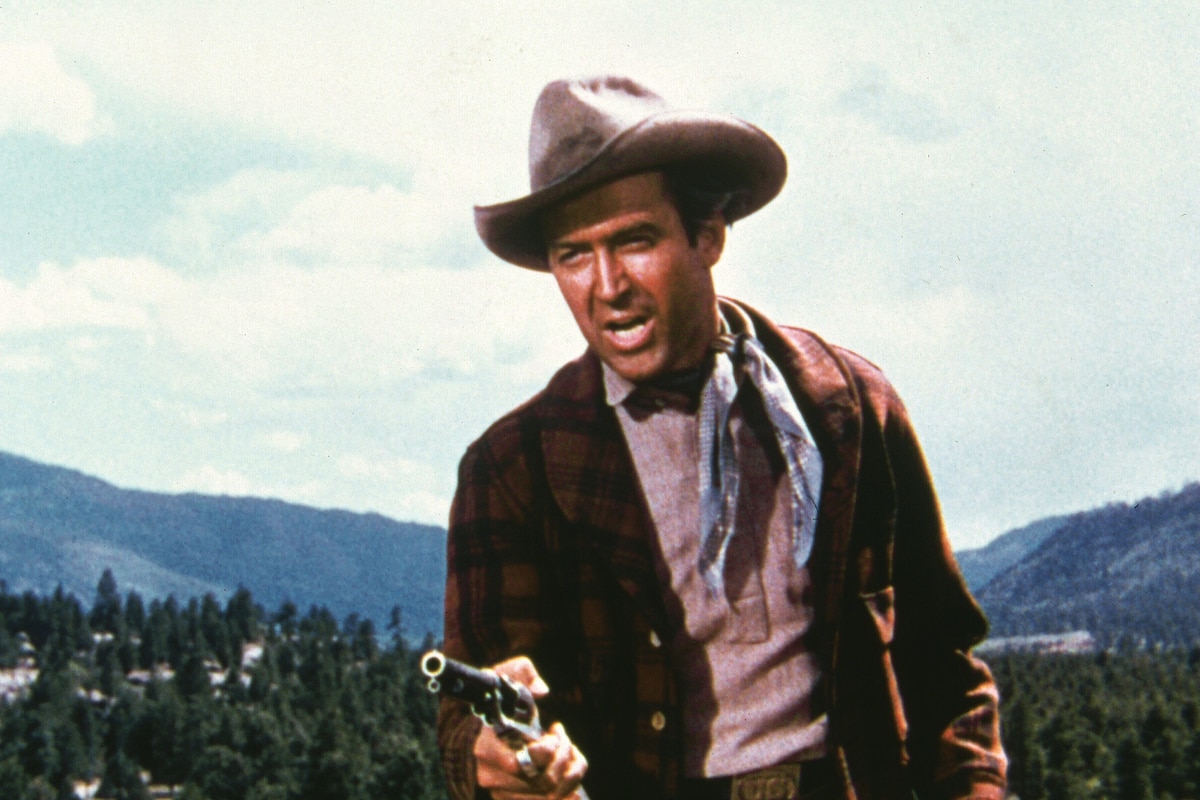
Naked Spur, The - James Stewart in Anthony Mann's THE NAKED SPUR on DVD
by Mikita Brottman and David Sterritt | September 29, 2006
SIGN UP FOR OUR NEWSLETTERS

CONNECT WITH TCM