"Ray and Martha are in love. They're on a honeymoon. The bride is in the trunk."
-Tagline from the one-sheet for The Honeymoon Killers, 1970 from Cinerama
On March 8, 1951 two criminals were executed via the electric chair at Sing Sing prison. The first was Raymond Fernandez followed minutes later by his lover, Martha Beck. The notorious pair were known all over the world as "The Lonely Hearts Killers".
During the period of about a year starting in 1948, Beck and Fernandez would meet unsuspecting and lonely females via "lonely heart" letters; women would correspond in an attempt to meet and build a romantic relationship, hopefully resulting in marriage. Fernandez would "marry" these women (with Beck pretending to be Raymond's sister) and subsequently rob and often murder them. Ironically, it was through this correspondence that Martha met Raymond. It was a match made in hell.
Martha Beck was a lonely, heavyset nurse with two children who led a very sad existence, one that revolved around reading romance novels, trashy True Confession-type pulps, going to movies and working at the hospital. She decided to submit her profile to a "lonely hearts club" and after a long period, received a response. It was then that she met Raymond Fernandez, a handsome Spaniard who wrote that he was a wealthy businessman who had come to America in search of new business endeavors. Of course, all of this was a lie. However, Martha herself had lied in her own profile; hiding the fact that she had two children and was quite overweight.
Martha was instantly enamored with Raymond and proved she would do anything to be with him; even attempting suicide after Raymond had written to her saying she had "misunderstood his feelings for her." It was then that Raymond allowed her to visit him in New York City and learned that he did enjoy her company. After losing her nursing job, Martha abandoned her children and began to live with Raymond. It was then that Raymond unveiled to her how he made his "living", through duping and fleecing vulnerable, lonely women. Martha became his partner in crime and the couple quickly began a cross country spree of con jobs, robbery and murder.
The couple was arrested on February 28, 1949. They confessed to their life of crime, complete with all of the sordid details of sex and violence that seemed straight out of a sleazy pulp novel. A sensational trial followed, with Beck and Fernandez achieving almost celebrity status. The press was obsessed with the issue of Beck's weight and the lurid details of the couple's sex life. When Beck took the stand on July 25, 1949 she said, "I loved him enough to do anything he asked me to!" Spectators were so fascinated by the unsavory details of the case that there were virtual riots with people trying to push their way into the courtroom. Ultimately, the jury found Beck and Fernandez guilty of first-degree murder and sentenced them to die in the electric chair. Up until the very end, the couple professed their love for each other, still corresponding via letters before their executions.
It was inevitable that such a bizarre and intense story would find its way to movie screens. In the late sixties, producer Warren Steibel and a young opera writer named Leonard Kastle set the wheels in motion for a big screen version of Raymond and Martha's obsessive and deadly love story. Unimpressed with the then-current crime drama, Bonnie and Clyde (1967) and its attractive, glamorous lead characters and almost romanticized view of crime, Kastle set out to make a film that was the antithesis of this, an "anti-Bonnie and Clyde". In his film, Kastle wanted to show crime and its perpetrators as an ugly, vicious thing; to show its lead characters as a pair of desperate, pathetic and un-glamorous people.
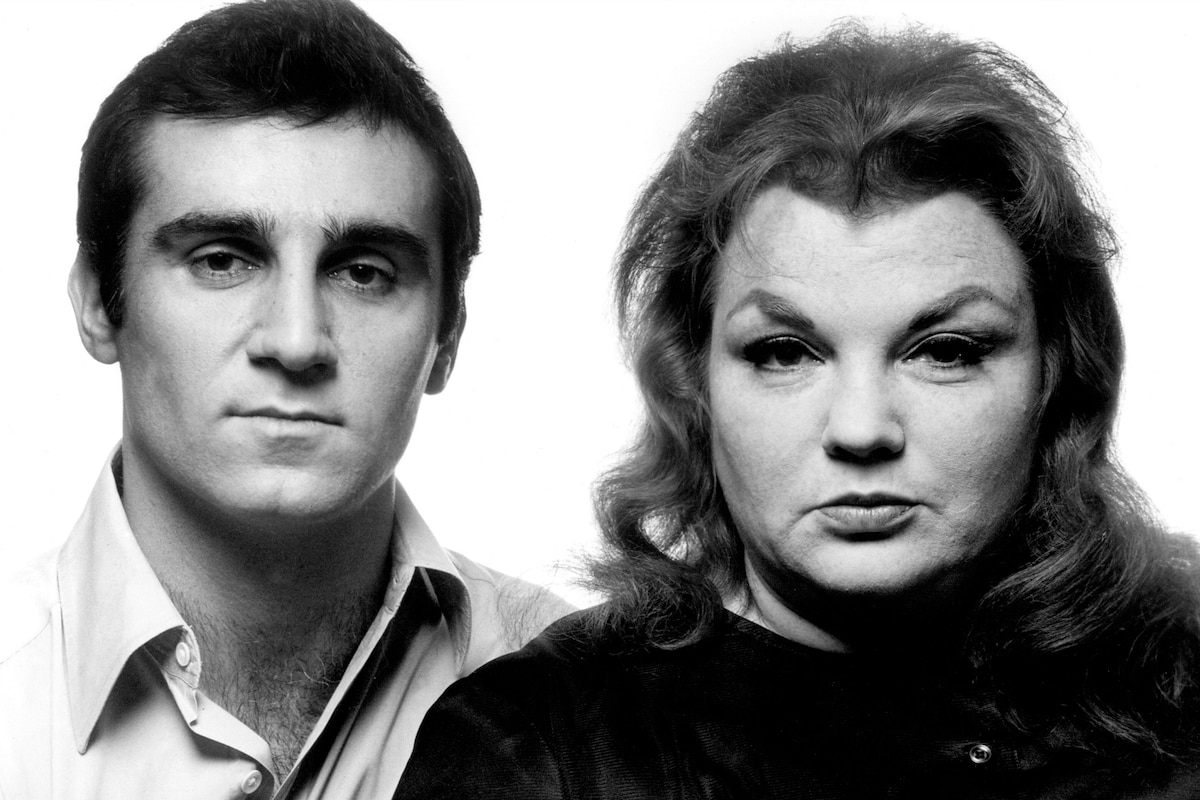
The result was The Honeymoon Killers, released in 1970, starring two New York stage actors, Tony Lo Bianco and Shirley Stoler as Raymond and Martha. The low-budget film was filmed in black and white and utilized a very un-Hollywood, independent approach to filmmaking; almost all of the film was shot on locations, using natural lighting. As it has been noted in many resources, this style gave the film the unusual quality of a sleazy tabloid magazine come to life which was completely appropriate for the subject material.
In an interview, Stoler complimented cinematographer Oliver Wood's approach to the visual look of the film; "If any one person were to take responsibility for the quality of The Honeymoon Killers, it would have to be the cinematographer, Oliver Wood. He loved very long takes and, with lighting, likes that diffused look. He didn't do anything to cover the lamps or dim the light, preferring whatever was naturally there. There's one scene where the two women are in bed, Martha slapping the other woman, and suddenly the screen went black. Everyone thought the film broke. But then a lamp turns on, as Tony Lo Bianco sits in a dark room. That was just one of Oliver's ideas. I thought he was brilliant - he created that film, especially the look of it, which tried for that pulp-ish True Detective quality."
The excellent and unusual assortment of actresses cast in the film also provided a realistic edge to the look and tone of the film. Stoler fondly recalled working with the actors; "...the chemistry of casting was very good. The actors seemed to be reacting to the situations in the film as they would react to the same situations in real life. Tony Lo Bianco, playing Martha Beck's lover, Ray Fernandez, was especially good. I would say that the filmmakers used Tony's ego, although he didn't know it, to arrive at the character. You can tell by the way he walks through scenes. Mary Jane Higby, who played Janet Fay, was fabulous. She used to be in soap operas in radio. She knew exactly what she was doing, an absolute master."
Producer: Paul Asselin, Warren Steibel
Director: Leonard Kastle
Screenplay: Leonard Kastle
Cinematography: Oliver Wood
Film Editing: Richard Brophy, Stanley Warnow
Cast: Shirley Stoler (Martha Beck), Tony Lo Bianco (Raymond Fernandez), Mary Jane Higby (Janet Fay), Doris Roberts (Bunny), Kip McArdle (Delphine Downing), Marilyn Chris (Myrtle Young).
BW-106m. Letterboxed.
by Eric Weber
The Honeymoon Killers
by Eric Weber | September 15, 2006
SIGN UP FOR OUR NEWSLETTERS

CONNECT WITH TCM