Stephen Hawking was an intriguing figure. As a theoretical physicist he spent his life thinking about the farthest reaches of time and space, yet he suffered from Lou Gehrig's disease (amyotrophic lateral sclerosis) and lost the ability to move and speak. He remained hugely influential in his field, communicating his paradigm-changing ideas so effectively that his best-known book, A Brief History of Time, was translated into dozens of languages and sold more than ten million copies in the 20 years after it was published in 1988.
He even became a movie star of sorts when Errol Morris's documentary portrait of him premiered. Also titled A Brief History of Time (1991), it won the Filmmakers Trophy and shared the Grand Jury Prize at the Sundance Film Festival in 1992. Seated in his wheelchair and communicating through a computer-based vocal synthesizer, Hawking projects a paradoxical charisma all his own. He's the unmoving subject of a fast-moving motion picture and the first non-talking talking head in media history, as Morris has mischievously called him.
Hawking was a genius from the beginning. Born in Oxford, England, he was nicknamed Einstein in high school and entered the University of Oxford at age 17, breezing his way through science courses and alcoholic beverages with ease. At 21 he was diagnosed with ALS and given two to three years to live--a verdict he disproved by living to be 76 years old--and eventually he became known as a wild rider in his wheelchair, with a license plate reading "Stephen" on the back.
In the early part of his career, Hawking's attention was divided between subatomic particles and faraway galaxies: the unimaginably small and the unimaginably immense. Eventually he decided to concentrate on galaxies as a way of exploring questions about the origins of the cosmos. He also delved into quantum mechanics and particle theory, since the gigantic and the infinitesimal are intimately linked in modern science. Hawking's specialties ranged from black holes and supergravity to cosmological inflation and the ultimate fate of the universe. He wrote numerous books in addition to A Brief History of Time, and his media persona appeared everywhere from The Simpsons to Star Trek: The Next Generation and a couple of Pink Floyd songs.
Before becoming a filmmaker, Morris had been a Princeton graduate student studying the history and philosophy of science--without much success, he later admitted--and the physicist who standardized the term "black hole" had been one of his professors. The idea of a movie based on A Brief History of Time came from Steven Spielberg, who mentioned it to Morris because his company owned the rights to Hawking's book. Morris's interest in Hawking was grounded partly in his respect for the scientist's accomplishments, and also in his feeling that Hawking's field of expertise--the origin, evolution and ultimate demise of the physical universe--is a vastly magnified version of the course of every human life, including that of Hawking, who was persisting in his intellectual pursuits even as his body collapsed into itself like an earthbound black hole.
Straight-to-the-camera interviews are always the center of gravity in Morris's films, and this posed a special challenge where Hawking was concerned, since the rhythms of ordinary speech are impossible for someone who processes every word through a synthesizer. Morris solved this dilemma by presenting Hawking's words in voiceover, making the sound of his computer-generated speech an integral part of the soundtrack. Other interviews are done in Morris's usual style, offering the views of everyone from Hawking's mother to key colleagues in the astrophysics world.
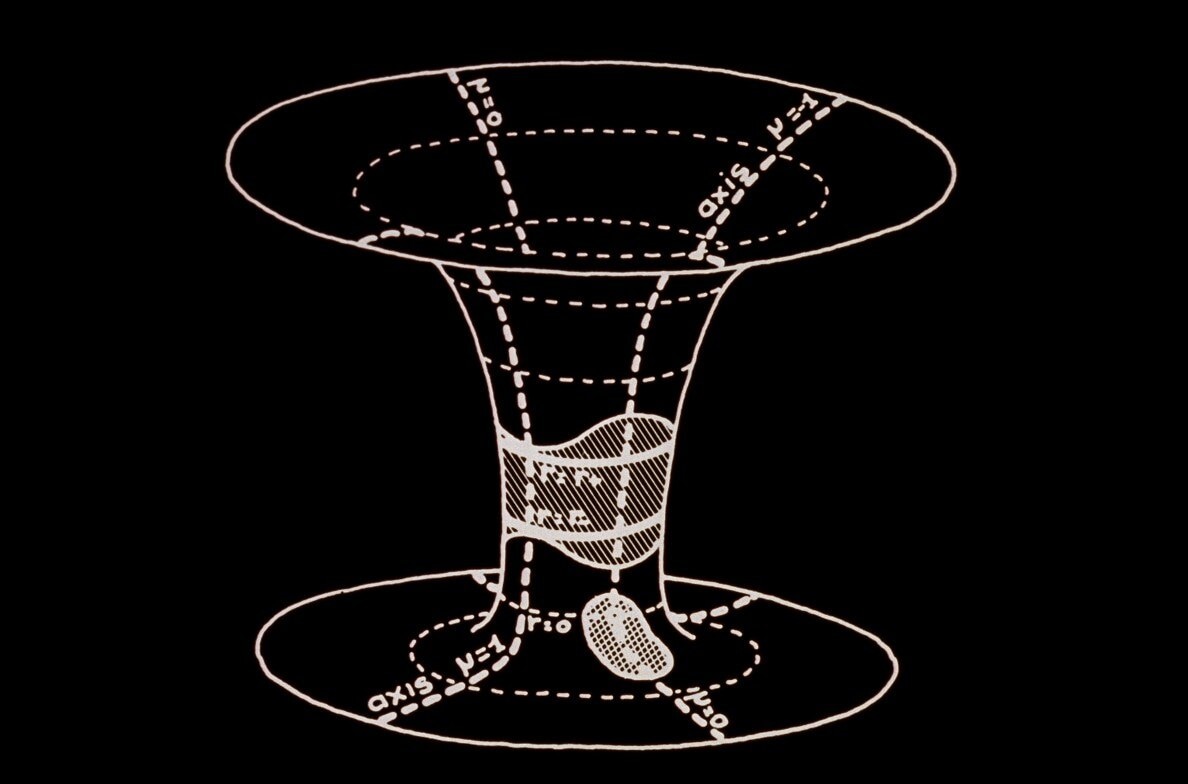
Like all of Morris's films, A Brief History of Time is a work of art as well as a source of information. To exercise total control over the picture's visual qualities, he filmed most of it at London's venerable Elstree Studios, building an exact copy of Hawking's office right down to the Marilyn Monroe posters on the walls. Computer graphics showing equations, vectors, and graphs occasionally punctuate the action, but Morris used such devices as rarely as possible, fearing that too much technical data would crowd out the profound humanity that Hawking embodied for him. A Brief History of Time is what Morris calls "biography as dreamscape," imparting a subtle touch of surrealism to its real-life subject matter.
Reviews of Morris's film were good, although many critics contrasted their enjoyment of the documentary with their inability to fathom Hawking's physics. New York Times critic Vincent Canby thanked Morris for rescuing "everyone who feels somehow inadequate for failing to mush on to the last page" of Hawking's book, adding that the movie "has its impenetrable moments [but] is also something of a delight." Desson Howe began his Washington Post review by praising the film's "engrossing barrage of juxtapositions" and went on to call Hawking a "gnarled, witty and appealing" screen persona. Reviewing the film in The Christian Science Monitor, I described it as a "deliberately crafted artifact that addresses real people, events, and ideas within a carefully conceived framework of musical rhythms, painterly compositions and richly cinematic montage passages."
Morris's inspired directorial ideas are complemented by the expert camerawork of John Bailey and Stefan Czapsky; razor-sharp editing done by Brad Fuller; and haunting minimalist music by Philip Glass, fresh from the triumph of his score for Morris's previous picture, The Thin Blue Line (1988). Morris returned to the scientific world in his 1997 romp Fast, Cheap & Out of Control, then went in more political directions with such timely works as Mr. Death: The Rise and Fall of Fred A. Leuchter, Jr. (1999), The Fog of War: Eleven Lessons from the Life of Robert S. McNamara (2003), The Unknown Known (2013), and the brilliant miniseries Wormwood (2017). Equations and all, A Brief History of Time stands with his most memorable and compelling achievements.
Director: Errol Morris
Producer: David Hickman
Screenplay: Stephen Hawking, based on his book
Cinematographers: John Bailey, Stefan Czapsky
Film Editing: Brad Fuller
Art Direction: David Lee
Production Design: Ted Bafaloukos
Music: Philip Glass
With: Stephen Hawking, Isobel Hawking, Dennis Sciama, Roger Penrose, John Wheeler (themselves)
Color-80m.
by David Sterritt
A Brief History of Time
by David Sterritt | October 26, 2018
SIGN UP FOR OUR NEWSLETTERS

CONNECT WITH TCM