The Moonshine War (1970)
From 1920-1933, all production and sales of alcohol were banned throughout the United States. During the 13 years of Prohibition, illegal booze was produced and sold by bootleggers to meet the public's demand. This created a black market for alcohol and strengthened various criminal organizations. By 1932, it was painfully clear that Prohibition had done more harm than good and in 1933 it was finally repealed. In Elmore Leonard's 1969 novel The Moonshine War, he chronicles those final days of Prohibition and the scramble for bootleggers to make money while demand for illegal booze is still high. A year after its release, Leonard wrote the adapted screenplay for his story for The Moonshine War (1970), directed by Richard Quine.
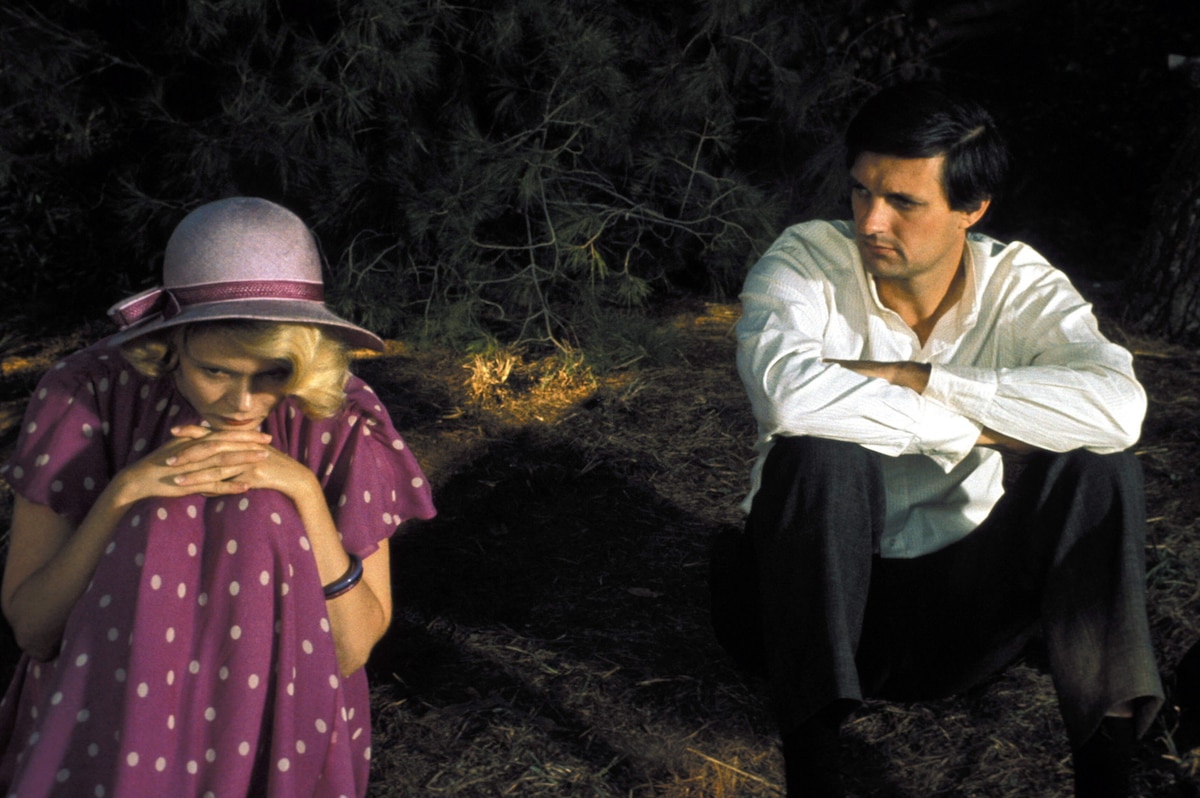
Patrick McGoohan is Frank Long, an agent with the Internal Revenue Service (IRS). Frank pays a visit to his old Army friend John "Son" Martin (Alan Alda), who is living in Kentucky. During his visit, Frank discovers that Son is operating a large moonshine still. In exchange for staying quiet about the still, Frank asks for a share of Son's profits. When Son refuses his demands, Frank hires ex-convict Dr. Emmett Taulbee (Richard Widmark) to strongarm Son into cooperating. Things do not go according to plan--threats, violence, murder and kidnapping--and Frank quickly realizes that he is in over his head.
Irish-American actor Patrick McGoohan was a staple in both television and movies throughout the 1960s and 1970s, and he is perhaps best known for his work on the series Secret Agent and The Prisoner, as well as his role as Warden in Don Siegel's Escape from Alcatraz (1979) starring Clint Eastwood.
Known for his tough guy roles in film noir, Westerns and war movies, actor Richard Widmark got his start as the ultimate baddie Tommy Udo in the film noir classic Kiss of Death (1947), directed by Henry Hathaway and starring Victor Mature and Coleen Gray. His performance in this film earned him an Academy Award nomination for Best Supporting Actor--the lone nomination in his long and prolific career.
Detroit-native Richard Quine was primarily an actor before becoming a film director, appearing in several films including William Wyler's Counsellor-at-Law (1933) starring John Barrymore; Busby Berkeley's Babes on Broadway (1941) starring Judy Garland and Mickey Rooney; and Alexander Hall's My Sister Eileen starring Rosalind Russell and Brian Aherne. But by 1948, Quine was interested in a directorial career, co-directing his first film with William Asher, Leather Gloves (1948), a boxing drama for Columbia Pictures starring Cameron Mitchell and Virginia Grey. In the 1950s and 1960s, Quine made several fun, light comedies for Columbia Pictures and is perhaps best known for his legendary multi-film collaboration with Jack Lemmon on a number of pictures, including the remake of My Sister Eileen (1955); Operation Mad Ball (1957); 1958's Bell, Book and Candle (co-starring another frequent Quine collaborator, Kim Novak); and How to Murder Your Wife (1965). By the 1970s, Quine's career had slowed down considerably with his final credited directorial effort being The Prisoner of Zenda (1979), a comedic spin on Anthony Hope's classic action-adventure tale, starring Peter Sellers.
Considered one of the most influential writers of the last century, Elmore Leonard got his start as a copywriter for an advertising agency. By the 1950s, Leonard was a staple in pulp fiction, particularly Westerns. Following his first full-length novel The Bounty Hunters, published in 1953, many of Leonard's stories were adapted for the screen (with Leonard often writing the adapted screenplays himself), including The Tall T (1957), directed by Budd Boetticher and starring Randolph Scott; 3:10 to Yuma (1957), directed by Delmer Daves and starring Glenn Ford and Van Heflin; and Hombre (1967), directed by Martin Ritt and starring Paul Newman and Fredric March. Leonard was also the writer behind Quentin Tarantino's 1997 film Jackie Brown (based on Leonard's novel Rum Punch); Steven Soderbergh's Out of Sight (1998); and Graham Yost's popular television series Justified (2010-2015), based on Leonard's short story "Fire in the Hole".
The Moonshine War features the original songs "Ballad of the Moonshine," written and performed by Hank Williams Jr. and "It Takes All Kinds of People" written and performed by Roy Orbison. These songs are in addition to a musical score written by composer and conductor Fred Karger, perhaps best known for his work on films such as When the Boys Meet the Girls (1965); Frankie and Johnny (1966); and Hot Rods to Hell (1967).
Director: Richard Quine
Producer: Martin Ransohoff
Screenplay: Elmore Leonard
Cinematography: Richard H. Kline
Editing: Allan Jacobs
Art Direction: Edward C. Carfagno and George W. Davis
Music: Fred Karger
Cast: Patrick McGoohan (Frank Long), Richard Widmark (Dr. Emmett Taulbee), Alan Alda (John "Son" Martin), Melodie Johnson (Lizann Simpson), Will Geer (Sheriff Baylor), Susanne Zenor (Miley Mitchell) and Harry Carey, Jr. (Arley Stamper).
C-100m
By Jill Blake
The Moonshine War
by Jill Blake | October 26, 2018
SIGN UP FOR OUR NEWSLETTERS

CONNECT WITH TCM