Still an unsung maverick who came in at the forefront of both '90s indie filmmaking and a new generation of female filmmakers, New York-based writer-director Sarah Jacobson would likely be better known had her life not been cut short. In fact, she only has one feature film to her name: Mary Jane's Not a Virgin Anymore (1998), shot on Super 8 color reversal film with a deliberately rough and gritty sensibility that still divides unsuspecting viewers.
Jacobson had already earned attention with her 1993 lo-fi short, I Was a Teenage Serial Killer, made under the wing of avant-garde legend and mentor George Kuchar whom she had met at the San Francisco Art Institute. She also took the unusual step of selling her films directly through mail order rather than going through the usual film distribution routes. In a New York Press interview Jacobson recalled being exposed to counterculture films through the influential TV series Night Flight on USA, with Susan Seidelman's Smithereens (1982) in particular sparking a revelation: "I decided then that I wanted to make films in which women didn't get killed, raped or married--cool films about cool women."
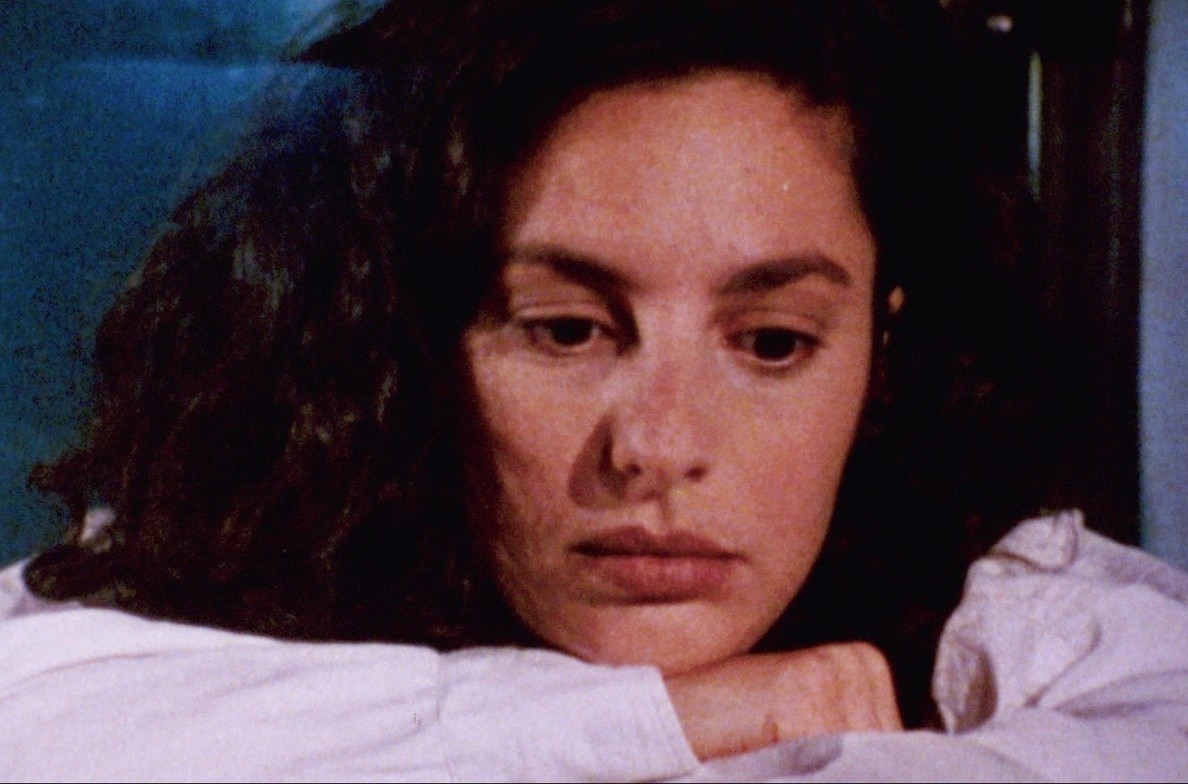
The process of making Jacobson's sole full-length feature took three years from writing to completion, with its premiere screening held at the Chicago Underground Film Festival. As the title indicates, the film deals with female sexuality in a casual and positive way courtesy of Jane (Lisa Gerstein), a movie theater employee whose loss of virginity becomes the catalyst for a bold look at coming of age and all of life's challenges that come along with the process. "One of the reasons I made the movie was because I really wanted to tell guys what I liked about sex, instead of just saying, 'It's different for girls,'" Jacobson explained in a Film Vault interview in 1998. "I wanted guys to be able to see it from a girl's point of view and kind of understand women and not have to be all embarrassed about it. To tell you the truth, there's been a lot of young guys who have been so into the movie."
Aiding Jacobson's cause was her affiliation with movers and shakers in the local film and music scene, most notably a particular champion in fellow female director Tamra Davis, who made a splash with Guncrazy in 1992. The film also boasts some of her other connections in cameo roles including Kuchar, Dead Kennedys' Jello Biafra and even a fleetingly-glimpsed Garry Marshall. However, Jacobson never leans on anyone else to get her voice through loud and clear in the film and pull viewers directly into the perspective of the female protagonist. "To me, feminism means that I should have an equal opportunity to do what I want to do as a woman," Jacobson told the Austin Chronicle when the film was released there. "I don't want to be better than men, I don't want to shut men up. It's like, look, you've got your little thing over here, you've got your B-movie aesthetic, and I've got my interpretation of it that girls can enjoy, too."
Tragically, Jacobson would pass away in 2004 from uterine cancer at the age of 32. However, she left behind a film that can stand proudly as a ragged-edged entry in the salvo of female-centered art house films of the era ranging from Slums of Beverly Hills (1998) and Manny & Lo (1996). This film's lack of wide availability over the years has kept it from sharing that same spotlight with its more familiar peers, but anyone fortunate enough to discover it has been quick to spread the word all the same.
By Nathaniel Thompson
Mary Jane's Not a Virgin Anymore
by Nathaniel Thompson | October 23, 2018
SIGN UP FOR OUR NEWSLETTERS

CONNECT WITH TCM