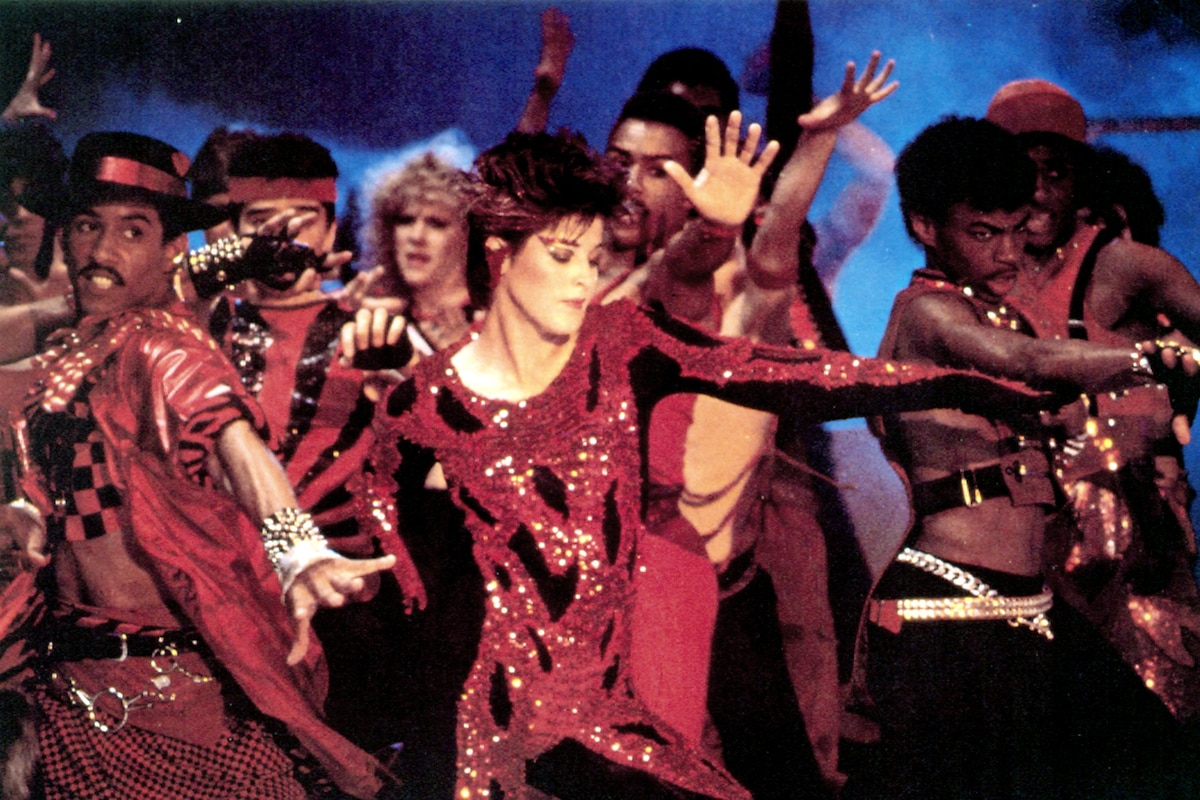
By the time 1984 rolled around, The Cannon Group, a British-formed outfit bought in 1979 by Israel-based cousins Menahem Golan and Yoram Globus, had become a familiar name to moviegoers thanks to action hits like Enter the Ninja (1981) and 10 to Midnight (1983). What they hadn't been able to capture was the all-important youth market, something they had courted with box-office misfires like the wild, futuristic rock musical The Apple (1980), the Italian fantasy Hercules (1983) and the 3D adventure Treasure of the Four Crowns (1983). All that changed when the studio struck gold with Breakin' (1984), released in May of that year, which became the first film to fully cash in on the emerging breakdance craze that had been evolving for decades but didn't reach popular culture until the 1970s. Audiences caught a glimpse of breakdancing in the popular Flashdance (1983) and the lesser seen Wild Style (1983), but the opportunity was wide open for a feature film to go all in on the dance sensation that was captivating kids from big cities to remote towns.
Written by Charles Parker and Allen DeBevoise (with additional story duties by Gerald Scaife), Breakin' has origins that vary depending on which participant is asked. Golan himself claims to have been inspired when his daughter spied breakdancers in 1983 during an afternoon at Venice Beach, while some participants in the film had appeared earlier in an obscure German documentary, Breakin' N' Enterin' (1983) and Chaka Khan's "I Feel for You" music video. The resulting exposure gave breakout roles to Adolfo Quinones, a.k.a. Shabba-Doo, as Ozone, and moonwalk innovator Michael Chambers, a.k.a. Boogaloo Shrimp, as Turbo. Both stars were retained for the sequel, Breakin' 2: Electric Boogaloo, shot immediately after Breakin' and released in December of the same year. Cannon was particularly eager to capitalize on breakdancing since several other projects were in the works elsewhere, with Beat Street going into production first but opening a month after Breakin'.
Starring opposite Shabba-Doo and Boogaloo Shrimp as the female lead is Lucinda Dickey, a professional dancer who had appeared on Solid Gold and can be spied as one of the fleet-footed Rydell High students in Grease 2 (1982). Her athletic grace caught the eye of casting directors and landed her the lead in Cannon's Ninja III: The Domination (1984), the third installment in its Sho Kosugi-starring ninja series. Cannon's entire release schedule was shuffled around, with Breakin' 2 kept on the fast track. The first Breakin' was also the only Dickey-starring Cannon film directed by Joel Silberg, whose prior work had consisted entirely of Israeli productions but would be followed by two more Cannon music-based features, Rappin' (1985) and Lambada (1990). In fact, Rappin' is often regarded as a third film in the Breakin' line thanks to its focus on hip-hop culture and the presence in all three films of Ice T, who would become one of the most important names in rap as well as a notable actor after his breakthrough film, New Jack City (1991). The other two Dickey films were helmed by one of Cannon's most dependable go-to directors, Sam Firstenberg, who would later kick off the American Ninja series. Shabba-Doo, Boogaloo Shrimp and Dickey would fade away from the big screen limelight after their tenure at Cannon, with Dickey retiring from film acting entirely after one more film, the tongue-in-cheek slasher film, Cheerleader Camp (1988).
Of course, no discussion of Breakin' would be complete with mentioning one of the greatest factors in its box office success (over $38 million, one of the biggest hits in the Cannon roster): the soundtrack. Distributed by Polydor, the LP spawned several chart hits and dance club favorites including "Breakin'... There's No Stopping Us" by Ollie & Jerry, "Freakshow on the Dance Floor" by Bar-Kays, "Ain't Nobody" by Rufus and Chaka Khan and an early rapping appearance by Ice-T on "Reckless" by Chris "The Glove" Taylor and David Storrs. Even for critics who weren't won over by the film's minimal dance competition storyline, the music and dance numbers remain classics of their kind and a harbinger of the hip-hop wave to come.
By Nathaniel Thompson
Breakin'
by Nathaniel Thompson | September 05, 2018
SIGN UP FOR OUR NEWSLETTERS

CONNECT WITH TCM