In the familiar lingo of movie promos: Before Monterey Pop (1968), before Woodstock (1970), there was Festival.
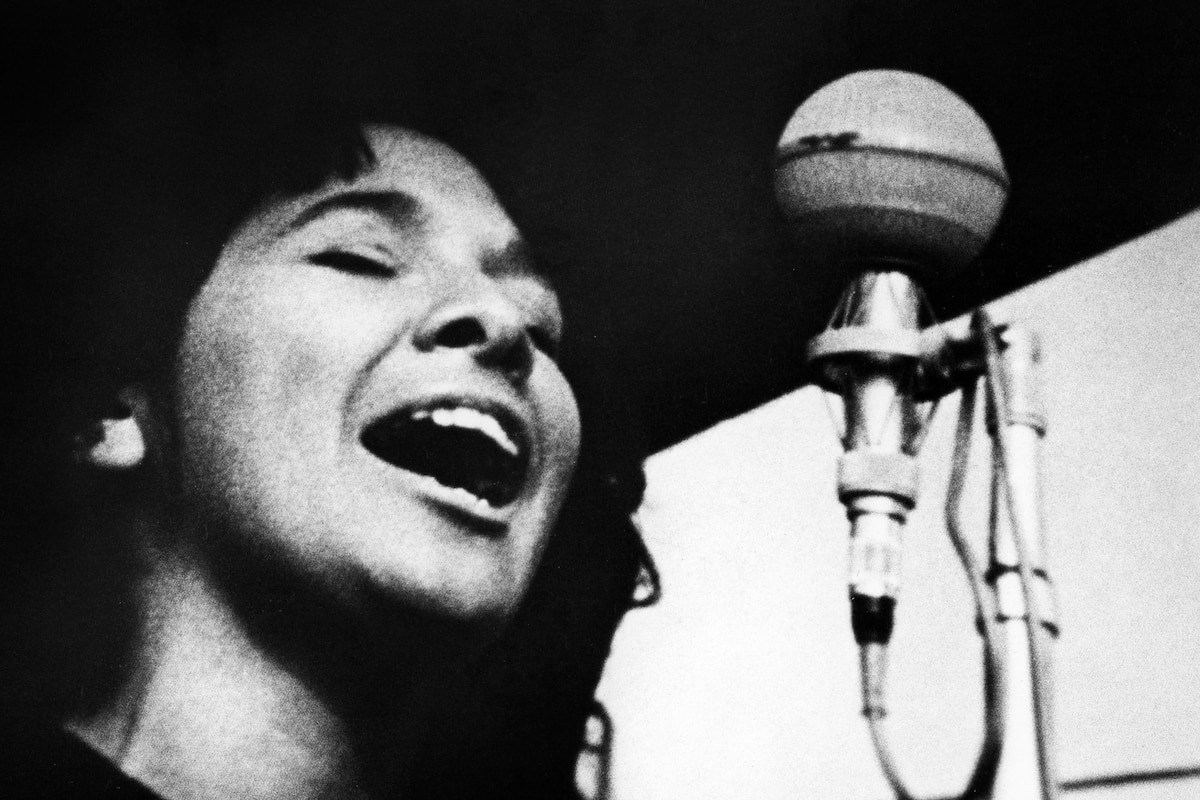
More specifically we can say: Before rock became the dominant music of the counter-culture, there was folk, and this documentary captures most of the leading lights of that movement over the course of three Newport Folk Festivals in 1963, 1964 and 1965. The film captures performances by Joan Baez, Peter Paul and Mary, Judy Collins, Pete Seeger, Donovan, Odetta, and many more. It also includes the moment--not well received at the time (1965)--when Bob Dylan went electric, packing in his acoustic set in favor of a fully plugged-in back-up band. While some praised Dylan's move into a new musical era, many folk purists were angered by what they saw as his betrayal of the genre and movement. It would be his last time playing at Newport for 37 years.
The film was conceived, produced and directed by Murray Lerner, who earned a Best Documentary Feature Academy Award nomination for his work here. The picture also won the San Giorgio Prize at the Venice Film Festival. Lerner, who died in 2017 at the age of 90, was a pioneer in feature-length music documentaries, including films on Miles Davis, Jimi Hendrix, Jethro Tull, Leonard Cohen and The Who, many of them recorded at the UK's legendary Isle of Wight Festival. Stepping outside his usual rock milieu, Lerner also created the acclaimed From Mao to Mozart: Isaac Stern in China (1979), which won the Best Documentary Feature Academy Award.
The film also highlights how folk fans were exposed to genres not usually associated with the stereotypical college or urban coffee house scene of the early 1960s. Performers like Johnny Cash, Howlin' Wolf, Son House, the Staple Singers, Mississippi John Hurt, Sonny Terry and others brought their brand of blues, gospel, soul and country to eager festival audiences.
If there is one quibble about this valuable historical record, it would be that the musical numbers are not shown in their entirety. Instead, Lerner opted to showcase the long roster of acts over the three-year period. But it's a minor quibble, indeed. Some of the musicians speak in brief interview clips, but the true essence of their art is revealed in their performances, their enthusiastic reception by festival fans, and occasional shots of the artists jamming off stage.
Beyond the music itself, Festival is a reminder of what these gatherings were like before the age of corporate sponsorship, endless swag and ubiquitous electronic devices mediating between the performer and the spectator. As Amanda Petrusich noted in her Criterion Collection essay, the documentary "reminds us of the original model: a gathering of like-minded people who were drawn not only to the populist music they were playing and listening to but also to genuine engagement in the larger questions that were agitating their society."
Director: Murray Lerner
Producer: Murray Lerner
Screenplay: Murray Lerner (credited as "conceived by")
Cinematography: Francis Grumman, Murray Lerner, Stanley Meredith, George Pickow
Editing: Howard Alk
By Rob Nixon
Festival
by Rob Nixon | July 02, 2018
SIGN UP FOR OUR NEWSLETTERS

CONNECT WITH TCM