Blondie (1938) began life on September 8, 1930 as a comic strip by Chic Young about a flapper called "Blondie Boopadoop" who marries wealthy playboy Dagwood Bumstead. The Bumsteads disapprove of Blondie and disinherit Dagwood when the couple marries and he goes to work at a construction company owned by Mr. Dithers. Columbia Pictures purchased the film rights to the strip and would eventually create a twenty-eight film series of "B" pictures.
Frank R. Strayer directed from a script that was originally set to be adapted by Aurania Rouverol, but was eventually written by Richard Flournoy. Many cast changes were made in pre-production. Blondie was going to be played by Gloria Blondell, sister of Joan Blondell, then Una Merkel was to star with Stuart Erwin as Dagwood. According to the American Film Institute, Shirley Deane had been cast, but illness prevented her from playing the role. Blondie finally went to Penny Singleton, who had been in films for years as a brunette under her real name of Dorothy McNulty, including a bit part in After the Thin Man (1936). Singleton would bleach her hair to play Blondie, and her co-star for all twenty-eight films was character actor Arthur Lake.
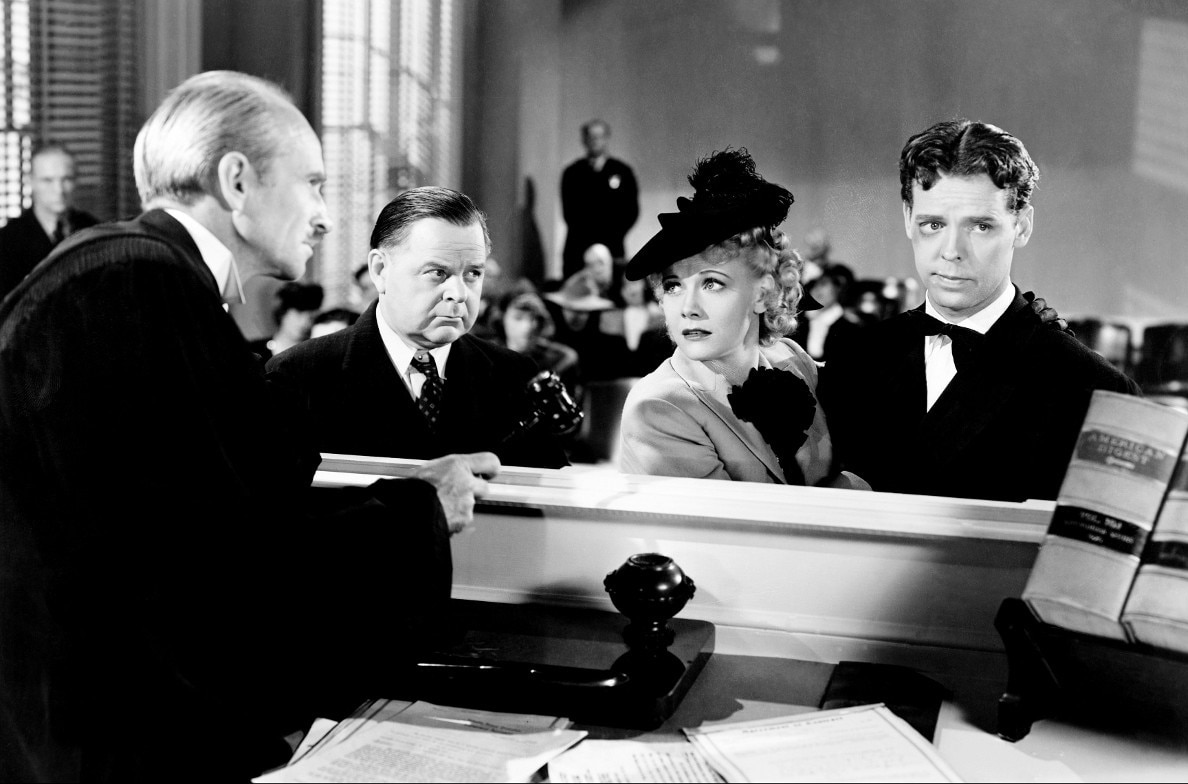
The film went into production on September 12, 1938 and lasted less than a month, wrapping on October 7th. In the cast were veteran character actors Gene Lockhart as C.P. Hazlip and his real-life wife, Kathleen Lockhart as Blondie's mother, Jonathan Hale as Mr. Dithers, and young Larry Simms as Baby Dumpling. Simms would stay with the series until the end, with his character evolving from "Baby Dumpling" to Alexander Bumstead. The film version of Blondie makes a major change to the storyline of the comic strip. Blondie and Dagwood became high school sweethearts instead of a flapper and a disinherited playboy, which was more in line with the values of Depression-era America. The film opens with the Bumsteads celebrating their fifth wedding anniversary and, like many families in the 1930s, short on cash. Blondie presses her husband to ask his boss, Mr. Dithers, for a raise to pay off the new living room set she bought on credit. When Dagwood arrives at work, he learns that the loan he co-signed for Dithers' former secretary has come due and he is now responsible. While Dithers won't give Dagwood a raise, he promises that he will both pay the loan and give Dagwood the raise if he can convince Hazlip to use their company for a construction project.
Blondie was a surprise hit and the studio decided to turn it into a series, but after five years, Columbia had grown tired of the Bumsteads. The audience's negative response to the cancellation was so strong that the studio was forced to bring it back. The Blondie series would continue until 1950, when Columbia could not agree on a new licensing contract with King Features. Blondie had another life on radio, with Lake and Singleton reprising their roles from 1939 until 1949 when Singleton left the radio show. Alice White, Ann Rutherford, and Lake's real-life wife, Patricia van Cleve, would replace her. The Bumsteads appeared on television in three separate series in 1954, 1958, and 1968-69, with Lake playing Dagwood with Pamela Britton as Blondie in the 1958 series. When her time as Blondie was over, Singleton became a union activist for the American Guild of Variety Artists (AGVA). She would also be associated with another iconic cartoon character. Beginning in the 1960s until Jetsons: The Movie in 1990, Penny Singleton would provide the voice of Jane Jetson.
By Lorraine LoBianco
SOURCES:
https://catalog.afi.com/Catalog/moviedetails/3891?sid=42142097-7cb3-42db-b583-ccd9c1c3f94a&sr=0.8563489&cp=1&pos=0
Commire, Anne and Klezmer Deborah Women in World History: A Biographical Encyclopedia
Blottner, Gene Columbia Pictures Movie Series, 1926-1955: The Harry Cohn Years
Fiore, Faye "Obituary Revives Rumor of Hearst Daughter: Hollywood: Gossips in the 1920s speculated that William Randolph Hearst and mistress Marion Davies had a child. Patricia Lake, long introduced as Davies' niece, asks on death bed that record be set straight." The Los Angeles Times 31 Oct 93
The Internet Movie Database
Blondie
by Lorraine LoBianco | April 17, 2018
SIGN UP FOR OUR NEWSLETTERS

CONNECT WITH TCM