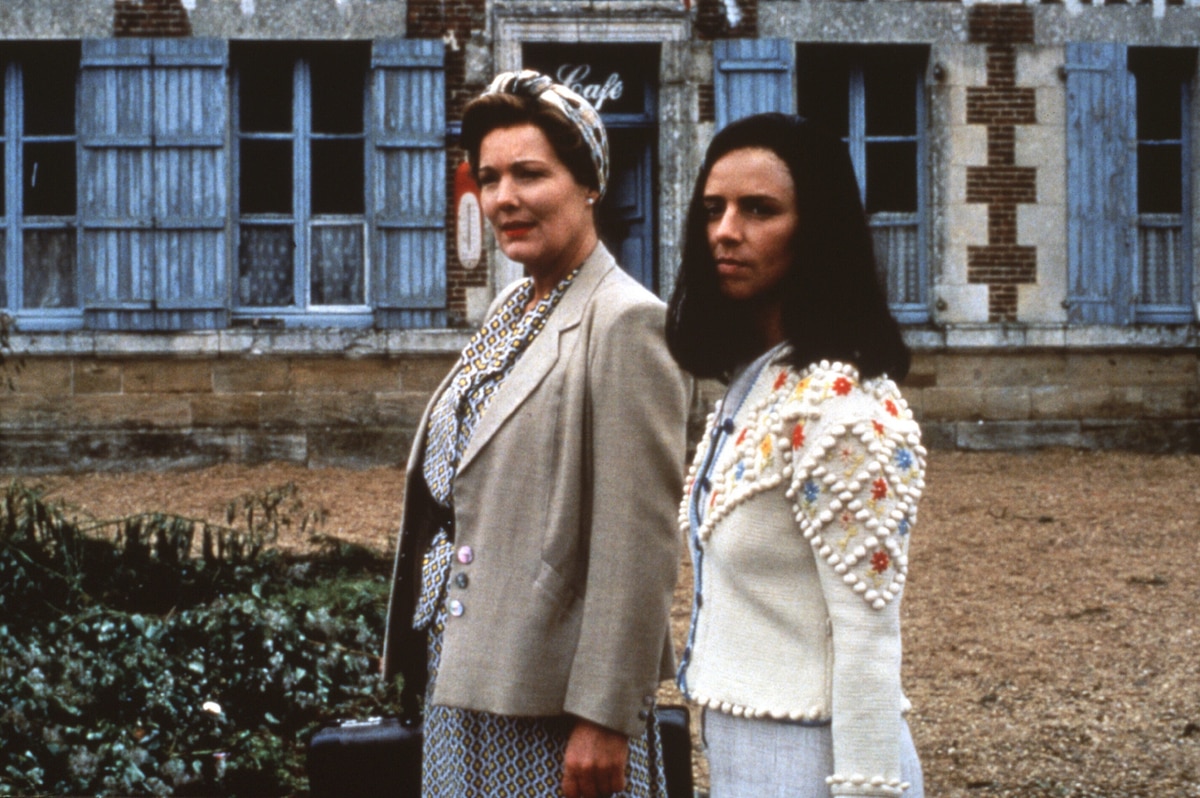
Antonia's Line, written and directed by Dutch filmmaker Marleen Gorris, is even timelier today than when it premiered in 1995 and won the Academy Award for Best Foreign Language picture of the year. The eponymous heroine is a strong, self-confident woman who returns to her ancestral home after World War II to arrange the funeral of her dying mother and then set up a happily eccentric household run by and for the females of the family. In addition to her daughter, the household eventually includes a granddaughter and great-granddaughter, and they share the matriarch's distinctive personality, albeit in different ways. Feminism has taken numerous forms since this film was new, but in the age of the Me-Too movement Gorris's warmly humanistic vision has special resonance.
For a movie that celebrates the satisfactions of ordinary lives, Antonia's Line starts on a surprisingly dark note, introducing Antonia as an elderly woman on what she knows will be the last day of her life - not because she's suicidal or fatally ill, but just because she's sensitive enough to realize when enough is enough, as her great-granddaughter puts it in the film's narration. The rest of the story unfolds as an extended flashback, beginning with Antonia and her daughter arriving in the village where Antonia grew up. There she meets new friends and renews acquaintances with old ones, passing through brief encounters and big adventures with a levelheaded blend of humor and skepticism. The opening scene makes it unavoidable that Antonia will die in the finale, but Gorris makes this the opposite of morbid, reminding us that although every individual's life inevitably ends, the lives of a household, a family, a community, and humanity itself inevitably continue. Plenty of deaths and other traumas occur in Antonia's Line, yet the story's overarching tone is vibrantly optimistic.
A key to the film's appeal is the gallery of vivid characters it sketches, some in detail and others in quick, deft strokes that make them memorable even when their screen time is limited. Antonia is the most striking one, providing a sturdy anchor for the multigenerational tale. Another central figure is her daughter, Danielle, a gifted painter who wants a child but doesn't want a husband - a common attitude today, but quite bohemian in the era when the story takes place. Danielle gets her wish and gives birth to Thérèse, a little girl brilliant enough to solve calculus equations before breakfast. Years later Thérèse has her own child, Sarah, whose narration clarifies and embroiders the tale.
Other characters come along in turn, facing a diverse array of joys and challenges. Boer Bas, a widowed farmer, wants Antonia to be the stepmother of his five sons, and when she turns down his request, he settles for a relationship of mutual affection spiced up by weekly trysts in a hideaway designed for that purpose. Deedee and Loony Lips, who have mental disabilities, get married and start a family. A lout named Pitte rapes both Deedee and Thérèse, tempering the film's generally high spirits with moments of unsparing grimness. A woman known as Mad Madonna is forbidden by her Catholic faith from marrying the Protestant she loves, so she vents her grief by regularly howling at the moon. The town's young curate flees from his pulpit after deciding that his love of life contradicts the church's fascination with death. And one of the most important characters is Crooked Finger, a man with a small number of scenes but a great deal of interest. He is the film's most openly philosophical figure, voicing a relentlessly downbeat view of life - nothing has meaning, hope is ridiculous, death is the end of everything - that throws Gorris's vigorously upbeat perspective into high relief.
Gorris garnered both praise and criticism for her first feature, the controversial 1982 drama A Question of Silence, about three women who murder a male dress-shop owner in a spontaneous burst of rage against patriarchal privilege. Her subsequent work includes the 1997 screen adaptation of Virginia Woolf's towering novel Mrs. Dalloway, starring Vanessa Redgrave and Natascha McElhone, who play the title character at different ages. Gorris's feminist loyalties and commitment to gay and lesbian equality are clear, and Antonia's Line endorses these values with buoyancy and charm. No less impressive are the film's first-rate technical achievements, among which are Willy Stassen's luminous cinematography and Jan Sewell's remarkable makeup effects, which make the same performers look young, old, and in between as their characters age over the course of half a century.
Although the social and cultural themes of Antonia's Line relate to a wide range of real-world issues, the film is thoroughly steeped in the tradition of magical realism, placing everyday events into a narrative realm where religious statuary comes alive and corpses sit up in their coffins. Balancing the real and the magical with steady skill and wit, Gorris's feminist fable makes for enjoyable viewing with a sprightly and enlightened outlook on modern life.
Director: Marleen Gorris
Producer: Hans de Weers
Screenplay: Marleen Gorris
Cinematographer: Willy Stassen
Film Editing: Michiel Reichwein, Wim Louwrier
Art Direction: Harry Ammerlaan
Music: Ilona Sekacz
With: Willeke van Ammelrooy (Antonia), Els Dottermans (Danielle), Jan Decleir (Boer Bas), Marina de Graaf (Deedee), Mil Seghers (Crooked Finger)
Color-102m.
by David Sterritt
Antonia's Line
by David Sterritt | January 23, 2018
SIGN UP FOR OUR NEWSLETTERS

CONNECT WITH TCM