Ivan Dixon's aptly titled Trouble Man reached the screen in 1972, about a year after Melvin Van Peebles's melodrama Sweet Sweetback's Baadasssss Song launched the so-called blaxploitation genre, which generated some two hundred films before tapering off around 1977. Blaxploitation specialized in stories of crime and violence set in urban environments, laced with romantic interludes as well as the hard-hitting action and rugged African-American heroes that were the genre's main trademarks. Many critics were angered by blaxploitation's indulgence in racial stereotyping and its habit of linking black characters with negative elements like gunplay, drug abuse, gambling, prostitution, and pimping. But others cheered its energetic narratives, loved the funk and soul music that resonated on its soundtracks, and hailed its ability to reinvent old Hollywood conventions in new African-American terms. It also provided black performers and filmmakers with a much-needed showcase for talents that the mainstream industry rarely spotlighted so effectively.
It's a fundamental irony that white filmmakers were heavily involved in blaxploitation, which was quickly embraced by Hollywood studios as a way of reaching African-American moviegoers, a scandalously underserved demographic that made up almost a third of the ticket-buying audience in some cities. A goodly number of black filmmakers did get their voices heard, however, and few were more able than Dixon, who was also a well-established actor with a long list of credits including a starring role in Michael Roemer's sensitive drama Nothing But a Man, which had reaped deserved acclaim in 1964. Trouble Man was the first feature he directed, and while it owes a large debt to the blaxploitation formulas that had taken their definitive shape in Gordon Parks's private-eye thriller Shaft a year earlier, its efficient storytelling and stylish acting demonstrate the professionalism that made Dixon a busy film and television director for the next two decades.
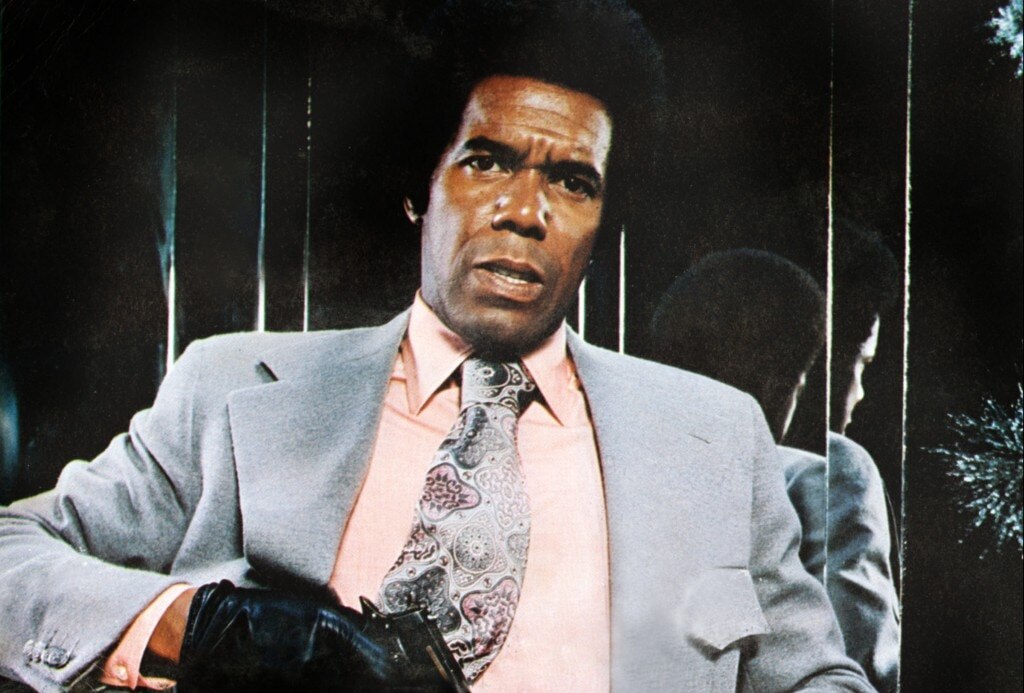
The main character of Trouble Man is the mysteriously named Mr. T, whose moniker definitely stands for Trouble and may also be a deliberate echo of Mr. Tibbs, the African-American hero played twice by Sidney Poitier, first in Norman Jewison's In the Heat of the Night, which won multiple Academy Awards in 1967, and again in Gordon Douglas's They Call Me Mister Tibbs! in 1970. Played by Robert Hooks with unflappable cool interrupted by bursts of hard-boiled intensity, T is a freelance fixer based in the South Central neighborhood of Los Angeles, where he spends his time shooting pool, doing detective work for selected clients, and sparring with police officers who treat him with a combination of open suspicion and grudging respect.
The story starts when T receives a visit from two smalltime gambling kingpins, a black crook named Chalky (Paul Winfield) and a white crook named Pete (Ralph Waite), who want him to attend their floating dice game and unmask the four thieves who have been robbing the operation on a regular basis. After demanding a large fee for his services, T arrives at the game and goes to work. He realizes too late that the whole scheme is a setup designed to take out a rival boss called Big (Julius Harris), and when Chalky shoots Big's collector under cover of a stickup, T finds that he's the top suspect for the murder. Now his task is to stay out of jail, steer clear of Big and the antagonistic police captain Joe Marx (Bill Smithers), and finger the real killer before he goes down for the crime himself.
Dixon made Trouble Man for Twentieth Century Fox using excellent actors and a first-rate technical crew. The most distinguished member of the cast is Hooks, who came to the production as a Tony Award-nominated actor, established TV star, and founder of New York's renowned Negro Ensemble Company, which he headed for more than a dozen years starting in 1965. Chalky is played by Paul Winfield, a prolific stage and TV actor who became one of the first African-Americans to receive an Oscar nomination with Martin Ritt's drama Sounder (1972), which opened a few weeks before Trouble Man premiered. Ralph Waite achieved TV stardom in The Waltons, the 1972-81 series that started regular episodes on CBS just as Trouble Man was released, and Harris, who made his screen debut in Dixon's Nothing But a Man, went on to blaxploitation fame in pictures like Gordon Parks, Jr.'s Super Fly (1972) and Larry Cohen's Black Caesar (1973), although he's probably best known for playing the chief villain in Guy Hamilton's 1973 James Bond thriller Live and Let Die.
Trouble Man was produced by Joel D. Freeman, who had entered the blaxploitation arena as producer of Gordon Parks's Shaft. The art director was Albert Brenner, one of Hollywood's most respected designers. The film editor was Michael Kahn, now known for a long list of Steven Spielberg pictures. And the music is by no less a Motown legend than Marvin Gaye, whose themes for the film have been recycled in numerous other productions over the years.
Blaxploitation has always been controversial, and although Dixon's picture has plenty of supporters, the influential New York Times critic Vincent Canby was troubled by Trouble Man in 1972. Describing it as a "white-financed black film," he wrote that by sanctifying the material success (cars, clothes, the works) of a murderous and mercenary "supercat," it becomes "a four-square, all-American movie that urges the preservation of the rotten system that makes all the loot possible" and mindlessly "neutralizes" the social change needed to reform and repair that system.
A more recent and sympathetic view came from NPR commentator Jimi Izrael, who commended the film as a "narrative tailored for a specific audience that was hungry for no-nonsense heroes," adding that some viewers "count it among the best of its kind" while others "count it among the worst." Deciding which take on Trouble Man has more to offer is one of the best reasons to watch Dixon's picture today.
Director: Ivan Dixon
Producer: Joel D. Freeman
Screenplay: John D.F. Black
Cinematographer: Michel Hugo
Film Editing: Michael Kahn
Art Direction: Albert Brenner
Music: Marvin Gaye
With: Robert Hooks (Mr. T), Paul Winfield (Chalky), Ralph Waite (Pete), Bill Smithers (Captain Joe Marx), Paula Kelly (Cleo), Julius Harris (Big), Akili Jones (Chi), Wayne Storm (Frank), Vince Howard (Preston), Stack Pierce (Collie), Larry Cook (Buddy), Virginia Capers (Macy), James "Texas Blood" Brown (Wesley), Tracy Reed (Policewoman), Felton Perry (Bobby), Howie Steindler (Howie), Bill Henderson (Jimmy), Rick Ferrell (Pindar), Jita Hadi (Leroy), John Crawford (Sergeant Koeppler), Gordon Jump (Salter) Edmund Cambridge (Sam), Lou Peralta (Detective Vadez), John Gruber (Detective Millers), Charlene Jones (Lucille), Karen Welch (Salter's Secretary), Betty Bresler (Nurse Katz), Jean Bell (Leona), Eric Strode (Dude), William Stevens (Bogus Cop), Harrison Page (Bogus Cop), Simeon Holloway (Watchman), Johnny Edwards (Abbey Walsh), Tom Hernandez (Police Sergeant), Danny "Little Red" Lopez (Danny)
Color-99m.
by David Sterritt
Trouble Man
by David Sterritt | December 21, 2017
SIGN UP FOR OUR NEWSLETTERS

CONNECT WITH TCM