In a remote part of the American Northwest in the 1820s, a scout traveling with an expedition is mauled by a bear and left to die by his companions. He survives and, although badly injured, he manages to track the men down, bent on revenge. Sound familiar?
It should. This Western is loosely based on the life and legend of fur trapper and explorer Hugh Glass (c. 1783-1833), the same source for the more recent film The Revenant (2015), winner of Academy Awards for Best Actor (Leonardo DiCaprio), Director (Alejandro González Iñárritu), and Cinematography (Emmanuel Lubezki).
Man in the Wilderness did not win any awards or even nominations, and reviews were mixed at best (with The New York Times calling it a "flat, pretentious bore"). Some people, however, prefer this earlier version of the story (even with such low-budget production values as a man in a bear suit) to the 2015 film. According to actor Walton Goggins, who appeared in Quentin Tarantino's Western The Hateful Eight (2015), this was one of the films Tarantino showed his cast prior to production on that movie.
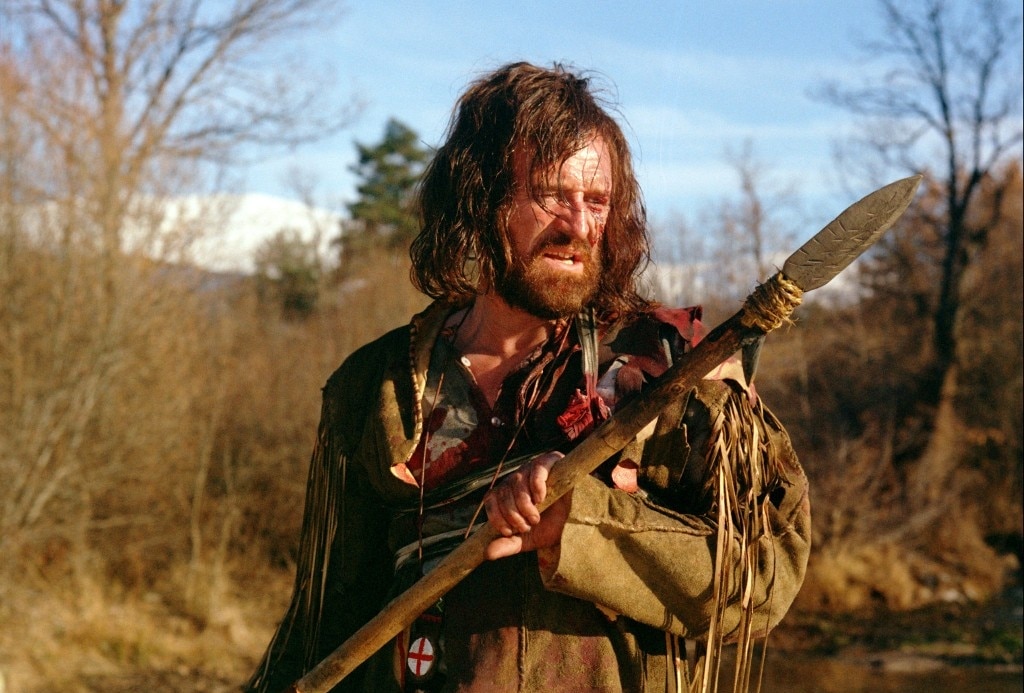
A good part of the reason is the volatile performance of actor Richard Harris who, although he barely speaks for most of the film, carries the weight of the grueling survival story. This was something of a follow-up, in spirit if not in details, to his hit A Man Called Horse (1970), another Western that subjected the star to horrific physical and mental torments. That film was written by Jack DeWitt, who also wrote Man in the Wilderness and the Harris-starred sequel The Return of a Man Called Horse (1976).
In The Revenant the lead character is called Hugh Glass, but here the character Harris plays is named Zach Bass, apparently so producers could avoid paying screen rights for Frederick Manfred's 1954 National Book Award-nominated account of the Glass legend, Lord Grizzly. Manfred did not care for the filmmakers' take on the story and threatened to sue the producers for using his material without rights. The conflict was settled out of court.
The real-life Hugh Glass was born in Pennsylvania but became an explorer of the Upper Missouri River watershed in what is now part of Montana, Nebraska, and the Dakotas. According to historical accounts, after the bear mauling and subsequent abandonment by General William Ashley's 1823 expedition, Glass managed to make his way under grueling physical and environmental conditions to South Dakota. His story was first put in writing in a Philadelphia publication in 1825 and picked up by various newspapers. Its accuracy has been disputed, and with no corroboration from Glass himself, it is believed to have been heavily embellished.
Ashley was a well-known trader, speculator, and later a politician in the 19th century. The character who represents him in the movie, Captain Henry, is an amalgam of William Henry Ashley and Andrew Henry, his partner in the very successful Rocky Mountain Fur Company, and not "Captain Fillmore Henry" as erroneously claimed to be a "historically true" figure in an opening title card.
The character is played in this movie by John Huston, who joined the production two days after quitting as director of The Last Run (1971) after run-ins with lead George C. Scott.
Third billed in the cast as "Indian Chief" was the veteran actor Henry Wilcoxon, who appeared in eight Cecil B. DeMille pictures, including Cleopatra (1934), and The Ten Commandments (1956).
The film was shot over a period of two to three months on a budget of about $2 million. Most of it was filmed in Spain on some of the same terrain David Lean used for Doctor Zhivago (1965).
The picture was the first in years to be screened in the old Princess Theatre in Edmonton, Alberta, Canada. The cinema had been refurbished and renamed the Klondike Theatre in time for the film's Christmas Day 1971 showing.
One other detail in this story may give viewers a vague sense of déjà vu. (Is it déjà vu if the picture it reminds you of came later?) On its way through the wilderness, the expedition laboriously drags along a boat on wheels, calling to mind the much larger boat - and much dafter journey - hauled over the South American mountains by the title character of Werner Herzog's Fitzcarraldo (1982).
Director: Richard C. Sarafian
Producer: Sanford Howard
Screenplay: Jack DeWitt
Cinematography: Gerry Fisher
Editing: Geoffrey Foot
Art Direction: Gumersindo Andrés
Music: Johnny Harris
Cast: Richard Harris (Zach Bass), John Huston (Captain Henry), Henry Wilcoxon (Indian Chief), Percy Herbert (Fogarty), Dennis Waterman (Lowrie), Prunella Ransome (Grace)
By Rob Nixon
Man in the Wilderness
by Rob Nixon | December 13, 2017
SIGN UP FOR OUR NEWSLETTERS

CONNECT WITH TCM