The prolific Japanese filmmaker Kon Ichikawa came to moviemaking as an artist and cartoonist. He was a fan of Chaplin comedies and the animated shorts of Walt Disney in the 1930s and he entered the film industry as an animator before graduating to feature film production. Though best known to western audiences for his intense award-winning dramas The Burmese Harp (1956) and Fires on the Plain (1959), he restlessly explored a variety of genres in his long career, from thrillers (Odd Obsession, 1959) to family drama (The Makioka Sisters, 1983) to fantasy (Princess from the Moon, 1987) to documentary (Tokyo Olympiad, 1965) to comedy (Mr. Pu, 1953).
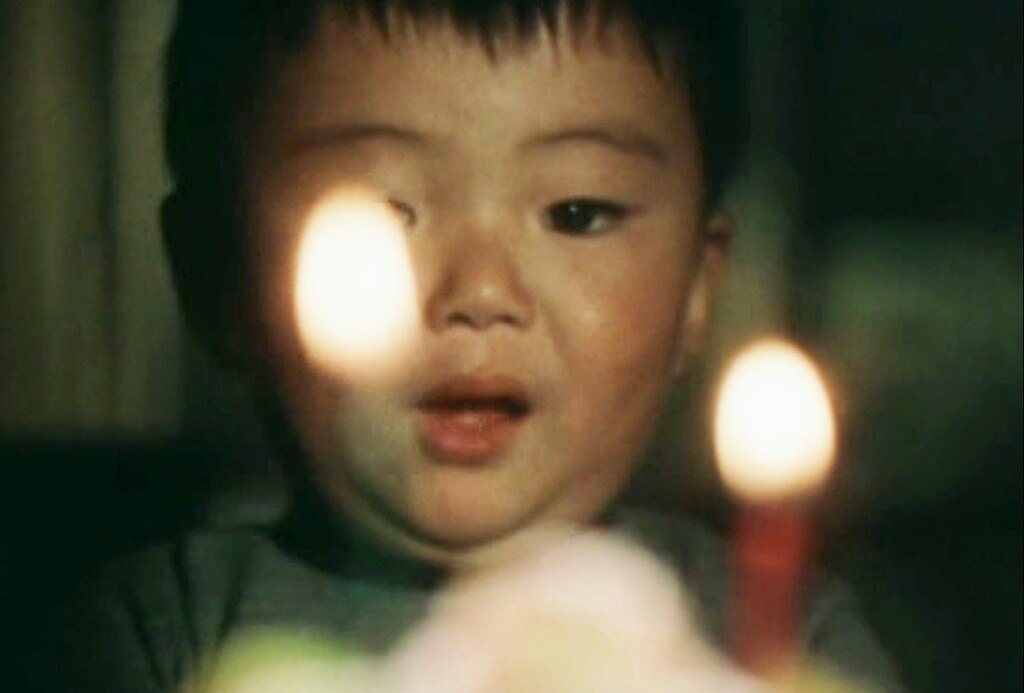
Being Two Isn't Easy (1962) is a family drama in the guise of a comedy. It opens on foggy lights and blurry colors as a voice-over commentary introduces us to Taro, a newborn baby boy describing his fist sensations entering the world, and we return periodically to his narration as he navigates the first two years of his life as the only child of a young married couple, vigilant mother Chiyo (Fujiko Yamamoto) and frustrated father Goro (Eiji Funakoshi). But the English title is a pun that points to the portrait of young parents (the other "two") learning how the responsibility of raising a child changes their lives completely and maturing along with their child.
The assignment was reportedly a punishment from his studio Daiei for going over budget on his previous production, The Outcast (1962). The source material for what was to be a routine studio comedy was a book of essays on child-rearing by Michio Matsuda. The film about family became something of a family affair itself. Natto Wada, Ichikawa's wife and longtime collaborator, transformed the book's observations into a domestic drama with a playful sense of humor with ironic observations of the modern social world of 1960s Japan. Eiji Funakoshi, who plays the salaryman father Goro with a comic exasperation, was also a longtime collaborator, previously starring in the comic mystery The Hole (1957) and (in a far more harrowing role) the World War II thriller Fires on the Plain. The brief animated sequences in Being Two Isn't Easy, which visualize the imagination of the infant Taro, pay tribute to Ichikawa's beginnings and early influences.
The film was a big hit with audiences and it was chosen as the top Japanese film of the year in the Kinema Jumpo poll and submitted by Japan as their official entry in the 35th Academy Awards (it was not, however, chosen as one of the final five nominees).
Sources:
Japanese Film Directors, Audie Bock. Kodansha International Ltd., 1985.
"Being Two Isn't Easy: The Uneasiness of the Family in 1960s Tokyo," Catherine Russell, in Kon Ichikawa, ed. James Quandt. Cinematheque Ontario Monographs, 2001.
World Film Directors, Volume Two: 1945-1985, The H.W. Wilson Company, 1988.
IMDb
By Sean Axmaker
Being Two Isn't Easy
by Sean Axmaker | November 16, 2017
SIGN UP FOR OUR NEWSLETTERS

CONNECT WITH TCM