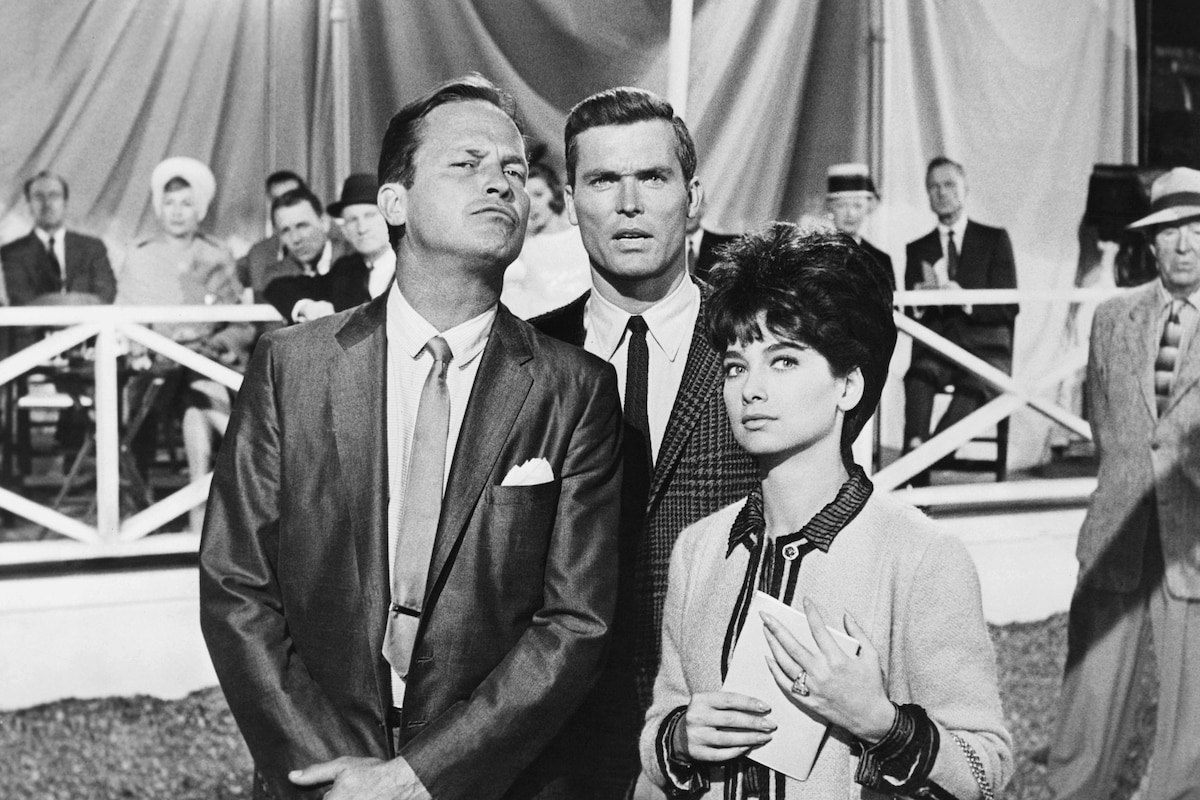
Romantic complications clash with realistic subject matter in writer-producer Joseph Landon's Wall of Noise, a 1963 drama focused on life at the horse racing tracks. Former Orson Welles associate and writer Richard Wilson directed this picture produced by Warner Bros., which likely mandated that much of the acting talent come from the ranks of its contract players. The production moved into Inglewood's Hollywood Park racetrack for a full twenty days - taking over facilities, staff, and horses as well, 36 thoroughbreds in all. The racing footage is exciting and the behind-the-scenes track operations are realistic, but critics faulted the soap-operatics of Landon's screenplay, in which both horses and women seem to be up for sale to the highest bidder. The coarse building contractor Matt (Ralph Meeker) wants to dabble in horses, and hires ambitious trainer Joel (Ty Hardin) to get his stable into shape. But Joel's main concern is gathering enough money to buy his own racehorse at auction. Laura, Matt's unhappy trophy wife (Suzanne Pleshette) wants her freedom. She begins an affair with Joel and tries to slip him some money to bid on a promising horse. Matt fires Joel, who then borrows the money from an ailing agent, Johnny Papadakis (Simon Oakland), who happens to be in love with Ann (Dorothy Provine), Joel's previous girlfriend. Now Matt wants to buy the racehorse, but Joel refuses to sell. Most of the major critics heaped scorn on Wall of Noise's unsympathetic, selfish characters. The reviewers were not kind to the leading actors. Ty Hardin was judged as inexpressive, and Newsweek's critic used half of his review to disparage Suzanne Pleshette's acting abilities. This was her fourth feature film after scoring a success on Broadway in the play The Miracle Worker. Shown more mercy was the lively Dorothy Provine, who was just graduating to big-time film work after five years in Warner Bros. television shows. The trade paper Variety found the film 'somber and oppressive,' citing a final act in which Ty Hardin's unappealing hero forces a sick horse to race. But the reviews were unanimous in their praise for the film's racetrack atmosphere. Cinematographer Lucien Ballard's camerawork aids in the behind-the-scenes-realism, as does the film's use of real track announcers, a genuine auctioneer and a working sports columnist, James Murray. The 'wall of noise' is identified as the din of the crowd, which can sometimes disturb the horses.
By Glenn Erickson
Wall of Noise
by Glenn Erickson | November 09, 2017
SIGN UP FOR OUR NEWSLETTERS

CONNECT WITH TCM