Stalag 17 was one of four Broadway hits Billy Wilder adapted in the 1950s. The others were Sabrina (1954, from the play Sabrina Fair), The Seven Year Itch (1955), and Witness for the Prosecution (1957).
With another picture, Sabrina, set for release, Wilder broke his longstanding, lucrative contract with Paramount reportedly over two conflicts arising out of Stalag 17. One involved the studio's withholding of substantial profits due to Wilder from Stalag 17's runaway box office to make up for the losses incurred by his previous film, Ace in the Hole (1951), which was a box office flop. More serious, however, was a suggestion from Paramount's worldwide distribution executive George Weltner to change the Nazi spy in the story to a Polish prisoner who sold out to the Germans in order to make the picture more sellable in Germany. Wilder, an Austrian-born Jew, shot back with his own story of what the Nazis had done to his family and his people and threatened to sever his connection with the studio if he did not receive an apology. An apology never came, and Wilder's next film, The Seven Year Itch, was made at Columbia.
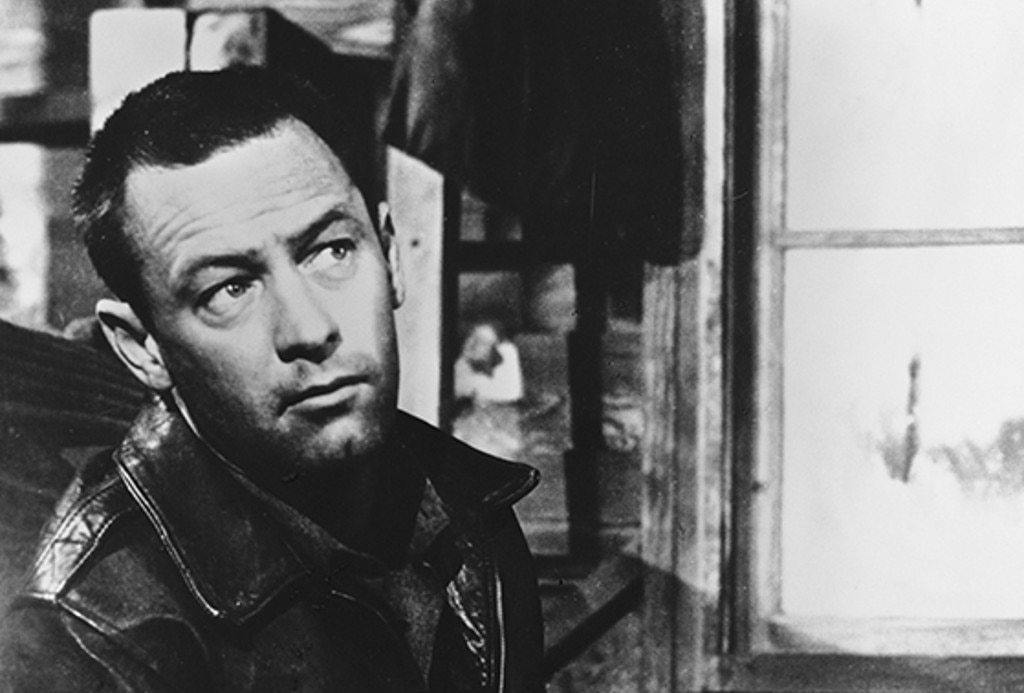
William Holden worked with Wilder three other times: Sunset Boulevard (1950), Sabrina, and Fedora (1978).
Holden's next picture after Stalag 17 was The Moon Is Blue (1953), also from a stage hit, and directed by Otto Preminger, who played the commandant of the prison camp.
Some people speculated Holden won the Best Actor Academy award as compensation for having been bypassed for an earlier Wilder film, Sunset Boulevard. Holden himself reportedly did not feel he should win; he thought the award should go to Burt Lancaster for From Here to Eternity (1953). "I felt adequate in Stalag 17, but I was never really simpatico with Sefton," he later said.
Holden was a little miffed when he was announced as the winner but told he had to be very brief in his acceptance because the telecast show was running long. He grabbed the statue and said merely "Thank you" before walking off.
Glenn Ford told columnists he rejected the offer to accept the Oscar® for Montgomery Clift or Burt Lancaster should either of them win (they both indicated they would skip the awards show) out of loyalty to and support for his good friend Bill Holden.
MGM, producer of Holden's picture Executive Suite (1954), released trailers for the new film a week before the Academy Awards crediting Holden as "Best Male Actor" winner.
According to the book Inside Oscar: The Unofficial History of the Academy Awards (Ballantine, 1986), Robert Strauss was so delighted to receive the Best Supporting Actor nomination that "he printed his acceptance speech in the trade papers in advance."
One of the authors of the play Stalag 17, Edmund Trzcinski, appears in the movie as the soldier who gets a letter from his wife claiming she found a baby on her doorstep that just happened to look exactly like her.
The soldier singing at the Christmas party is Ross Bagdasarian. Shortly after Stalag 17 he was featured as the frustrated songwriter at the piano across the courtyard in Alfred Hitchcock's Rear Window (1954). A prolific composer in real life ("Witch Doctor," "Come On-A My House"), he later created, under the name David Seville, the musical novelty act, The Chipmunks.
Although he had made a handful of pictures in the previous decade, character actor Robert Strauss got his real screen break recreating the role he played on stage, the Betty Grable-obsessed Animal. Strauss worked with Wilder again, as Kruhulik the building janitor in The Seven Year Itch. He made more than 30 more films after Stalag 17 and dozens of TV appearances before his death in 1975.
Harvey Lembeck had a long career as a character actor after playing Shapiro in this film. He's best known as Barbella on the 1950s military sitcom The Phil Silvers Show (aka Sergeant Bilko) and as the comic biker bad guy Eric Von Zipper, which he played in several of the Frankie Avalon-Annette Funicello teen movies of the early 60s.
Peter Graves, who played Price, is the younger brother of James Arness (aka Marshall Dillon of Gunsmoke). Graves is perhaps best known for his role as Jim Phelps in the TV series Mission Impossible, as the seemingly pedophiliac pilot in the disaster movie spoof Airplane! (1980) and as the long-running host of the Biography TV series.
Sig Ruman played the quintessential German on screen in more than 100 films (mostly comedies) between 1929 and 1966. His talents were sought after by the Marx Brothers (three pictures), Ernst Lubitsch (great comic turns in Ninotchka, 1939, and To Be or Not to Be, 1942), and by Billy Wilder. In addition to this picture, Wilder directed him in The Emperor Waltz (1948) and The Fortune Cookie (1966).
The original play on which Stalag 17 was based was produced and directed on Broadway by Jose Ferrer, who won the Best Actor Academy Award for Cyrano de Bergerac (1950) the year Holden was nominated for the first time, for Sunset Boulevard.
Holden's brother, Richard Beedle, had an uncredited bit in the movie. He also played small roles in two other movies the same year.
Rob Nixon
Memorable Quotes from STALAG 17
COOKIE (Gil Stratton): I don't know about you, but it always makes me sore when I see those war pictures... all about flying leathernecks and submarine patrols and frogmen and guerillas in the Philippines. What gets me is that there never w-was a movie about POWs, about prisoners of war.
SEFTON (William Holden): Two packs of cigarettes says they don't get out of the forest.
SHAPIRO (Harvey Lembeck): He'd make book on his own mother getting hit by a truck.
VON SCHERBACH (Otto Preminger): Nasty weather we're having, eh? And I was so hoping to give you a White Christmas, just like the ones you used to know.
SHAPIRO: I'm tellin' ya, Animal, these Krauts ain't kosher.
ANIMAL (Robert Strauss): (looking at the egg Sefton is cooking) Where'd it come from?
SEFTON: From a chicken, bug-wit.
DUKE (Neville Brand): Come on, Trader Horn, let's hear it. What'd you give the krauts for that egg?
SEFTON: Forty five cigarettes. Price has gone up.
DUKE: They wouldn't be the cigarettes you took us for last night?
SEFTON: What was I gonna do with them? I only smoke cigars.
SEFTON: What's the beef, boys? So I'm trading. Everybody here is trading. Maybe I'm trading a little sharper. Does that make me a collaborator?
SCHULZ (Sig Ruman): That's me in Cincinnati.
ANIMAL: Who's the other wrestler, with the mustache?
SCHULZ: That's my wife.
SCHULZ: How do you expect to win the war with an army of clowns?
DUNBAR (Don Taylor): We sorta hope you'll laugh yourselves to death.
VON SCHERBACH: I'm very grateful for the company. You see, I suffer from insomnia.
DUNBAR: You ever try 40 sleeping pills?
PRICE (Peter Graves): Sefton, I never liked you and I never will.
SEFTON: A lot of people say that and first thing you know they get married, and live happily ever after.
SEFTON: If I ever run into any of you bums on a street corner, just let's pretend we've never met before.
Compiled by Rob Nixon
Trivia & Fun Facts About STALAG 17
by Rob Nixon | October 30, 2006
SIGN UP FOR OUR NEWSLETTERS

CONNECT WITH TCM