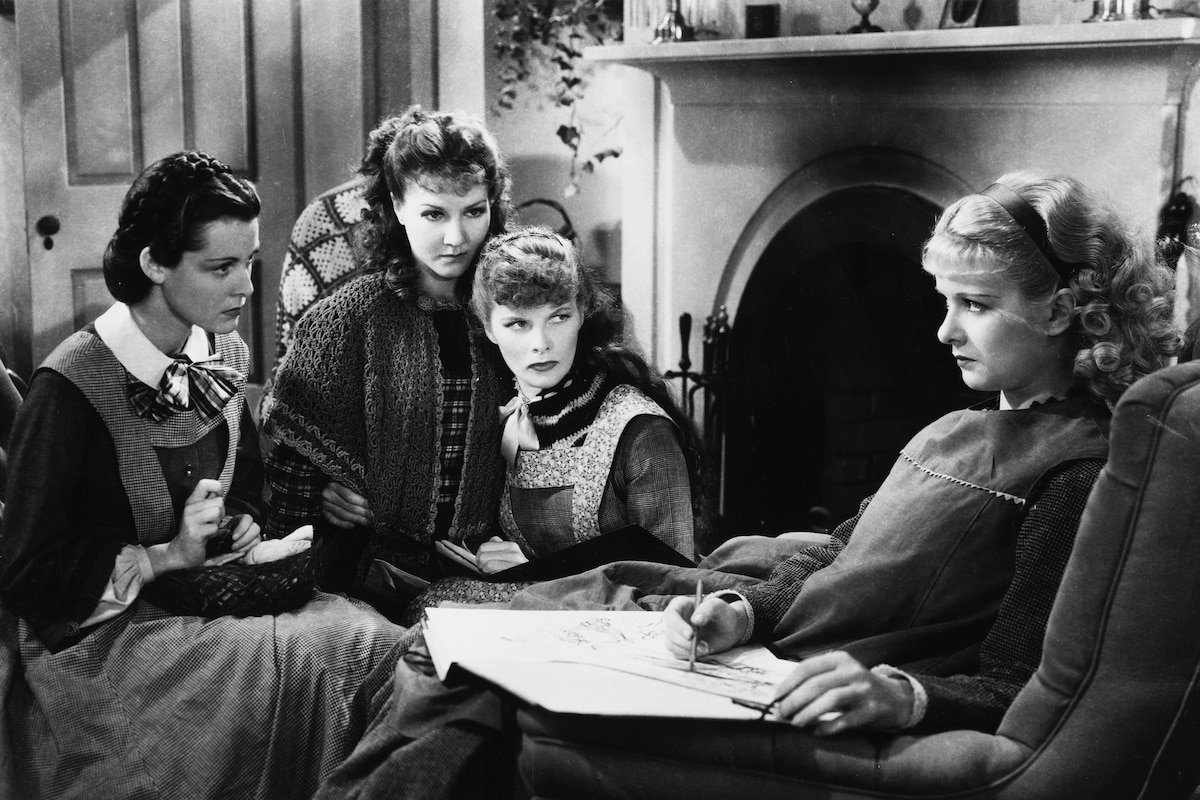
RKO production chief David O. Selznick had defied the recommendations of his colleagues by signing stage actress Katharine Hepburn to star in A Bill of Divorcement (1932). Her face was considered too angular and her manner too eccentric to appeal to the general movie-going public. When he attended the film's first preview, he could sense the audience's confusion at first, but then saw her performance gradually win them over. At that point, he decided that the role of independent New Englander Jo March in Little Women would be the perfect vehicle for her. The novel had long been on his list of classics he considered ideal for screen adaptation.
Director George Cukor had never read the novel prior to production since he considered it a girl's story and of limited interest. When he read it, he was struck by the strength of the writing and its depiction of life in New England.
Cukor and Selznick did much of their planning for the film on an ocean voyage from Los Angeles to New York.
Selznick went through half a dozen writing teams until husband and wife Victor Heerman and Sarah Y. Mason came up with an adaptation that managed to remain faithful to the novel while paring down some scenes to create a film of manageable length. Cukor also fought to keep the script from making the story too Hollywood. When one adaptation created a happy ending by having Jo's first novel become a best-seller, he soundly rejected it.
The Heermans' script got an unexpected endorsement from the studio's steno pool. While typing it up, the secretaries were so enthralled they kept stopping to read passages to each other and act out scenes.
Cukor cast Joan Bennett as Amy after seeing her slightly drunk at a party. He had always considered her rather hard-boiled, but at the party she revealed a sweet and silly side that was perfect for the character.
by Frank Miller
The Big Idea - THE BIG IDEA - The Origins of LITTLE WOMEN (1933)
by Frank Miller | December 18, 2006
SIGN UP FOR OUR NEWSLETTERS

CONNECT WITH TCM