SYNOPSIS
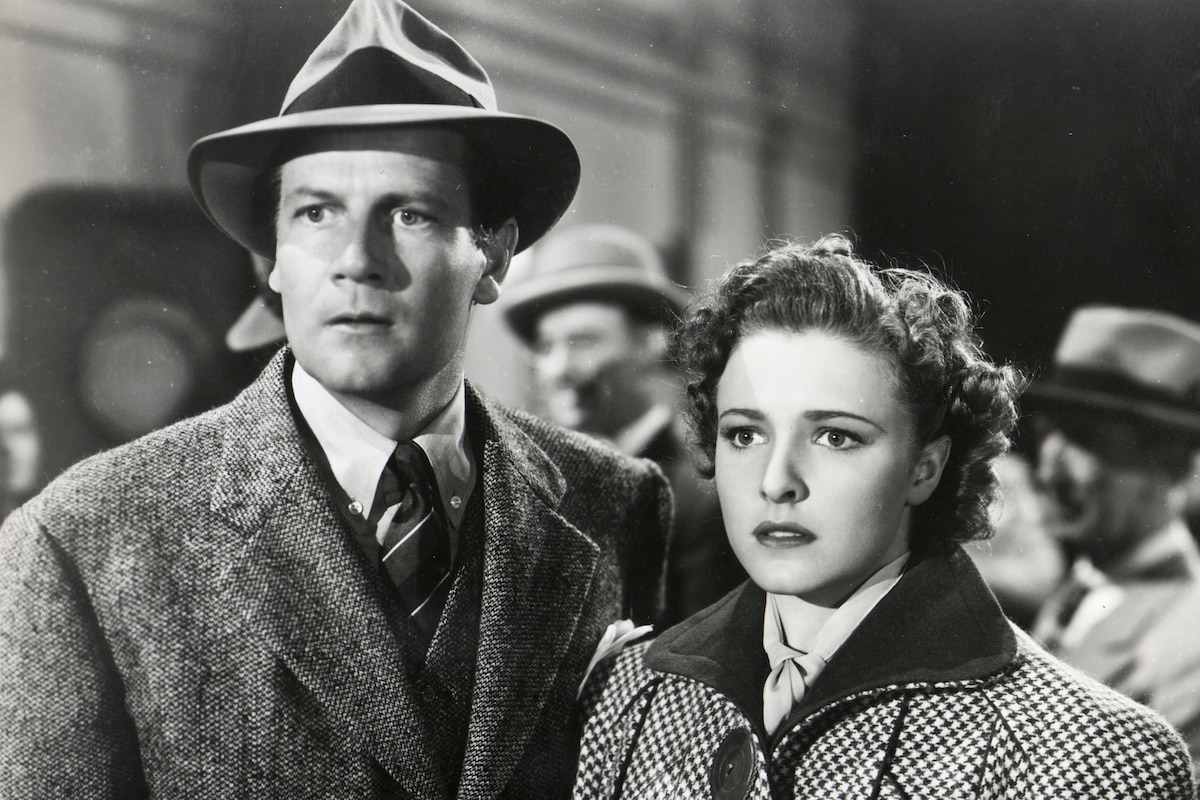
American newspaper publisher Mr. Powers is frustrated that his overseas correspondents are unable to uncover compelling stories about the impending war in Europe. He taps Johnny Jones, an impetuous and politically naive crime reporter, to travel to the Continent in search of good copy. Powers renames Jones as "Huntley Haverstock" and introduces him to his guide, peace activist Stephen Fisher. As a starting point, Jones is also assigned to get an interview with Van Meer, a Dutch diplomat who holds the key to a secret clause in a treaty between the Dutch and the Belgians. In London, Jones meets and falls for Fisher's daughter Carol, and touches base with one of his correspondent peers, the genial but hard-drinking Stebbins. Arriving in Holland, Jones witnesses the apparent assassination of Van Meer in a crowded, rain-soaked square, and upon seeing the fleeing gunman, he gives chase. As Carol and her friend Scott ffolliott follow other leads, Jones discovers Van Meer, kidnapped and held captive in a windmill. Jones has stumbled onto a ring of spies operating on Dutch and English soil, determined to disrupt the peace conference Mr. Fisher has arranged and get the upper hand in the outbreak of war by forcing secrets from Van Meer.
Producer: Walter Wanger
Director: Alfred Hitchcock
Screenplay: Robert Benchley, Charles Bennett, Harold Clurman, (uncredited), Joan Harrison, Ben Hecht (uncredited), James Hilton, John Howard Lawson (uncredited), John Lee Mahin (uncredited), Richard Maibaum, Budd Schulberg (uncredited), Based on the book Personal History by Vincent Sheean
Art Direction: Alexander Golitzen
Cinematography: Rudolph Maté
Costume Design: I. Magnin
Film Editing: Dorothy Spencer
Original Music: Alfred Newman
Cast: Joel McCrea (Johnny Jones), Laraine Day (Carol Fisher), Herbert Marshall (Stephen Fisher), George Sanders (Scott ffolliott), Robert Benchley (Stebbins), Albert Bassermann (Van Meer), Edmund Gwenn (Rowley), Eduardo Ciannelli (Mr. Krug), Martin Kosleck (Tramp), Harry Davenport (Mr. Powers), Ian Wolfe (Stiles), Barbara Pepper (Dorine).
BW-120m.
Why FOREIGN CORRESPONDENT is Essential
Following the enormous success of his first American movie, Rebecca (1940), Alfred Hitchcock made his next film, Foreign Correspondent (1940), on loan-out to independent producer Walter Wanger, for distribution through United Artists. For this political thriller, Hitchcock was able to sum up themes and techniques culled from his earlier British films, such as The 39 Steps (1935) and The Lady Vanishes (1938). To work the script into shape, Hitchcock and Wanger brought in a total of fourteen writers, yet the final vision is undoubtedly the director's. Several scenes prove to be textbook examples of the Hitchcock technique; in one, an assassination occurs in a crowd of people holding umbrellas, in another purely visual scene the turning of a windmill reveals an important clue to the film's mystery. Perhaps the most famous scene in Foreign Correspondent is a frightening and spectacular plane crash that still packs a punch today. Aiding Hitchcock in his visualization on the film were atmospheric set designs by the brilliant William Cameron Menzies.
By early 1940, Europe was being divided and decimated by the Nazis but the official U.S. policy was still one of strict neutrality. Despite the fact that the British government urged their most famous native, Alfred Hitchcock, to remain in America during this time, the director desperately wanted to contribute to the British war effort so he sought out a property that would allow him to make a pro-Britain statement. The subsequent production, Foreign Correspondent (1940), is the story of an American correspondent (Joel McCrea) in Europe who becomes committed to the fight against fascism during his investigation of a kidnapped Dutch diplomat, a situation that requires him to travel from London to Holland.
The source for Foreign Correspondent was Personal History, Vincent Sheean's autobiographical account of the growing political turmoil in Europe. Producer Walter Wanger had recently purchased the book for $10,000 and Hitchcock hired Charles Bennett and Joan Harrison, both previous screenplay collaborators of his, to mold the material into a workable screenplay. When they were finished, very little remained from the original book with the exception of the opening scene in Holland. Ironically, even the completed screenplay of Bennett and Harrison was drastically altered with Hitchcock bringing in many writers (including Robert Benchley and novelist James Hilton) before he arrived at a final version. Foreign Correspondent was an enjoyable production for Hitchcock because of his loan-out arrangement with Walter Wanger; he was given free reign and not under the close scrutiny and autocratic rule of his regular employer, studio chief David O. Selznick. Huge creative differences existed between Hitchcock and Selznick and the director would later get his revenge on the producer with an in-joke in Rear Window (1954); The murder suspect (Raymond Burr) in that thriller bore a startling resemblance to the heavy set mogul.
Originally, Hitchcock wanted Gary Cooper for the title role in Foreign Correspondent with Joan Fontaine as his leading lady but eventually settled for Joel McCrea and Laraine Day. Although some critics viewed the film as a glorified B-movie after the lush production values of Hitchcock's Selznick films, Foreign Correspondent actually cost more to produce than Rebecca (1940), partly due to some very elaborate special effects. Foreign Correspondent was enjoyed equally by the critics and the public and garnered five Oscar® nominations including Best Supporting Actor (Albert Bassermann), Best Screenplay, and Best Cinematography. Hitchcock was also nominated for Best Director that year - for Rebecca.
by Jeff Stafford and John M. Miller
The Essentials-Foreign Correspondent
by Jeff Stafford and John M. Miller | July 10, 2006
SIGN UP FOR OUR NEWSLETTERS

CONNECT WITH TCM