Hollywood generally steered clear of anti-Nazi films in the 1930s. For most studios, the German market was too important to risk alienating with films that condemned its actions. But as the true scope of Germany's military expansion and anti-Semitic laws became more widely known, the threat of Nazism weighed heavily on the studio bosses, most of them European immigrants of Jewish extraction with family overseas, and their films began to reflect their anxieties. Once war formally broke out in Europe, France and the UK declaring war on Germany, the floodgates opened. "Hollywood made anti-Nazi films because, after September 1939, there was no good reason not to," wrote film historian Thomas Doherty. The Man I Married (1940) was one of the first aggressively anti-Nazi films made in the wake of the Invasion of Poland in September 1939 and it doesn't hold back on its portrait of Germany under the oppressive ideological rule of Adolf Hitler and the Nazi Party.
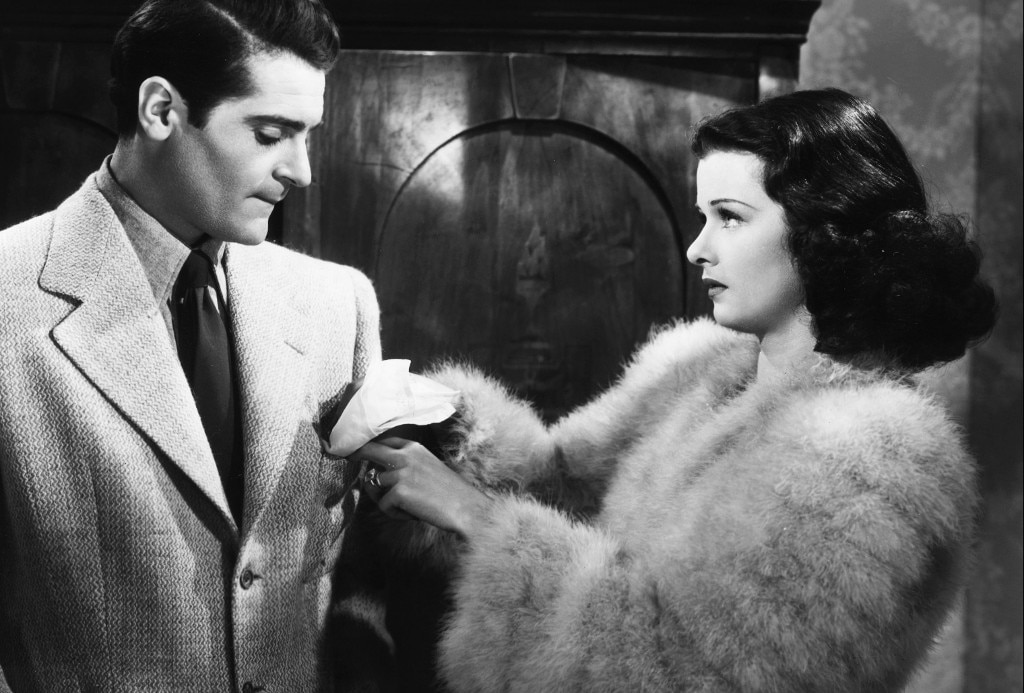
Joan Bennett stars as American art critic Carol Hoffman, a successful professional woman at a big city newspaper. Francis Lederer is her German-American husband Eric Hoffman, who is eager to take her and their thoroughly American son (Johnny Russell) to his homeland. What is supposed to be a short stop in a European vacation becomes a long stay as Eric falls under the sway of Nazism, enthusiastically shouting "Sieg Heil!" at rallies he attends with a former schoolmate (Anna Sten), a party faithful who embodies the Aryan ideal.
Part propaganda movie, part detective film, and part escape thriller, The Man I Married presents Carol as a kind of civilian investigator discovering the openly brutal treatment of Jews in the streets and the blind fanaticism of the German people. Lloyd Nolan co-stars as the affable American correspondent who becomes her guide and ally as her husband transforms into a pro-Hitler zealot during their stay. Where previous films avoided the word "Jew," there is no hesitation in this film, and newsreel footage of actual Nazi rallies and military parades adds chilling realism to the dramatic recreations.
There are no German-born actors in the cast but the film features some of Hollywood's great European-born actors playing the German characters. In addition to Prague-born Francis Lederer as the man Joan Bennett married and Russian Anna Sten as his Aryan sweetheart, the film co-stars the great Russian-born Maria Ouspenskaya, who trained under Stanislavsky and was an influential acting teacher in the U.S., and Austrian-born Ludwig Stössel, a German movie star and a Jew who fled Europe when Hitler came to power.
New York Times film critic Bosley Crowther praised the film's restraint and "frank and factual" treatment: "[H]ere is a 'hate' film which, at least, lets the villains speak a word for themselves, which pictures the German Nazis as hypnotized zealots rather than congenital brutes and which tells a simple, straightforward story without wild dramatics and therefore with conviction."
Sources:
"'The Man I Married,' a Drama of Inside Germany," Bosley Crowther. The New York Times, August 3, 1940.
Hollywood and Hitler: 1933-1939, Thomas Doherty. Columbia University Press, 2013.
IMDb
By Sean Axmaker
The Man I Married
by Sean Axmaker | October 18, 2017
SIGN UP FOR OUR NEWSLETTERS

CONNECT WITH TCM