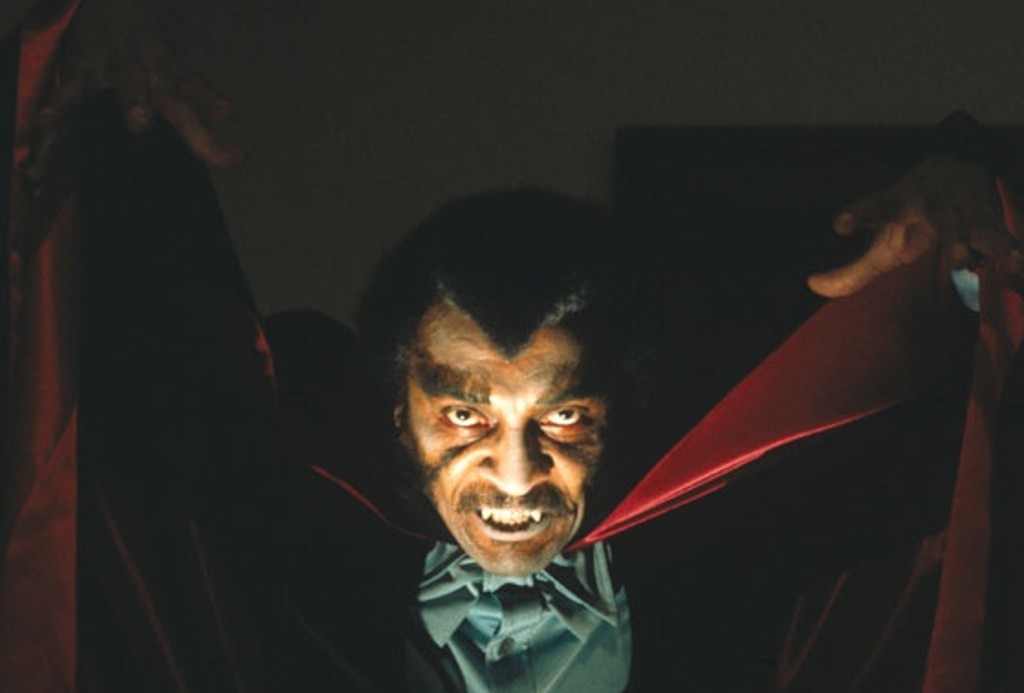
The "blaxploitation" films of the 1970s--the term referred to exploitation films featuring African-American heroes and anti-heroes--leaned heavily on urban crime dramas and gangster movies but soon reached out to other genres, including westerns and horror films. The first and most successful of these was Blacula (1972), produced by American International Pictures and starring William Marshall as an African Prince transformed into a vampire by Count Dracula. It touched on the legacy of slavery and offered a different kind of African-American anti-hero, cursed by vampirism and bloodlust yet devoted to the rights of black men and women, and it was a hit, grossing over $1 million on its domestic run. A sequel was inevitable so Joan Torres and Raymond Koenig, who wrote the original Blacula (with uncredited assistance by Marshall), resurrected the dead bones of Marshall's Prince Mamuwalde with a voodoo spell for Scream Blacula Scream (1973).
Marshall was a respected stage veteran who had appeared in only a few movies, playing a gladiator in Demetrius and the Gladiators (1954) and attorney general in The Boston Strangler (1968), and TV shows, before making the original Blacula. He's best known to audiences today as computer scientist Dr. Richard Daystrom in the episode "The Ultimate Computer" of the original Star Trek. His Shakespearean poise and deep, dignified speaking voice brings gravitas to the role of Mamuwalde, much as Vincent Price did for Roger Corman's Poe films, and he creates a vampire that is more victim than villain, cursed by the bite that transforms him into a predator. But he also contributed key ideas to the script that became essential elements of its success, including making his character an African prince. "The producers were not particularly interested in any concept of African people at that time, or with that aura surrounding the figure," he explained in an interview with David Walker. "I rather insisted. I felt that this would be the selling point, particularly for young African American men and women."
Set in a culture of African American academics and modern voodoo cults in 1970s Los Angeles, the sequel co-stars Pam Grier as a respected voodoo priestess and Don Mitchell as a former police detective turned African scholar and historian. Grier was on her way to becoming a blaxploitation star, having worked her way up from gratuitously exploitative women-in-prison potboilers like The Big Doll House (1971) to the starring role in Coffy (1973), when she was cast. Mitchell was arguably an even bigger star at the time, having played Officer Mark Sanger in the hit TV series Ironside since 1967. Michael Conrad, a veteran character actor who would go on to fame as the paternal Sgt. Phil Esterhaus in Hill Street Blues, co-stars as Mitchell's former colleague, an old-school detective understandably reluctant to accept that vampires are invading his town.
Bob Kelljan, director of AIP's two Count Yorga films, took the reins from Blacula director William Crain and helped give it a more serious tone than the title might suggest. Scream Blacula Scream was reportedly chosen over such possible titles as Blacula Is Beautiful and Blacula Lives Again in a contest among AIP employees. Reviews were mixed but the performances strong (Roger Ebert wrote that actors Marshall and Grier "both have a lot of style; so much, indeed, that it stands out in this routine movie") and the film was another hit for AIP. Though the climax left an opening for another sequel, there was no follow-up. Perhaps AIP was wary of a market increasingly overcrowded with films like Blackenstein (1973) and Abby (1974, an Exorcist knock-off). For whatever reason, it was the final film to feature the great, underrated William Marshall in a leading role.
Sources:
Foxy: My Life in Three Acts, Pam Grier with Andrea Cagan. Springboard, 2010.
Horror Films of the 1970s, John Kenneth Muir. McFarland and Company, 2002.
Blaxploitation Films of the 1970s: Blackness and Genre, Novotny Lawrence. Routledge, 2008.
Vampire Films of the 1970s: Dracula to Blacula and Every Fang Between, Gary A. Smith. McFarland and Company, 2017.
Reflections on Blaxploitation, ed. David Walker, Andrew J. Rausch, Chris Watson. Scarecrow Press, 2009.
"The Dracula and the Blacula Cultural Revolution," Paul R. Lehman and John Edgar Browning, essay in Draculas, Vampires, and Other Undead Forms: Essays on Gender, Race and Culture, edited by John Edgar Browning and Caroline Joan "Kay" Picart. Scarecrow Press, 2009.
By Sean Axmaker
Scream Blacula Scream
by Sean Axmaker | October 11, 2017
SIGN UP FOR OUR NEWSLETTERS

CONNECT WITH TCM