The term "shock value" might be overused today, but it certainly still applies in spades to the film that most purely represents the "body horror" idea associated with director David Cronenberg. The esteemed Canadian filmmaker was still an up-and-coming, controversial figure in his native country when he made this, his fourth wide release feature film, following the commercially successful but critically lambasted Shivers (1975) and Rabid (1977), along with the racing drama Fast Company (1979). Here Cronenberg had his biggest cast to date thanks to Oliver Reed and Samantha Eggar, who ensured wider distribution courtesy of Rabid handlers New World Pictures. Both stars had grown up in the same English village and had appeared together earlier in Anatole Litvak's The Lady in the Car with Glasses and a Gun (1970).
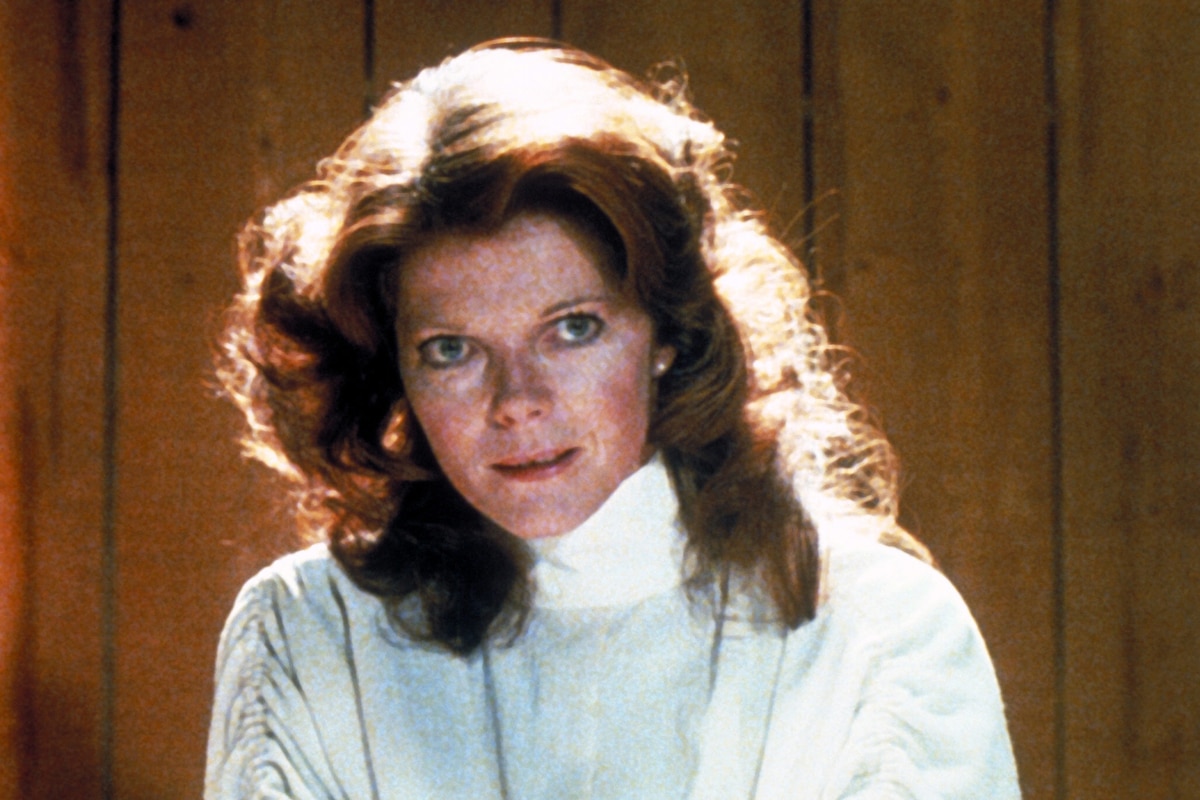
The familiar Cronenberg idea of bodily transformation mirroring the conflict or evolution of someone's psyche reaches its zenith here with psychoplasmics, a method pioneered by therapist Hal Raglan (Reed) at his institute with patients including his sequestered star patient, Nola (Eggar). Her estranged husband, Frank (Art Hindle), is in the process of handling their divorce and the safekeeping of their daughter, Candice (Cindy Hinds), but when members of Nola's family start getting killed off by what appear to be homicidal, home-invading children, it seems her therapy might involve something truly grotesque and horrifying.
Cronenberg himself was in the middle of an acrimonious separation and child custody dispute when he conceived of this film, and the personal connection shows in the deep sense of anguish and rage that permeates each of the characters. As some viewers and critics have noticed, this marks the first time a genuine human pulse seems to be running through a Cronenberg film, perhaps due to the director's personal investment in the material; here the icy cold setting forms an intriguing backdrop against the tension between the two battling parents, who ultimately only end up sharing a tiny shred of screen time together.
The film is also notable as the first collaboration between Cronenberg and composer Howard Shore, who would score almost all of the filmmaker's subsequent projects. The presence of an original score (versus the Ivan Reitman-supervised library music tracked over the prior two horror films) gives this film a richer, more unified feeling with those reliable Shore strings ratcheting up the tension to an unbearable degree during the main murder set pieces and the grand finale. Speaking of which, that ending, which takes a natural childbirth instinct to a visually upsetting degree, was a major sticking point with the MPAA, who demanded some close-up licking be excised along with an aftermath shot of a particularly gruesome mallet attack. Cronenberg was dismayed by the cuts, noting that it now seemed Eggar was committing an act of cannibalism instead of motherly cleaning. Fortunately the uncensored version of the film has since become the norm on home video since the film passed into the MGM library for its first release on DVD.
Early promotional Canadian sales materials for this film promised, "In May 1979, The Brood will take you beyond fear, beyond terror, beyond the boundaries of the mind... and will devastate you totally." For once the hype turned out to be true as audiences turned out in droves for the film, whose 1979 opening placed it in one of the busiest single-year periods in horror movie history.
Many critics were less amused by the film's extreme depiction of domestic strife. For example, Films & Filming chided, "Ms. Eggar, hitherto such a nice type of British gal, should be ashamed, and Oliver Reed should dust himself off and start all over again." Likewise, Kevin Thomas of the Los Angeles Times huffed about the film's R rating and found the project "is so totally sickening it's an irresponsible work itself. You can't help but feel that the MPAA, in its lenient rating, hasn't been very responsible either." Leonard Maltin's pithy capsule review (which awarded the film a "BOMB" rating) has since become legendary as well. A few critics managed to see the value in the film, however, such as Ron Pennington's Hollywood Reporter appraisal that called it "an excellent new psychological horror film that should have audiences shivering this summer." Interestingly, the film did pick up a Gold Award at the annual Rank Screen Advertising Campaign ceremony for its creative TV spots, which featured infrared reaction shots of audiences watching the film. That same concept was employed later for Cronenberg's Scanners (1981) and has become a fixture in numerous horror movie campaigns since then, most notably Final Destination (2009) and The Ring (2002).
By Nathaniel Thompson
The Brood
by Nathaniel Thompson | September 22, 2017
SIGN UP FOR OUR NEWSLETTERS

CONNECT WITH TCM