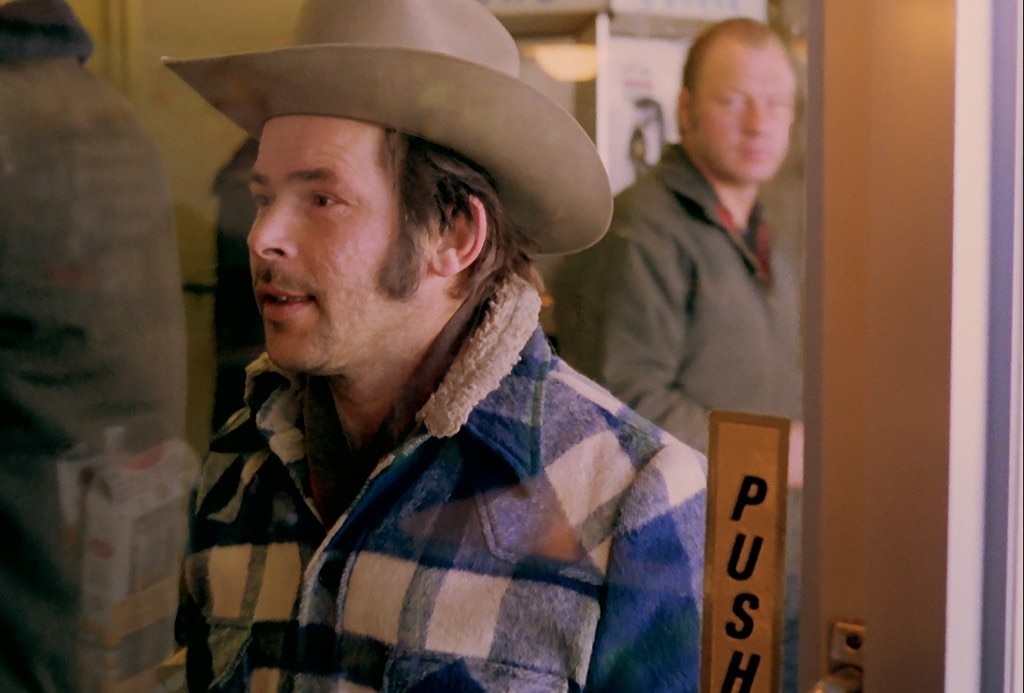
Three years after the critical and art house success of The Enigma of Kaspar Hauser (1974), director Werner Herzog brought back that film's singular leading man, Bruno S., for one of the filmmaker's most eccentric films: Stroszek (1977), an unforgettable portrait of the American heartland and one of Herzog's funniest features.
The title of the film comes from the main character, a name familiar from Herzog's first feature film, Signs of Life (1968), and originating from a college friend whose academic aid to Herzog was traded for cinematic immortality. Herzog's affinity for dangerous, live-wire leading men (most notoriously embodied in Klaus Kinski) led him to seek out Bruno after seeing him in a documentary about his troubled life, Bruno the Black - One Day a Hunter Blew His Horn (1971). The rejected son of a prostitute, Bruno had spent the lion's share of his adult life in mental institutions where he nevertheless honed his skills as an artist and street musician (including his accordion, which you can see in this film). Described as "the unknown soldier of German cinema" due to his unusual credit in Herzog's audio commentary for this film, Bruno desperately wanted to play the lead in Herzog's adaptation of Woyzeck (which would be filmed in 1979 with Kinski); however, the filmmaker realized the role was beyond the capacity of his actor and crafted this project with him in mind instead. In addition to elements from Bruno's life, his mannerisms were also incorporated into the film including his unkempt appearance (complete with deliberately open fly during one street scene).
The role of Bruno's traveling companion, down-and-out prostitute Eva, was also specifically written with its performer in mind: Eva Mattes, the most experienced thespian in the cast and a veteran of Rainer Werner Fassbinder films including The Bitter Tears of Petra von Kant (1972) and Effi Briest (1974). The third main character in the film, the elderly Clemens Scheitz, also bears his real name in the film and was discovered by Herzog among hundreds of index cards of potential movie extras. Herzog described Scheitz as "a crazed man who thought Bruno was smelling badly" but nevertheless brought him back here after his roles in Kaspar Hauser and Heart of Glass (1976). Scheitz passed away in 1980, shortly after his brief, eccentric turn in Herzog's remake of Nosferatu the Vampyre (1979).
The film features an ambitious slate of locations for a Herzog film, opening in Berlin (including the use of a real prison) before moving through New York and Wisconsin with a climactic detour to North Carolina. The New York shooting proved to be especially tricky, with location shots captured without permits by hiding cameras and grabbing covert shots when police weren't looking.
Though not technically a documentary, Stroszek adopts many of the techniques and the overall atmosphere familiar from Herzog's non-fiction work; not for nothing a dedication card in the opening credit give thanks to Errol Morris, Lutz Eisholz (director of the Bruno doc), and Les Blanc. The Morris citation is especially fascinating now given the ongoing friendship between the filmmakers, which included a visit to notorious serial killer Ed Gein (for an uncompleted Morris film) and the planned excavation of his mother in Plainfield, Wisconsin, to find out whether she was still there and whether Gein had dug tunnels to have access to the body. In a 2009 interview with the two directors for Believe magazine, Herzog recalled, "I said that we were going to do a film there in Plainfield, and that really upset Errol a lot. He thought I was a thief without loot. This was his country, his territory, his Plainfield, and I shot in Plainfield. I shot a film, Stroszek, which I think is forgotten and forgiven by now, and we can maintain friendship over this now." In fact, it was after the completion of shooting for Stroszek that Herzog handed an envelope of $2,000 to Morris (twice, after Morris threw it out the window the first time), which ended up funding a trip to Vernon, Florida and the trigger for Morris's legendary career as a documentarian in his own right.
By Nathaniel Thompson
Stroszek
by Nathaniel Thompson | August 22, 2017
SIGN UP FOR OUR NEWSLETTERS

CONNECT WITH TCM