An operetta staple since it debuted in 1926, The Desert Song, with its swashbuckling story of a charming Frenchman who is secretly the leader of Moroccan rebels against French colonial rule, has been filmed three times by the Warner Brothers studio. The main attraction, of course, is the gorgeous score by Sigmund Romberg and Oscar Hammerstein II, and like many operettas, it usually exists out of time, in an exotic location, with a lush score and romantic plot that ties up its story neatly. The first film adaptation was an early talkie made in 1929, billed as the studio's first "all-talking, all-singing" production; and Warners gave the 1953 version, starring Gordon MacRae and Kathryn Grayson a lavish Technicolor production. But the excellent 1943 version, also in color, was little-seen for decades, held up first by wartime restrictions and later by legal issues.
As early as 1938, MGM had been trying to acquire The Desert Song for their own operetta sweethearts, Jeanette MacDonald and Nelson Eddy. But Warner Brothers held on to the rights, finally deciding to make the film themselves. Shot in mid-1942 after America's entry into World War II and released after more than a year of delays, The Desert Song has something the earlier and later versions do not: relevance. "Never let it be said that Warner Brothers has overlooked a chance to twist some current significance into even the most 'escapist' of its films," wrote New York Times critic Bosley Crowther in the first sentence of his review. "[It] now tells a modern story of Nazis and anti-Nazis at work." The review details a Casablanca-ish scenario about Nazis plotting to build a railroad in North Africa with the cooperation of a French official (Bruce Cabot). The rebels foil the attempt with the help of an American piano player (Dennis Morgan) who is a veteran of the Spanish Civil War. But unlike Casablanca, which was allowed to be forthright about French cooperation with the Nazis, the U.S. government's Office of War Information objected to the script which had the French officer being complicit. Instead, the story has Cabot being duped by the Germans.
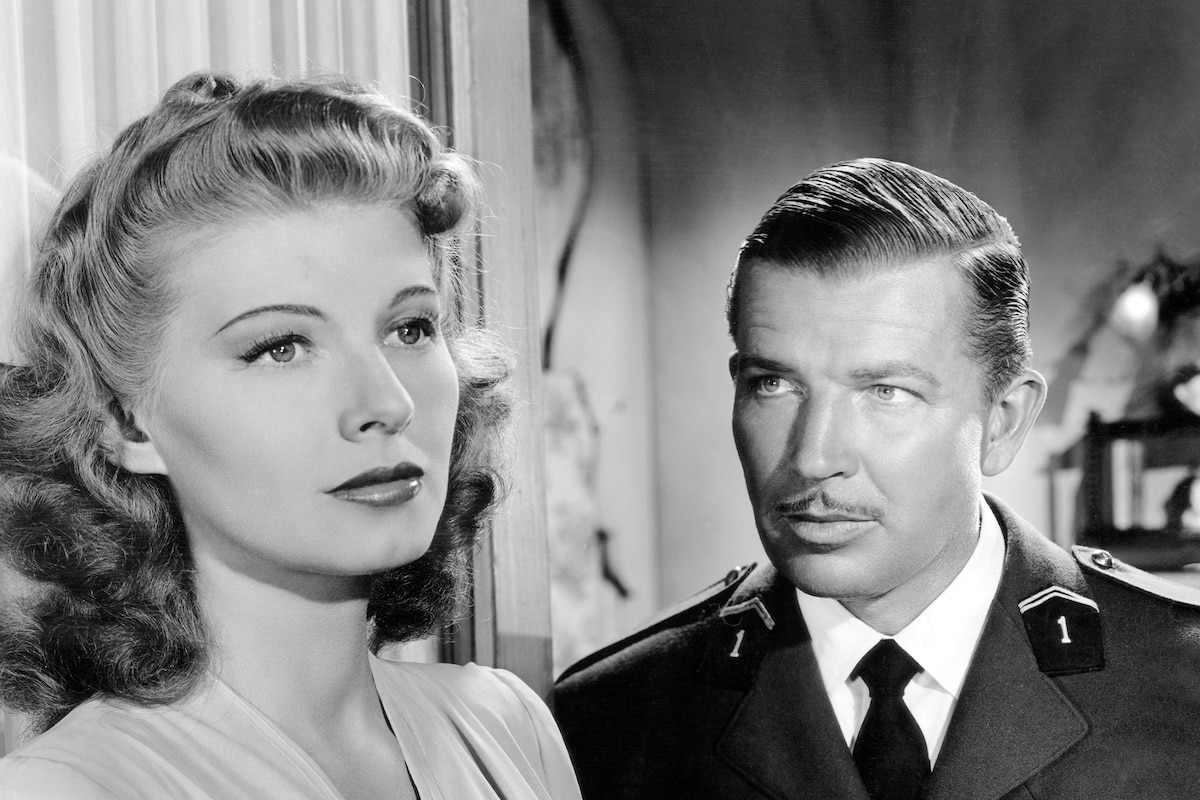
French-born director Robert Florey spent nearly a month shooting the desert sequences in New Mexico, plagued by sandstorms and 110-degree heat, but the effort was worth it. The action scenes are surprisingly robust for a musical, and Florey is equally adept with the cafe sequences, even contributing objets d'art from his personal collection to the decor. Warner Brothers contract star Dennis Morgan plays the dashing hero with charm and energy, and gets an opportunity to show off his superb tenor voice. He is well-matched with blond soprano Irene Manning as the cafe singer he loves.
Florey had first arrived in the U.S. in 1921 as a correspondent for a French film journal, after working in the French and Swiss film industries. He directed several experimental shorts before making his way into the studio system as a writer and director, usually on short-term contracts. Among his notable films was the expressionist short, The Life and Death of 9413, a Hollywood Extra (1928). Florey had signed a one-picture deal at Warner Brothers specifically to direct The Desert Song, and the film shows the influence of his adventurous visual sense. Florey's biographer Brian Taves calls The Desert Song "a major artistic and creative triumph for Florey," but also very difficult, because of "management interference, grueling location work," and censorship problems.br>
Ultimately, the studio was happy enough with The Desert Song's box office performance that they offered Florey a long term contract, but it was too late. He had already moved on to other studios. Today, many fans of The Desert Song operetta agree that Florey's version is the best of the three, and echo Times critic Crowther's conclusion: "This brash and gaudy picture is relaxing entertainment and spirited fun, with a great deal of colorful action in odorous cafes and on the burning desert sands."
Director: Robert Florey
Producer: Robert Buckner
Screenplay: Robert Buckner, Robert Florey, based on the play by Oscar Hammerstein II, Otto A. Harbach, Frank Mandel, Laurence Schwab
Cinematography: Bert Glennon
Editor: Frank Magee
Costume Design: Milo Anderson
Art Direction: Charles Novi
Musical Score: Sigmund Romberg, Oscar Hammerstein II, Otto Harbach, Jack Scholl
Principal Cast: Dennis Morgan (Paul Hudson, also known as El Khobar), Irene Manning (Margot), Bruce Cabot (Colonel Fontaine), Lynne Overman (Johnny Walsh), Gene Lockhart (Pere Fanfan), Faye Emerson (Hajy), Victor Francen (Caid Yusseff), Curt Bois (Francois), Jack La Rue (Lieutenant Bertin), Marcel Dalio (Tarboush), Nestor Paiva (Benoit)
90 minutes
by Margarita Landazuri
The Desert Song (1943)
by Margarita Landazuri | July 25, 2017
SIGN UP FOR OUR NEWSLETTERS

CONNECT WITH TCM