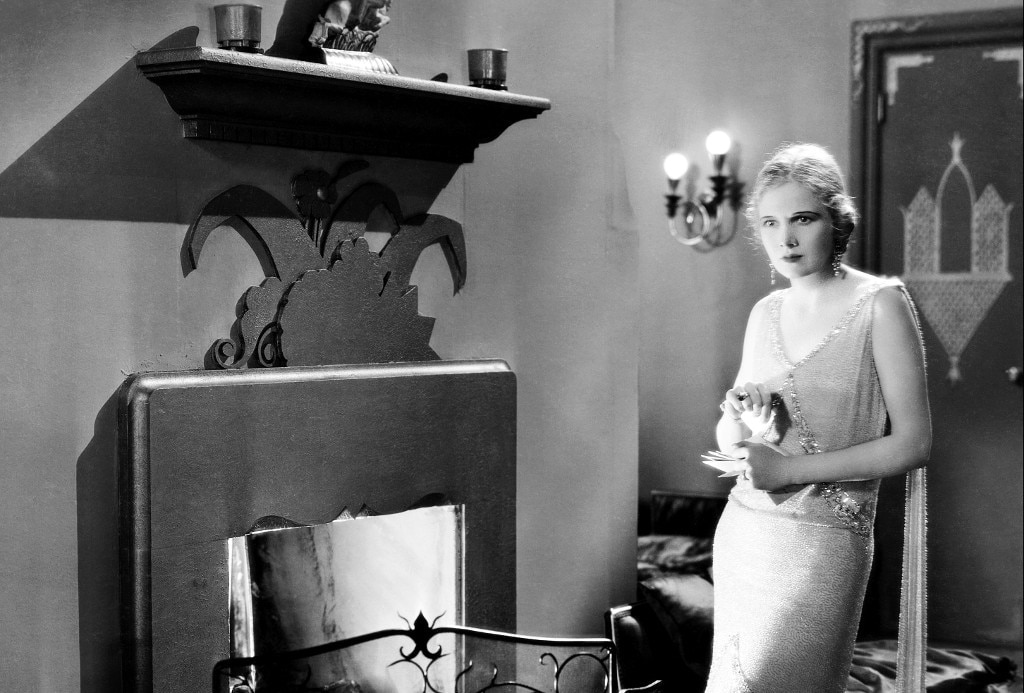
By only her second film, Ann Harding was drawing a solid fan following attracted to her cool blonde beauty and patrician bearing. That bearing was put to the test in this adaptation of a failed Broadway play about a respectable married woman blackmailed by a man with whom she had flirted during a brief separation from her husband. When she goes to collect some incriminating letters, the blackmailer tries to get her into bed, only to end up shot in self-defense. Fearing scandal, Harding flees the scene, but later convinces a family friend to defend the butler unjustly accused of the crime.
The film showcases Harding's beauty from the first shot, showing her reflected in an ornate mirror as she prepares for a night at the opera (Carmen, the perfect entertainment for an almost fallen woman). Audiences loved the way her beauty survived the near loss of her honor and her growing guilt.
Harding was one of several stage actors lured to Hollywood at the dawn of sound. Executives at Pathé were so impressed with her husky line deliveries that they even signed her husband, Harry Bannister, to a contract and made him the leading man opposite her. They would reteam a year later for The Girl of the Golden West (1930), by which time his habit of telling directors what to do soured his relationship with the studio and his wife.
By Frank Miller
Her Private Affair
by Frank Miller | July 24, 2017
SIGN UP FOR OUR NEWSLETTERS

CONNECT WITH TCM