With his first feature film, Le Beau Serge (1958), Claude Chabrol not only made the transition from film critic to movie director but also wound up launching the French New Wave. This was an influential movement by directors who sought to shift away from classical French cinema via more topical subject matter, location shooting, and fragmented visual styles and editing techniques. Francois Truffaut's The 400 Blows (1959) and Jean-Luc Godard's Breathless (1960) are more famous early examples of the New Wave, but Le Beau Serge is widely considered to be the first.
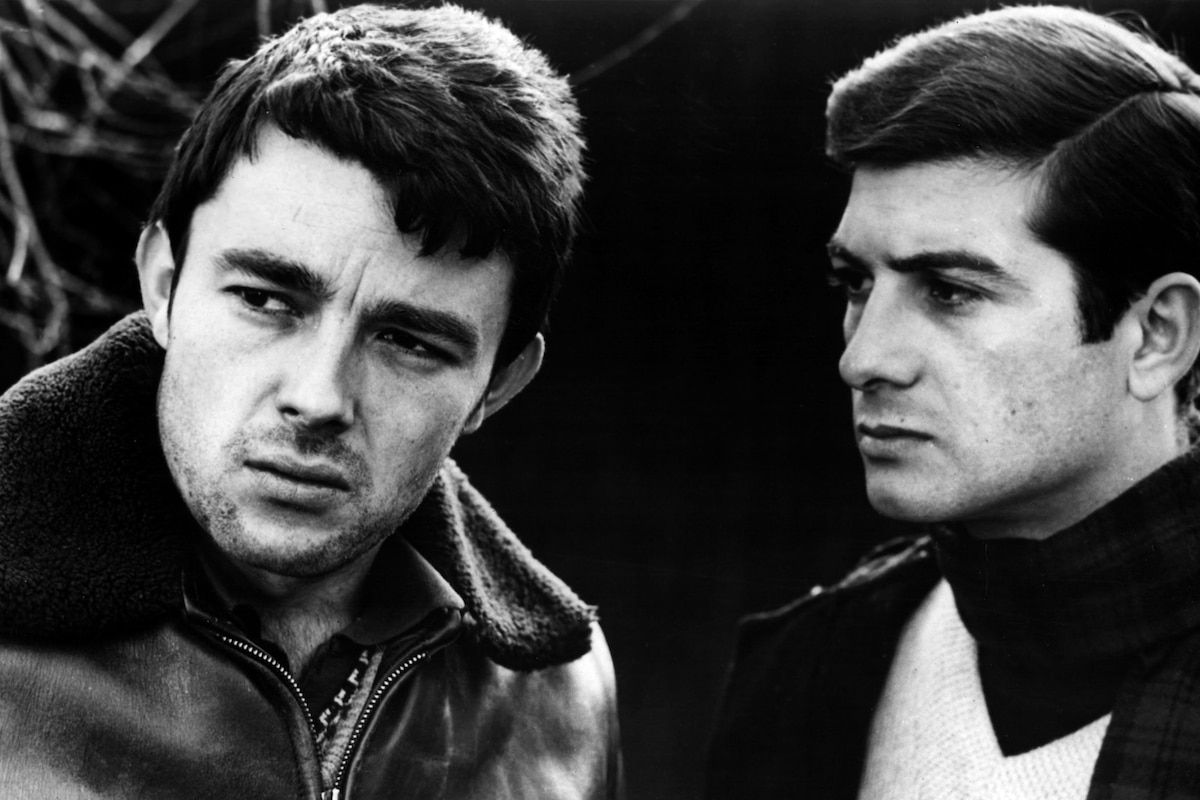
It's the tale of a friendship between two men in a tiny French village. Francois (Jean-Claude Brialy) returns to town after several years away to find that his old best friend, Serge (Gerard Blain), has transformed from once-promising architect to the town drunk. Francois sets out to rehabilitate him, and the story carries a tone of disillusionment and despair.
28-year-old Chabrol, at the cusp of a long and illustrious directing career, financed Le Beau Serge with his wife's recent $150,000 inheritance, and he shot the film in his home town of Sardent. Actors Brialy and Blain had appeared in a few films, but this one would really launch their own prominent careers, and Chabrol would use them again in his second feature, Les Cousins (1959).
Chabrol had actually intended to make Les Cousins first, but its anticipated scope and complexity made him decide to do the simpler, cheaper Le Beau Serge instead. The smaller scale also allowed him to take his time as he pursued a realistic setting and atmosphere: he shot the picture in nine weeks and cast real villagers in the bit parts.
Chabrol also paid tribute to his idol, Alfred Hitchcock, not just by giving himself a Hitchcock-like cameo but by exploring such themes as the transference of guilt and concentrating on tangible details to advance the story. "What interests me," Chabrol said, "is to tease the audience along, to set it chasing off in one direction, and then to turn things inside out."
According to biographer Guy Austin, the director's original cut was two and a half hours long and included documentary-like footage of village life and ambience. Chabrol edited it down before release but later wished he had retained it.
Critics at the time deemed Le Beau Serge to be a type of neorealist film, and they raved about the new filmmaker's style. Variety declared: "An important new French director, Claude Chabrol, is unveiled in this pic. Chabrol used his own money and made this feature entirely on location in his old home town... Technically excellent, director Chabrol should be heard from."
Le Beau Serge was screened out of competition at the 1958 Cannes Film Festival, where it was picked up for foreign distribution. It was successful enough that Chabrol could now go on to make the more elaborate Les Cousins.
By Jeremy Arnold
Le Beau Serge
by Jeremy Arnold | July 10, 2017
SIGN UP FOR OUR NEWSLETTERS

CONNECT WITH TCM