Director W.S. "Woody" Van Dyke had a penchant for mystery stories, and when he found that MGM had bought the rights to Dashiell Hammett's book The Thin Man for $14,000, he immediately requested it for his next assignment. The book was a best seller and well-reviewed; Alexander Woollcott had called it "the best detective story yet written in America."
The studio did not consider the story a valuable property. The public taste for clever tales of sleuthing seemed to be played out, and the book was not considered worthy of more than B-picture treatment. But because Van Dyke had a reputation for making pictures quickly and cheaply, they figured it wouldn't hurt to let him have a shot at it.
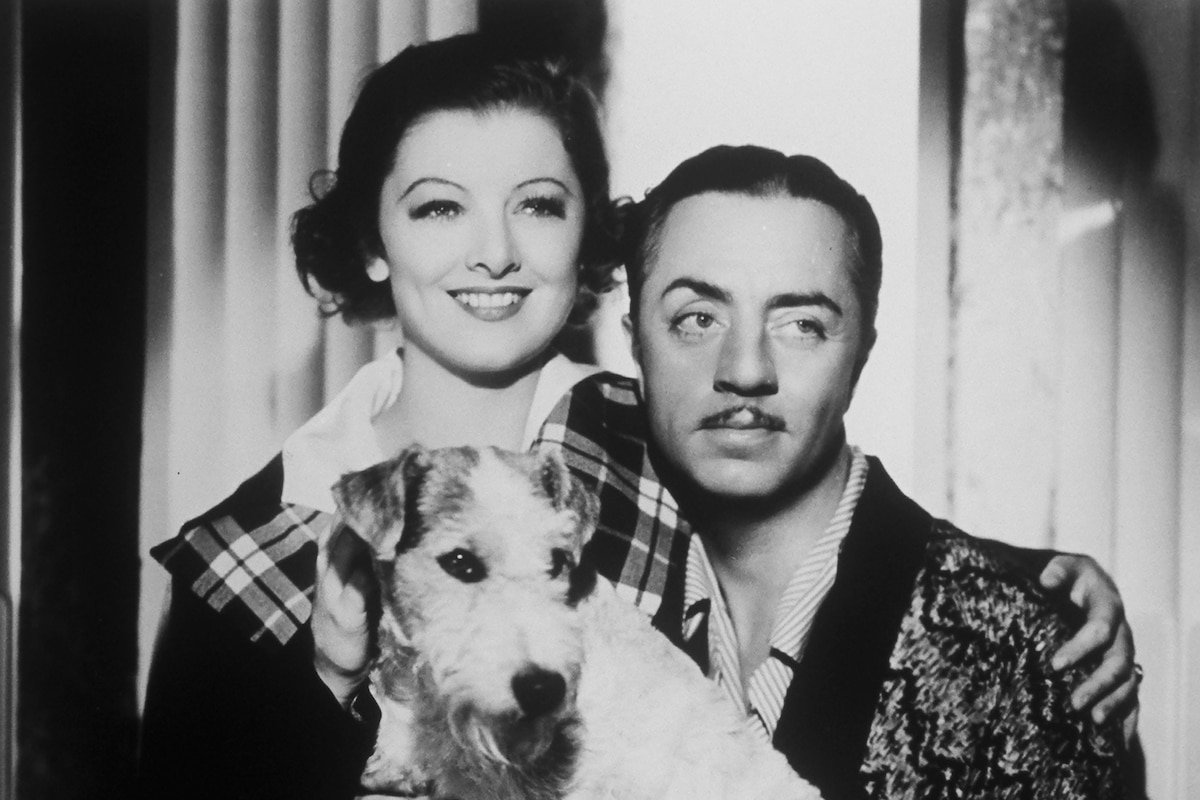
For the role of Nick Charles, Van Dyke immediately thought of William Powell, who had recently contracted with MGM after establishing his career at other studios. Studio executives had some concern about Powell in the role since he was already identified in the public mind with playing another well-known sleuth, Philo Vance; he had starred in the popular film series at Paramount between 1929 and 1933. In fact, Powell had played the part so often that one producer claimed theater owners were beginning to put the name "Philo Vance" on the marquee instead of Powell's. But Van Dyke was convinced the actor was right for the role, and Powell felt he knew the character well and enjoyed the fact that Nick was more of a "regular guy" than the more socially connected Vance.
The studio also balked at Van Dyke's choice for Nora. Usually cast as either exotic beauties, ethnic types or as "the Other Woman," Myrna Loy had been laboring in more than 80 films over the preceding decade without making a huge impact. She read the script of The Thin Man and instantly liked it because it offered her the rare chance to do a comedy. But studio head Louis B. Mayer wanted the now largely forgotten silent star Laura La Plante. Van Dyke had just finished directing Loy and Powell together in Manhattan Melodrama (1934) and saw a chemistry there he could further develop. Van Dyke had a reputation as the studio's most dependable and efficient director, one who could take any project and bring it in on time and on budget. So it was relatively easy for him to get what he wanted, and the production moved ahead with Powell and Loy in the leads.
For the adaptation, Van Dyke turned to married couple Frances Goodrich and Albert Hackett, who had also recently contracted with MGM. The two former actors had turned to writing for the stage several years earlier and came to Hollywood to pen the adaptation of their play Up Pops the Devil (1931), which featured Powell's then-wife Carole Lombard. They signed with Metro in 1933 and showed their facility for creating witty, urbane dialogue and eccentric characters in such modest hits as Penthouse (1933, featuring Loy and directed by Van Dyke) and Fugitive Lovers (1934). Van Dyke instructed them to largely ignore the Hammett mystery and concentrate on the repartee and relationship between Nick and Nora. He also told them to build their script specifically around the talents of the two stars and to come up with no fewer than eight new marital scenes between them.
According to Samuel Marx, head of the MGM story department at the time, two elements of the script "scared the hell" out of the producers: the fact that the murder story was being treated frivolously and with humor and that the central characters were a sophisticated married couple who always seemed to be mixing cocktails.
by Rob Nixon
The Big Idea-The Thin Man
by Rob Nixon | October 30, 2006
SIGN UP FOR OUR NEWSLETTERS

CONNECT WITH TCM