Hot rod culture gained momentum during the post-World War II years in America at the same time that teenage youth culture began to emerge as an important new audience for contemporary cinema. With the curtailing of new automobile production during the war years, new cars were scarce, and there was a shortage of new auto parts due to rationing and restrictions. As a result, it became a common pastime, especially for teenage boys, to soup up their old cars with modified spare parts to increase their performance on the open road. These "hot rods" were soon all the rage, and along with it came drag racing and a whole new car subculture.
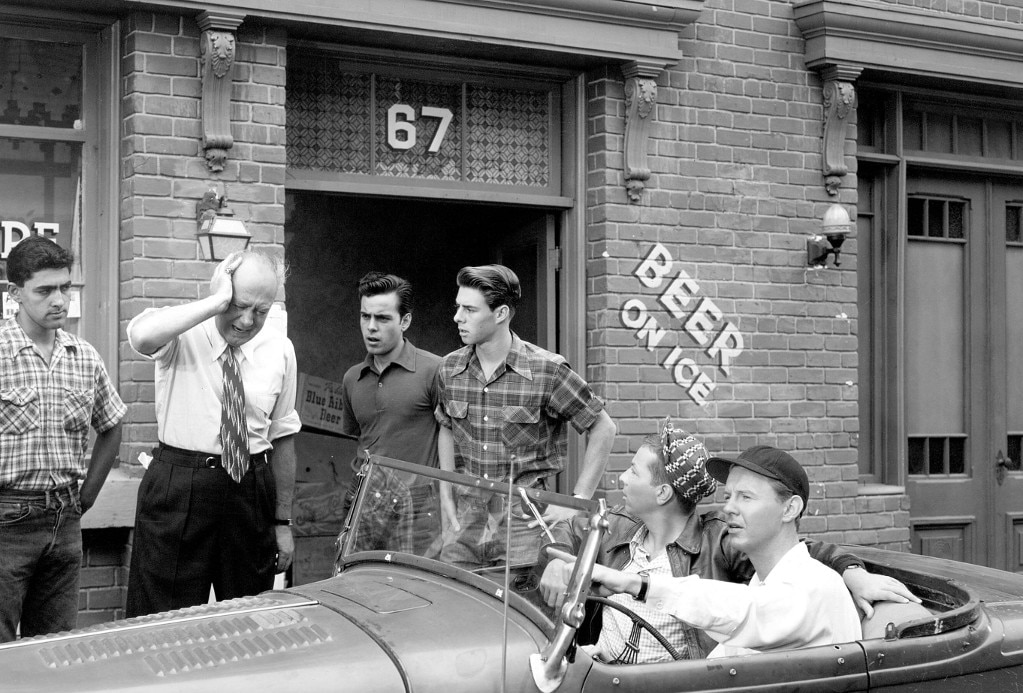
This new subculture was reflected in a new genre of low budget hot rod films in which teenagers were the stars, and speedy hot rods were integral to the plots. Hot Rod (1950) from Monogram Pictures was one of the earliest entries into this new genre. James "Jimmy" Lydon portrays David Langham, a straight arrow teenager whose pokey secondhand jalopy causes him embarrassment when he loses his girl Janie (Gloria Winters) to a hot rodding rival (Tommy Bond). Against the wishes of his father (Art Baker), a tough courthouse judge who has seen one too many nasty accidents involving teenagers and hot rods, David decides to soup up his 1932 Ford Roadster with the help of his best pal Swifty (Gil Stratton Jr.) to win back his girl.
Star James Lydon gained early recognition for playing the title role in the popular Henry Aldrich film series for Paramount in the early 1940s and co-starring with William Powell, Irene Dunne and Elizabeth Taylor in the 1947 classic Life With Father. Viewers may also recognize Tommy Bond, who plays Lydon's speed demon rival Jack, from the 1930s Our Gang and Little Rascals film series in which he played Butch the bully.
In 2006 Hot Rod magazine named Hot Rod one of the "Top Car Movies Ever Made", calling the cars featured in it "wicked in the way only genuine early rods can be."
By Andrea Passafiume
Hot Rod
by Andrea Passafiume | June 22, 2017
SIGN UP FOR OUR NEWSLETTERS

CONNECT WITH TCM