Before he directed his first picture, The Culpepper Cattle Co. (1972), Dick Richards spent much of the "Mad Men" era of 1960s New York as a director of television commercials. On one such commercial, a Heinz Soup ad set around an old-west campfire, he got the idea of making a western feature. Later, shooting another commercial in Oklahoma, he met a 95-year-old man who regaled him with stories of having worked on cattle drives at the age of fourteen. This sparked more thought in Richards, who proceeded to spend the next three years interviewing other elderly survivors of that era throughout the southwest. He meticulously researched details of clothes, guns, wagons and more, learning that it had not been uncommon for teenage boys to join up with cattle drives as cooks' helpers and essentially apprentice as cowboys.
The result was a story Richards originally called We Pointed 'Em North, and it revolved around a 16-year-old coming of age as a cook's helper on a hard, tough cattle drive from Texas to Colorado. The kid's romantic visions of cowboys are brought down to earth first by the cook, who advises him that "cowboyin' is something you do when you can't do nothing else," and then by the rest of the men as they set about destroying themselves. As one review described it: "He learns about lying and killing and whoring."
Richards worked with two writers, including the veteran Eric Bercovici (Hell in the Pacific, 1968) to turn his story into a screenplay, then used his connections to land the commitment of producer Paul Helmick, who had helped produce several recent Howard Hawks films. The Culpepper Cattle Co. was set up at Twentieth Century-Fox with a modest budget of just over $1 million, enough to afford a cast of character actors, including Billy "Green" Bush, who had been memorable as Jack Nicholson's pal in Five Easy Pieces (1970). Playing the lead role of the teenage boy was Gary Grimes, who had just made a lauded feature debut in Summer of '42 (1971).
Cameras rolled for nine weeks on location in Sonora, Mexico; Santa Fe, New Mex.; and soundstages at the Fox studio lot. Richards was more interested in the atmosphere of the story than the plot itself, which is minimal. When the film was announced, he told a reporter: "Fox is actually allowing me to do a dramatized documentary--no women, no romance--just a realistic look at what it was like in those not-so-good old days."
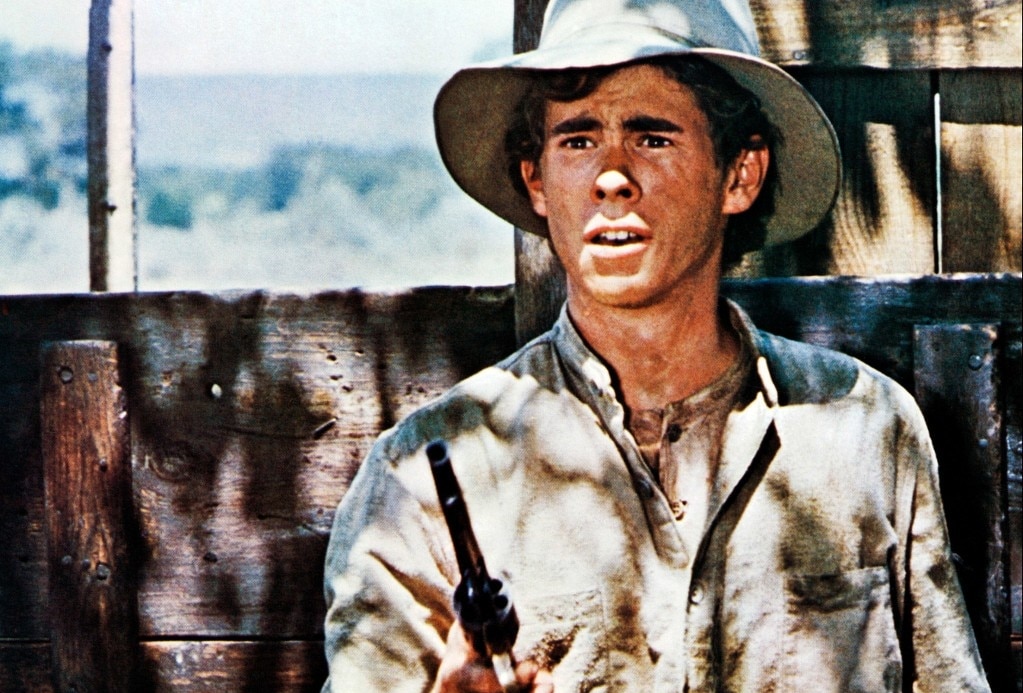
A former photographer, Richards took extra care with the lighting and cinematography to express that atmosphere, later writing: "I didn't want the audience to be aware of the camera in any way. I just wanted [them] to experience what the people of the period went through. I used the quality of light and shadow, of early morning and late day, that I felt would bring out the rich feeling of the west."
The Culpepper Cattle Co. came out as another entry in a recent line of "revisionist" westerns including The Wild Bunch (1969), Little Big Man (1970), McCabe and Mrs. Miller (1971), and Doc (1971)--with Bad Company (1972), Dirty Little Billy (1972), and Ulzana's Raid (1972) soon to follow. They aimed to demythologize the western hero and genre both in their unglamorous stories and in their often grainy and stylized visual looks.
Still, the Fox press book for this picture described Culpepper as "a different kind of western. It makes no statements, offers no messages, nor does it wallow in violence for its own sake. Instead, [it] attempts to recreate the old west as it really was, not as we like to think it was. Harsh, not romantic. Gritty, not glamorous. Heroism arising from quiet gestures, not grand displays."
Culpepper has become something of a cult film, but critics in 1972 were mixed.
Variety called it "another successful attempt to mount a poetic and stylistic ballet of death in the environment of a period western, ... but pretentious, static staging, intercut with flashy massacres and interspersed with dramatically lifeless looping, add up to dreary direction and flagging audience involvement."
The Los Angeles Times found it to be "visually outstanding.... The images have a romantic naturalism which suggests the cowboy world of Remington and Russell. It is the handsomest western since Bill Fraker's Monte Walsh [1970], and it offers not only portraits and textures but some rip-roaring action... On balance, Culpepper, personal and modestly made, is a considerably better-than-average western... An admirable launching for director Richards."
The Culpepper Cattle Co. also marked another feature debut, that of associate producer Jerry Bruckheimer. Like Richards, Bruckheimer came from the world of 1960s New York advertising. The duo worked together on three more pictures before Bruckheimer went on to become one of the most successful producers in Hollywood history, with such credits as Beverly Hills Cop (1984), Top Gun (1986), Armageddon (1998), and the Pirates of the Caribbean movies.
By Jeremy Arnold
The Culpepper Cattle Co.
by Jeremy Arnold | May 11, 2017
SIGN UP FOR OUR NEWSLETTERS

CONNECT WITH TCM