Throughout his career, French director Jacques Demy turned again and again to the genre he loved best, the musical, to express intense emotions--from the bittersweet romance of The Umbrellas of Cherbourg (1964) early in his career, to the carefree joy of The Young Girls of Rochefort (1967), to the darkly operatic turmoil of the little-seen Une Chambre en Ville (A Room in Town), his penultimate film.
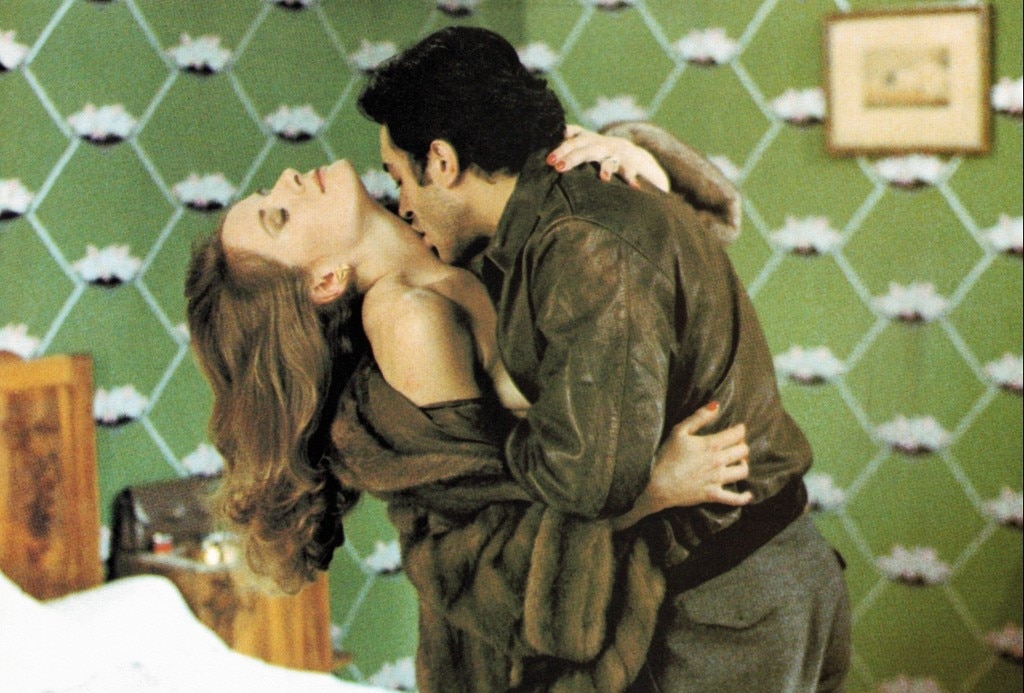
Set during a dockworkers' strike in the 1950s, Une Chambre en Ville takes place in the port city of Nantes, in western France, a recurring location for Demy who grew up the area. He'd seen a shipyard strike as a child, and had never forgotten it. Later, he began writing a novel based on the idea, but decided it would be better as an opera, and eventually, as a film. The director had shot his first feature, Lola (1961), in Nantes, and makes extraordinary use of the city in Une Chambre en Ville, as striking workers march through the streets towards a confrontation with police. Demy's father and uncles had worked in the shipyards, and his father, like the film's main character, had rented a room in the home of the widow of a military officer, the model for Danielle Darrieux's character in the film. (The veteran actress had previously appeared in Demy's The Young Girls of Rochefort). The film focuses on a shipyard worker, Francois (Richard Berry). Although he is engaged, Francois falls in love with a neurotic, unhappily-married woman (Dominique Sanda), who is his landlady's daughter, but the strike has devastating consequences for the lovers.
As in some of Demy's most memorable films, Une Chambre en Ville is told entirely in song, from the lovers' passionate moments to the alternating scenes of workers and police marching toward confrontation in the city's streets. Unemployed workers in Nantes played strikers, and members of local choirs provided the singing. For the first time, Demy's musical collaborator is not Michel Legrand, the composer of his most memorable films, who was otherwise occupied, but Michel Colombier.
Une Chambre en Ville's attempt to combine socially conscious drama and opera was a box-office flop, although critics and fellow filmmakers enthusiastically supported the film. A critics' group in France named it the year's best film, and took out an ad in one of the leading newspapers, Le Monde, urging readers to see the film before it disappeared from theaters, to no avail. But the years have only added luster to the film's reputation as one of Demy's most innovative. As British film historian Geoff Andrews wrote in wrote in 2014, "All of Demy's finest films feel as if they occupy a magical realm unique to their creator, but even in comparison with that marvelous body of work, Une Chambre en Ville, with its readiness--indeed, its need--to fully embrace amour fou and death, really does seem one of a kind."
Director: Jacques Demy
Producer: Christine Gouze Renal
Screenplay: Jacques Demy
Cinematography: Jean Penzer
Editor: Sabine Mamou
Costume Design: Rosalie Varda
Production Design: Bernard Evein
Music: Michel Colombier
Principal Cast: Dominique Sanda (Edith Leroyer), Danielle Darrieux (Margot Langlois), Richard Berry (Francois Guilbaud), Michel Piccoli (Edmond Leroyer), Fabienne Guyon (Violette Pelletier), Anna Gaylor (Madame Pelletier), Jean Francois Stevenin (Dambiel)
90 minutes
by Margarita Landazuri
Une Chambre en Ville
by Margarita Landazuri | May 01, 2017
SIGN UP FOR OUR NEWSLETTERS

CONNECT WITH TCM