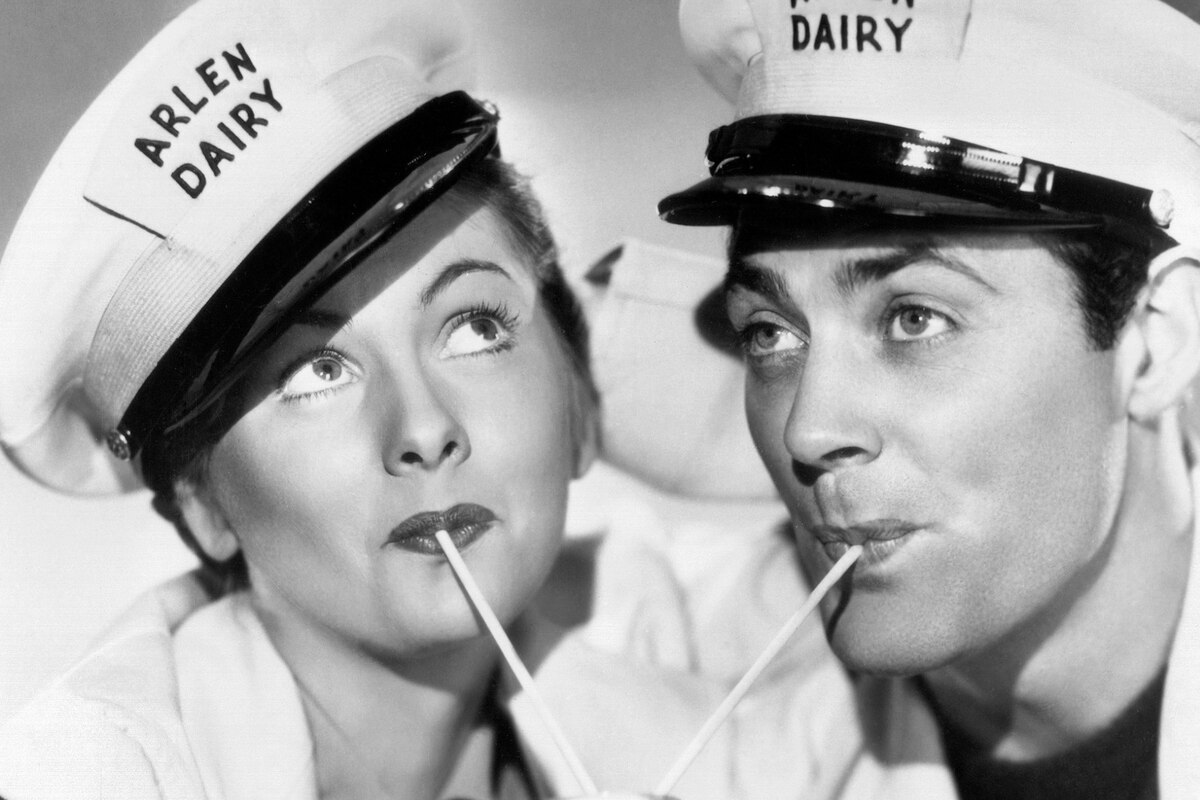
Unlike her celebrated older sister Olivia de Havilland, Joan Fontaine's career got off to a rocky start in Hollywood. After two years and seven movies, her big break opposite Fred Astaire in George Stevens' A Damsel in Distress (1937) became the first Astaire film to lose money. As RKO lost faith in Ms. Fontaine they began to loan her out, and Joan spent the next year racing between five fast quickie productions. Although not received well, her first RKO program picture of 1938 Maid's Night Out now plays as a bright, animated romantic comedy. Bert Granet's screenplay arranges for a potential romantic couple to 'meet cute' by mistaking each other for members of the working class. Sheila Harrison (Fontaine) has a respected name and lives in a nice house, but her ditsy mother (Hedda Hopper) refuses to live within her income. Mother wants Sheila to end their money troubles by marrying her eager suitor, the prissy Wally Martin (William Brisbane), but Sheila instead falls for her neighborhood milkman, Bill Norman (Allan Lane). Bill is actually a newly graduated ichthyologist who wants to borrow his dad's yacht for research; he's working thirty days as a milkman only to prove to Pop that he can hold down an ordinary job. Bill first sees Sheila in her backyard and mistakes her for a maid, and Sheila doesn't correct him because she doesn't want to scare him off. They end up sneaking out together every night, until a fight with Wally puts Bill in jail. When Sheila discovers the truth from another milkman, she assumes Bill's milk route so he can win his bet with his father. Bill joins her on the milk wagon, but a police chase ensues when it is assumed that Sheila is being kidnapped. The light romantic comedy is aided by acting support from the seasoned actors Billy Gilbert, Cecil Kellaway and George Irving. The Hollywood Reporter seemed to be in Fontaine's corner when they wrote that she "has plenty of personality and with more experience should get somewhere on screen." But Variety warned exhibitors that giving the show top billing would be "box office suicide." Feeling responsible for the young Fontaine, George Stevens cast her in his next big picture Gunga Din (1939) and her stellar career fell immediately into place. Within four years she collected a Best Actress nomination for Rebecca (1940), and a Best Actress Oscar for Suspicion (1941). As for Allan Lane, during the war he switched permanently to acting in westerns, and never looked back. His final gig was providing the humorous voice for the equine star of the TV show Mister Ed (1961).
By Glenn Erickson
Maid's Night Out
by Glenn Erickson | April 07, 2017
SIGN UP FOR OUR NEWSLETTERS

CONNECT WITH TCM