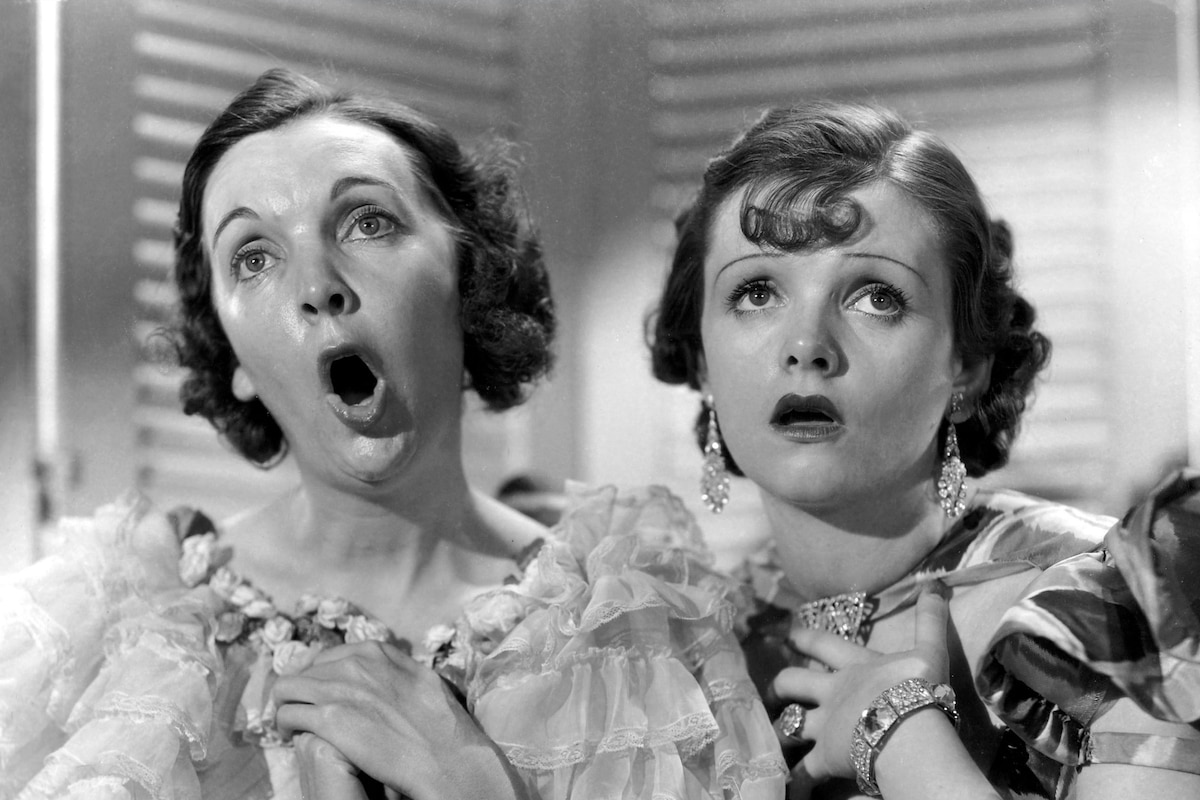
Love isn't blind, it's tone-deaf in Sing and Like It (1934), a pre-Code comedy about a tough gangster with a sentimental streak who overhears bank teller Annie Snodgrass (ZaSu Pitts) warble a mawkish song about "Mother" at an amateur theatrical pageant in midst of grand larceny. The passionately, obliviously untalented Annie dreams of a stage career and Fenny (Nat Pendleton) is determined to deliver it, foisting the blank-eyed teller upon Broadway producer Adam Frink (Edward Everett Horton), leaning on a critic to rave over the performance, and strong-arming an audience into attending her debut. Fenny drafts his showgirl fiancée (Pert Kelton) into grooming his talentless discovery and even lets one of his goons rewrite the play. Could it have been an inspiration for Woody Allen's Bullets Over Broadway?
The prolific William Seiter made a little of everything in his decade-long career (including the Astaire and Rogers musical Roberta, 1935, and a number of Shirley Temple films), but comedy was his specialty, from early silent shorts to TV sitcoms in the 1950s. Sing and Like It draws on the colorful slang of Damon Runyon's underworld tales, with Pendleton growling gangster speak as Fenny and Ned Sparks, the cigar-chewing wise guy of such 1930s comedies as 42nd Street (1932) and Frank Capra's Lady for a Day (1933), translating his comments for civilian audiences. Pendleton made a career playing big lugs, dense thugs, and dim cops, from the slow-witted police officer always behind the witty and worldly Nick Charles in The Thin Man (1934) to a growling Army Sargent opposite Abbott and Costello in Buck Privates (1941). Sing and Like It gave Pendleton a rare leading role and he embraced it.
Erich Von Stroheim cast ZaSu Pitts as the tragic lead of his epic Greed (1925) but to the rest of Hollywood she was a crack comic character actress and her high, fluttery voice and deadpan delivery cinched the deal in the sound era. She starred opposite Thelma Todd in a series of successful comedy shorts in the early thirties and opposite Charles Laughton in Ruggles of Red Gap (1935), and was regularly cast as maids and spinsters and dizzy dames. She's marvelously oblivious as the bank teller with Broadway dreams convinced that her untapped talents have finally been discovered. She sings "Dear Mother" multiple times throughout the film, each delivery earnest and arch and hilariously tortured. Pitt's distinctive voice and delivery inspired actress Mae Questel's rendition of Olive Oyl in the 1930s "Popeye the Sailor" cartoons.
Sing and Like It gave Edward Everett Horton, a master at flustered and fussy and constantly fretting characters (most notably in the Astaire and Rogers classics The Gay Divorcee, 1934, and Top Hat, 1935), the chance to play a more aggressive figure. Frink is a bullying Broadway producer who barks orders and commands the stage, at least until gangster Fenny forces him to use Annie in his latest show "or else!" Or else what is never specified but Frink gets the picture. Pert Kelton, who plays Fenny's streetwise fiancée, made a specialty of floozies and fast women and was the original Alice Kramden opposite Jackie Gleason in the first incarnation The Honeymooners when it was a segment of Gleason's variety show Cavalcade of Stars. She lost the role when she was blacklisted but returned to the screen a decade later as Mrs. Paroo in The Music Man (1962), the lively, red-haired Irish mother to Shirley Jones.
"Treated for gentle burlesque flavor, the picture picks up laughs quickly in the first reel and lands them in fair volume throughout," writes the Variety film critic identified only as Char. "The direction is smooth and the dialog crisp. Miss Pitts proves ideal as the ham actress, which Horton and Pendleton are cinches in the parts for which they are picked." His review ends with one tongue-in-cheek caveat: "One drawback, it may be considered, is the many times which the picture permits Miss Pitts to sing her awful mother ballad."
Sources:
Comic Support: Second Bananas in the Movies, Ronald L. Smith. Citadel Press, 1993.
"Sing and Like It," Char. Variety, April 17, 1934.
"Forgotten Pre-Codes: Sing and Like It," David Cairns. MUBI Notebook, Dec 8, 2011.
AFI Catalog of Feature Films
IMDb
By Sean Axmaker
Sing and Like It
by Sean Axmaker | March 30, 2017
SIGN UP FOR OUR NEWSLETTERS

CONNECT WITH TCM