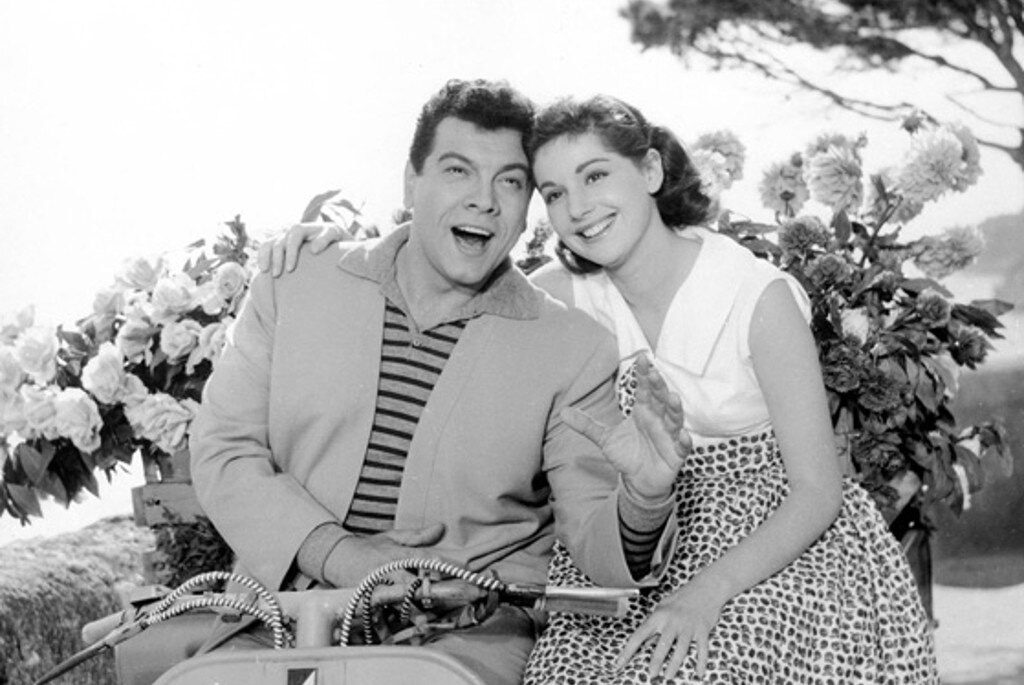
As MGM fell apart in the early 1950s, most of their vaunted 'galaxy of stars' went off contract. Just three years after making a huge success in The Great Caruso (1951), operatic singing star Mario Lanza was fired for problems over the recording of the songs for The Student Prince (1954), to be lip-synched by actor Edmund Purdom. Most of Lanza's professional singing career had been associated with MGM. Unprepared for unemployment, he went into a personal tailspin. For the First Time (1959) is a German-Italian co-production tailored as a comeback vehicle for the man that Maria Callas called 'the new Caruso.' The show was directed by Hollywood veteran Rudolph Maté; and written by Andrew Solt, who had contributed to the major success The Jolson Story (1946). The confected story is about Tonio Costa (Lanza), a beloved opera tenor who longs to sing for the common people. Tonio keeps a paying audience in the Vienna Opera House waiting while he serenades a crowd from a balcony. Aldo Tonti's beautiful Technicolor and Technirama cinematography follows Costa across Europe to the island of Capri, where he meets Christa (Johanna von Koczian), a deaf girl who reforms his spirit. The unsubtle script contains zingers such as, "You owe your voice to mankind!" and "I'm going to sing my guts out!" Costa sends Christa to a clinic that restores her hearing; but romantic interference comes in the person of Costa's old girlfriend Gloria De Vadnuz, played by Zsa Zsa Gabor with a cynical 'so who cares?' attitude. Although Kurt Kasznar carries the main supporting role, German sentimental favorite Annie Rosar (Embezzled Heaven, 1958) and the soulful Italian Renzo Cesana (Try and Get Me!,1950) add to the film's religious tone. When Christa loses her hearing once more, the mournful Costa must reevaluate his moral standing. The trade papers were not impressed by For the First Time. Newsweek called the movie shallow and devotional, and said that Mario Lanza was in a rut. Just two weeks after the American premiere, Mario Lanza died of a heart attack in Rome. Ironically, the film's distributor was MGM, which had dismissed him just five years before.
By Glenn Erickson
For the First Time
by Glenn Erickson | January 12, 2017
SIGN UP FOR OUR NEWSLETTERS

CONNECT WITH TCM